
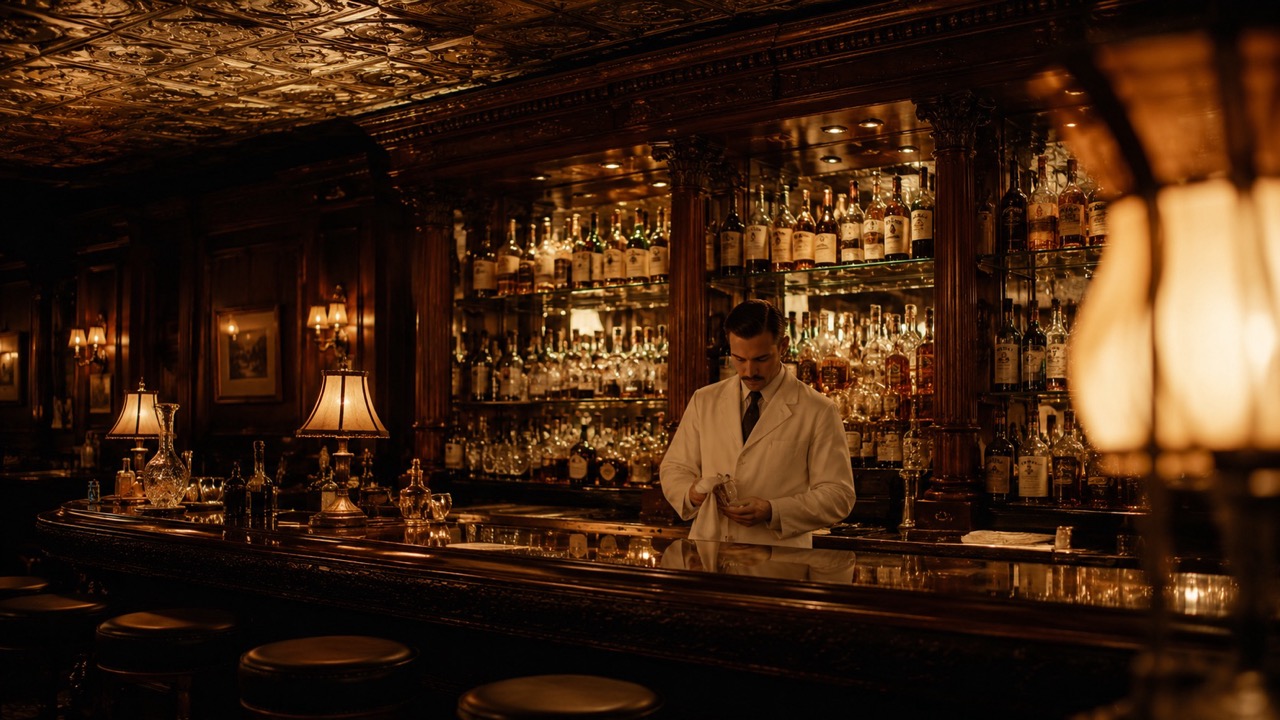
Before César Ritz, a hotel was merely a building in which one slept between engagements. The mattress might be adequate, the water tepid, the staff indifferent — and this was considered perfectly acceptable, even at the grandest establishments. What Ritz understood, with an intuition that bordered on clairvoyance, was that true luxury consists not in the provision of comforts but in the elimination of friction. The guest should never have to ask. The desire should be met before it becomes conscious.
The Savoy Revolution
When Ritz took over the Savoy in 1889, London’s hotel culture was essentially clubland with beds attached. Gentlemen dined in heavy, dark rooms. Ladies did not dine in hotels at all. Ritz changed the lighting — literally. He introduced soft, flattering electric illumination at a time when most establishments still guttered with gas. He lowered the ceilings, draped the walls in pale silk, and opened the dining room to women. The effect was revolutionary: the hotel became a destination in itself, a place where society wished to be seen.
But his genius extended far beyond aesthetics. Ritz installed private bathrooms — an extravagance so radical that competitors laughed. He developed the sommelier system, elevating wine service from an afterthought to an art form. He insisted that fresh flowers appear in every room, daily, regardless of season. He trained his staff to remember not merely names but preferences: the guest who liked their curtains drawn at precisely nine, the dowager who required a particular brand of mineral water that had to be imported from Bavaria.
The Architecture of Anticipation
What Ritz invented was not a hotel but a philosophy — one that every subsequent luxury experience, from the Aman resorts to the concierge desks of Mayfair, has merely elaborated upon. The philosophy is this: attention should be invisible. The highest form of service is that which leaves no trace of itself. The guest should feel not served but simply fortunate, as though the universe has arranged itself for their particular comfort.
This sounds simple. It is, in practice, enormously difficult. It requires a system — what Ritz called “organisation” — of such complexity that the machinery vanishes entirely behind the effect it produces. Consider the implications: every member of staff must understand not only their own role but the roles of everyone around them. Information must flow silently, constantly, without the guest ever witnessing a whispered instruction or a scribbled note. The kitchen must be prepared for requests that have not yet been made.
Place Vendôme and the Codification of Dreams
When Ritz opened the hotel that bears his name on the Place Vendôme in 1898, he was not merely creating another establishment. He was codifying everything he had learned into a monument. The building itself was already magnificent — a Louis XV façade giving onto the most elegant square in Paris. But Ritz transformed its interior into something unprecedented: each suite individually decorated, the proportions calibrated to induce a specific psychological effect of expansiveness within intimacy.
The Paris Ritz became the template. Its innovations — the integration of restaurant and hotel into a single social ecosystem, the concept of the “palace hotel” as cultural institution, the idea that a guest’s experience should be seamless from arrival to departure — these became the grammar of luxury hospitality worldwide. When we check into any great hotel today and find our preferences remembered, our pillows adjusted, our favourite newspaper waiting — we are living inside César Ritz’s imagination.
The Invisible Made Manifest
There is a deeper lesson in Ritz’s legacy, one that extends well beyond hospitality. It concerns the nature of luxury itself. In our contemporary moment, luxury is often confused with conspicuousness — the visible display of expense. But Ritz understood that genuine luxury is precisely the opposite. It is the removal of all evidence of effort. It is the experience of ease so complete that one forgets ease is being produced.
This is why his influence persists not only in hotels but across the entire landscape of premium experience. The bespoke tailor who keeps your measurements on file for decades. The sommelier who remembers your palate across seasons. The private banker who anticipates a need before you articulate it. All of these are descendants of Ritz’s central insight: that the highest luxury is attention made invisible, effort rendered imperceptible, care so thorough it feels like fate.
A century and more after his death, we still inhabit the world César Ritz imagined into being — a world in which comfort is not a gift but an atmosphere, service not a transaction but an art, and the greatest extravagance of all is the sensation that everything has been arranged, silently and perfectly, just for you.