
Elegance is the most culturally specific of all aesthetic judgments. What reads as refined in one city reads as costumey in another, as underdressed in a third. The word itself translates imperfectly: the Japanese have yōhin and the deeper iki; the Italians distinguish between eleganza and the rarer sprezzatura; the Moroccans speak of zīna in a way that encompasses beauty, propriety, and spiritual grace simultaneously. To understand elegance cross-culturally is to understand that dress is always an argument about values — and that every culture argues differently.
Tokyo: The Eloquence of Restraint
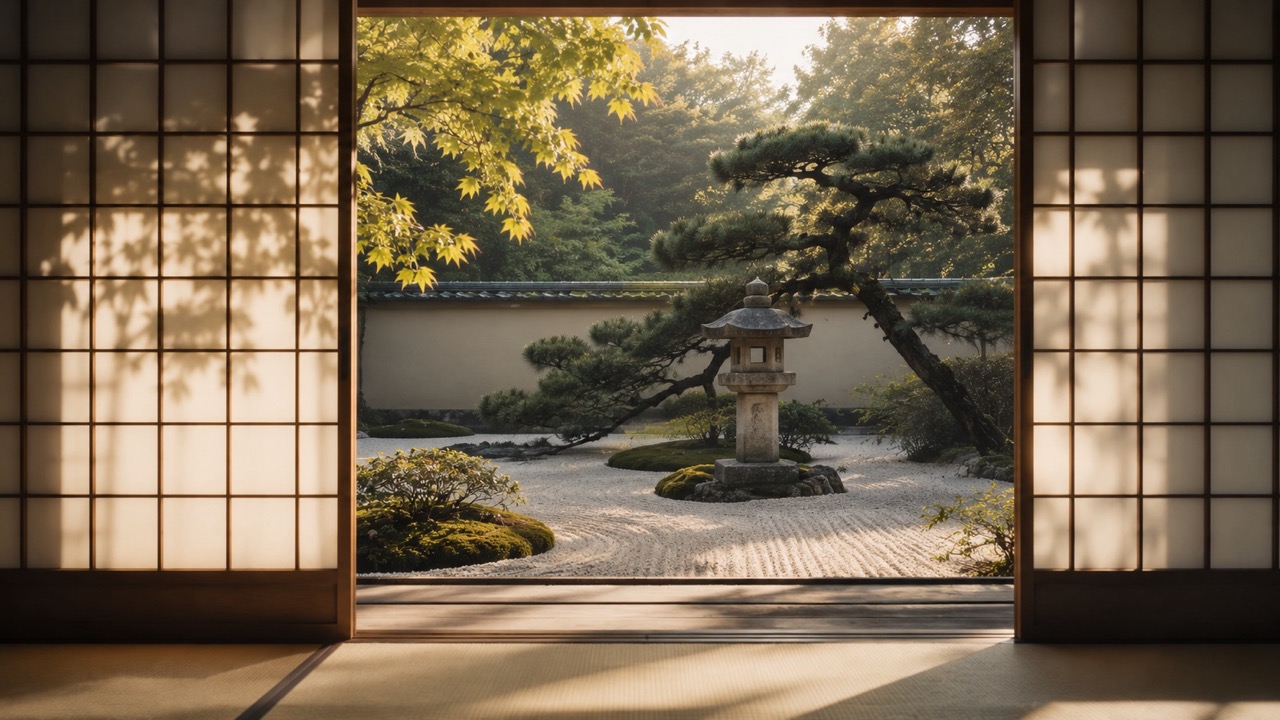
Japanese elegance operates through subtraction. The most expensively dressed woman in a Tokyo restaurant may be wearing a single colour from shoulder to ankle — navy, perhaps, or charcoal — in fabrics so precisely cut that the garment appears to have no structure at all. The art is in what you cannot see: the construction, the finishing, the quality of the undergarments that create the silhouette. Brands like Issey Miyake, Yohji Yamamoto, and Comme des Garçons emerged from a culture where the supreme aesthetic achievement is the appearance of effortlessness produced by enormous effort. In traditional dress, this principle reaches its apotheosis: the obi tied precisely so, the nape of the neck revealed by the kimono collar according to exact social codes. Even contemporary Tokyo street fashion — that explosion of apparent anarchy — operates within strictly understood rules of proportion and reference. Elegance here is ultimately about ma: negative space, the eloquence of what is withheld.
Marrakech: The Architecture of Concealment
Moroccan elegance is architectural in conception. The djellaba — that long hooded garment worn by both men and women — is the sartorial equivalent of the riad: an unremarkable exterior concealing extraordinary richness within. The principle extends throughout Moroccan dress: layers reveal themselves progressively, textiles of astonishing quality are worn close to the body where only intimates will see them, embroidery appears at hems and cuffs as fleeting glimpses. The kaftan, in its most refined Fassi incarnation, may involve months of handwork — passementerie in gold thread, buttons sculpted from silk — yet the overall impression is of fluidity rather than decoration. Colour is used with a boldness that would overwhelm in other contexts but here, against terracotta walls and beneath the particular quality of Moroccan light, achieves a harmony that is both sensual and contained. The interplay between concealment and revelation — the hand emerging from a sleeve, the face framed by a headscarf — creates an elegance that is fundamentally narrative: a story told slowly, never all at once.
Milan: Quality as Philosophy
Milanese elegance is perhaps the most legible to the Western eye — and therefore the most frequently misunderstood. It is not about fashion in any trend-driven sense. The Milanese wardrobe is built on a principle closer to architecture: structural integrity, material excellence, the rejection of anything that prioritises novelty over longevity. The coat is the supreme Milanese garment — camel, navy, or black, cut to fall precisely at the knee, in cloth that improves with wear. The handbag is carried, never displayed. The shoe — always leather, always resoleable — speaks to a relationship with clothing as infrastructure rather than spectacle. Brands like Loro Piana, Brunello Cucinelli, and the older Milanese tailoring houses embody this philosophy: luxury as engineering, quality as a daily ethical choice. The Milanese do not dress to be noticed. They dress to be correct — and correctness, here, encompasses material, proportion, colour, and above all, context.
São Paulo: The Body as Celebration
Brazilian elegance begins with a fundamentally different relationship to the body. Where Japanese elegance conceals and Milanese elegance disciplines, Brazilian elegance celebrates — not exhibitionism but a profound physical confidence that transforms even simple garments into statements of presence. The colour palette is fearless: white against dark skin, coral, emerald, the particular shade of yellow that appears in the national consciousness like a birthright. Fabric is chosen for how it moves — the way a silk shirt responds to gesture, the way linen falls against the body in São Paulo’s subtropical heat. Brazilian designers — Lenny Niemeyer, Adriana Degreas, the ateliers of Osklen — work with an understanding that elegance here is kinetic: it exists in motion, in the walk, in the way cloth and body collaborate. The flip side of this confidence is a rigorous attention to grooming and presentation — hair, skin, nails — that may exceed any other culture’s standards. Elegance in São Paulo is never accidental. It is a performed vitality that makes restraint look, by comparison, like timidity.
To observe these four cities simultaneously is to understand that elegance is never a single quality but a cultural argument made visible. Each tradition answers differently the fundamental questions of dress: What should be shown? What concealed? Where does refinement reside — in the body, in the garment, in the relationship between the two? The cultivated traveller learns not to prefer one answer but to read all four — and, perhaps, to compose from them a personal language that honours each tradition without imitating any.