
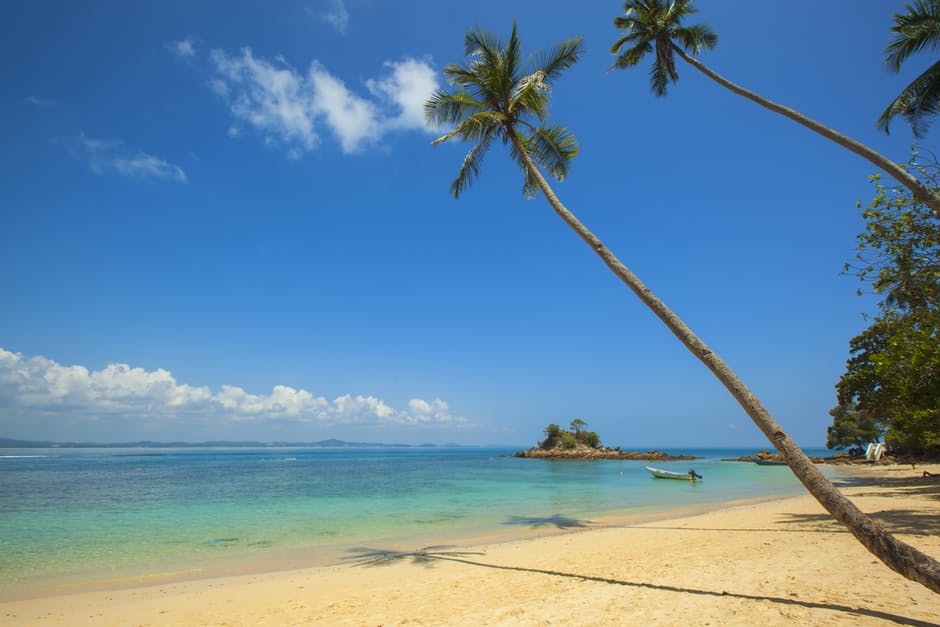
There is a particular quality of light that exists only on islands that have not yet fully awakened to their own beauty — a luminescence that belongs to the hour before the world arrives, when the sea is still silver and the palms cast long shadows across sand that has not yet been touched. Phu Quoc, Vietnam’s largest island and its most radiant jewel, possesses this quality in abundance. For decades it remained one of Southeast Asia’s most closely held secrets, known to fishermen, to a handful of intrepid travellers, and to the pepper farmers who cultivated its rust-red soil with generations of knowledge. Today, the world has found Phu Quoc — and yet, by some miracle of geography and character, the island has not entirely surrendered itself to the finding.
A Pearl in the Gulf of Thailand
Phu Quoc sits in the Gulf of Thailand, closer to Cambodia than to the Vietnamese mainland, and this position at the edge of things has long defined its identity. The island’s name translates roughly as “land surrounded by water,” which feels less like a geographical descriptor than a philosophical one. Water here is not merely a border but a presence — the warm, improbably clear waters of the Gulf embracing beaches that run for miles without interruption, waters that shift from jade to turquoise to deep sapphire as the light changes through the day. The national park that covers more than half the island’s interior remains a place of genuine wildness, where hornbills call from the canopy and the air carries the faint sweetness of pine and tropical forest.
The Architecture of Arrival
The discerning traveller arriving at Phu Quoc International Airport will notice, even from the descent, that the island has been treated with unusual thoughtfulness. Development has been concentrated, the forests preserved, the northern coast given over largely to the national park. The southern stretch, anchored by the town of Duong Dong, is where the island’s finest addresses have taken root — the InterContinental with its overwater villas, the JW Marriott’s fantasy architecture of Vietnamese vernacular reimagined at grand scale, and the Regent with its quiet confidence and views that seem to stop time. These are properties that understand the art of restraint, of architecture that frames landscape rather than competes with it.
On the Matter of the Sea
To speak of Phu Quoc without speaking of its fishing traditions would be to describe a symphony without mentioning the instruments. The island’s relationship with the sea is ancient and ongoing. The Phu Quoc fish sauce — nuoc mam — produced here is regarded by Vietnamese connoisseurs as among the finest in the world, the result of a centuries-old process of fermenting anchovies in wooden barrels that perfume the air around Duong Dong with something that takes getting used to but ultimately comes to smell like authenticity itself. A visit to one of the traditional barrel factories, wooden vessels stacked in dark rooms, is one of those experiences that connects the luxury traveller to the genuine grain of a place.
The Table as Destination
Phu Quoc’s culinary identity is a conversation between the land and sea, between Vietnamese tradition and the particular ingredients the island produces. Crab in tamarind, squid grilled over open coals, the island’s signature sea urchin served simply with lime and herbs — these are dishes that taste of their origins in the most direct possible way. The night market in Duong Dong, still operating as it always has despite the new hotels that have grown up around it, remains one of the most pleasurable ways to spend an evening, moving from stall to stall in the warm dark, the air fragrant with charcoal and ginger. For those seeking elevation, the fine dining restaurants within the major resorts have attracted chefs of genuine ambition, producing menus that honour Vietnamese technique while reaching toward something more international.
The Future of the Pearl
There are, of course, tensions inherent in any island’s rise to prominence. The cable car that now connects Phu Quoc to the smaller island of Hon Thom is the longest non-stop cable car over the sea in the world — a feat of engineering, a genuinely spectacular experience, and also a reminder that Phu Quoc is now firmly on the map of global tourism. The island is growing, new properties appearing each season, and the conversation about how much growth is too much is one that the Vietnamese authorities are, by all accounts, taking seriously. The national park designation protects the heart of the island’s wildness. The hope among those who love Phu Quoc most is that the light — that particular pre-dawn luminescence — will persist.
What Phu Quoc offers the thoughtful traveller is something rarer than merely beautiful beaches and excellent hotels, though it offers those in abundance. It offers the sensation of arriving somewhere that is still becoming itself, still discovering what it wishes to be, still negotiating between the ancient and the new. That negotiation, observed from the terrace of an overwater villa as the sun descends into the Gulf, is one of the most quietly thrilling spectacles in contemporary travel.