
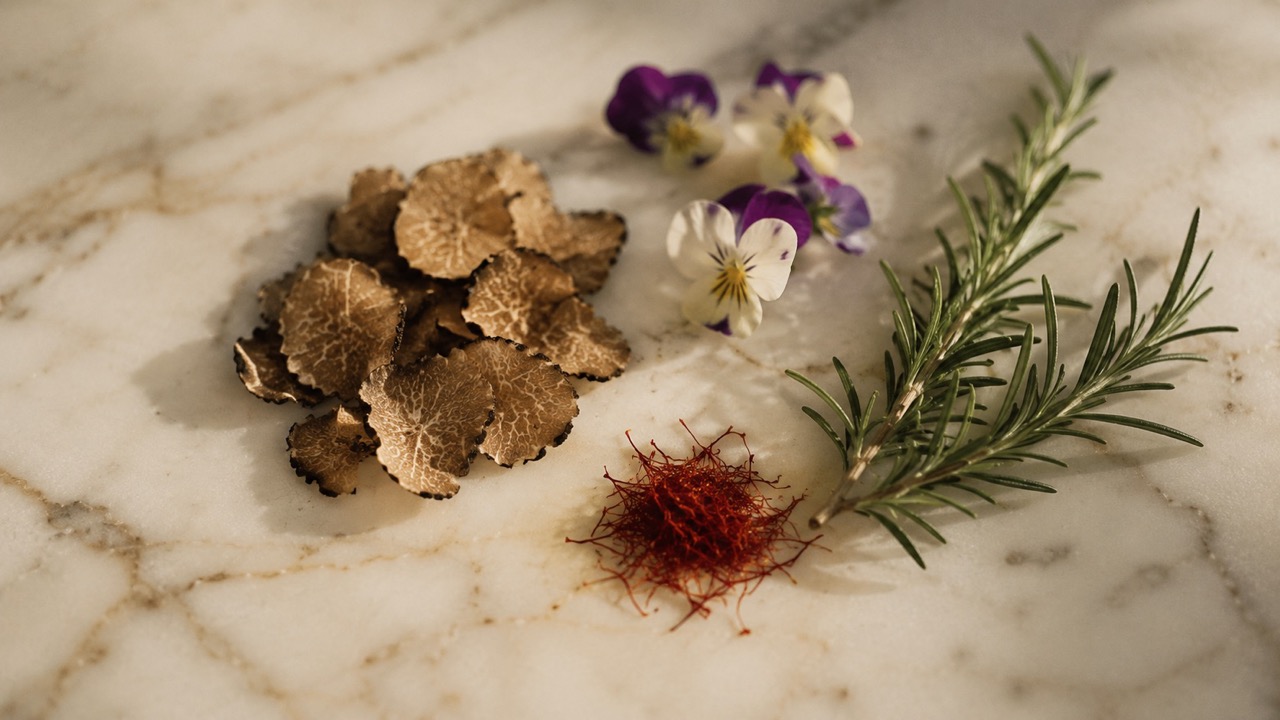
The alchemists of medieval Europe believed that base metals could be transmuted into gold through a combination of esoteric knowledge and patient process. They were wrong about metallurgy, but they were describing something real about cooking. The great chefs — those who have genuinely extended the boundaries of what a meal can achieve — are alchemists in the truest sense: practitioners of a discipline in which humble materials, subjected to heat, time, acid, fat, and the precise application of technique, are converted into something that transcends their origins entirely. The egg becomes a cloud; the onion becomes silk; the bone becomes velvet. The transformation is real, and learning to perform it is among the most satisfying pursuits available to a serious mind.
Understanding the Maillard Reaction
The single most important chemical reaction in savoury cooking has a name that most cooks have never used but an effect that every palate immediately recognises. The Maillard reaction — named for the French chemist Louis-Camille Maillard, who first described it in 1912 — occurs when amino acids and reducing sugars are subjected to heat above approximately 140 degrees Celsius, producing the hundreds of flavour compounds responsible for the deeply bronzed crust of a seared steak, the caramelised skin of a roasted chicken, the complex bitterness of fresh coffee, the toasted depth of good bread. Without the Maillard reaction, food is nourishment. With it, food becomes flavour.
The practical implications for the home cook are significant. A pan must be hot — genuinely, searingly hot — before protein is introduced, or the surface steams rather than sears and the transformation never occurs. Moisture is the enemy: a wet surface cannot exceed 100 degrees Celsius until all liquid has evaporated, which means the Maillard reaction begins only after irreversible damage has been done to texture. Pat proteins dry. Dry-brine in advance. Use a heavy pan, preheated to the point of smoke. These are not pedantic instructions but the practical grammar of flavour creation.
Fat as Medium and Message
Fat is the most versatile and misunderstood ingredient in the kitchen — not a dietary concession but a culinary medium of extraordinary range. It is the carrier of fat-soluble flavour compounds that water cannot dissolve; it is the medium through which heat is transferred with precision to delicate proteins; it is the emulsifier that creates the creamy impossibility of a hollandaise or the silky permanence of a well-made vinaigrette. Understanding fat’s role transforms cooking from an act of assembly into an act of design.
The choice of fat communicates flavour before a dish reaches the palate. Good butter — cultured, from an animal whose diet is reflected in the fat’s golden depth — adds a complexity that neutral oils simply cannot. Duck fat, applied to potatoes before roasting, produces a crust and a depth of flavour that olive oil approaches only on its best days. The rendered fat from a piece of guanciale, used to build a simple pasta sauce, carries the entire flavour identity of the dish. Fat is not merely medium; it is message.
The Long Cook and the Patient Result
Some of the greatest alchemy in cooking occurs not at high heat but at barely a simmer, over periods of time that cannot be shortened without fundamental loss. The daube of beef that has spent six hours in a low oven with wine, aromatics, and the gelatine-rich bones required to build its sauce to glossy richness is not merely tender meat in sauce — it is the result of a slow conversion of collagen to gelatin, of wine’s harsh tannins to something rounded and integrated, of separate ingredients into a unified flavour entity that bears no resemblance to the sum of its parts.
The same principle governs the making of stock — the foundation upon which all serious cooking rests. A proper chicken stock, made with bones that have been roasted to deep gold, vegetables that have been sweated to translucency, and water that has barely moved at a murmur for four hours, possesses a depth and body that the commercial alternative, however premium its branding, cannot replicate. Stock is patience made liquid, and the dishes built upon it carry that patience in every mouthful.
Acid as Architecture
The role of acid in cooking is among the most underappreciated and transformative of all culinary tools. A squeeze of lemon at the finish of a sauce, a splash of vinegar added to braised vegetables at the last moment, the careful balance of acidity in a salad dressing — these are not afterthoughts but structural decisions, altering the perception of every other flavour in the dish. Acid lifts. It separates flavours that have merged into indistinct richness and restores them to individual clarity. It makes fat taste less heavy, sweetness less cloying, earthiness more vivid.
The alchemical understanding of acid means knowing when to add it: too early in a braise and the acidity integrates entirely, adding background complexity; too late and it sits on the surface, providing lift without depth. Like all the great variables in cooking, its correct application is a matter of taste developed over time and attention, which is to say it is a matter of genuine craft.
The Everyday Elevated
The greatest cooks in history have consistently demonstrated that the measure of true culinary skill is not the handling of expensive ingredients — truffles and caviar forgive a multitude of technical deficiencies — but the elevation of the ordinary. A perfect omelette. A roast chicken that tastes purely and profoundly of chicken. A vegetable soup in which each component has been treated with the respect it deserves. These are the dishes that reveal the alchemist, and the everyday ingredients they transform are, in the right hands, the most extraordinary raw materials in the kitchen.