
There are countries that reveal themselves all at once, generously, in a single season. Finland is not among them. This is a landscape of such radical seasonal transformation that to know it in summer is to know only one of its four distinct and extraordinary faces — to have read, one might say, the opening chapter of a novel that grows more beautiful and more strange with each successive turn of the page. To understand Finland requires a year, or at least the imagination to hold all four of its seasons simultaneously in the mind.
The Long Light of Summer
Finnish summer, at its most extreme, defies the basic categories through which most of the world organises its days. Above the Arctic Circle, the sun does not set for weeks. In Helsinki, midsummer nights reduce darkness to a brief, luminous twilight — a blue-grey half-light of extraordinary beauty that arrives around midnight and is gone again before two. The Finns call this time yö, the night, but it resembles night as the world’s great northern forests resemble a city park: the category technically applies, but the reality exceeds it entirely.
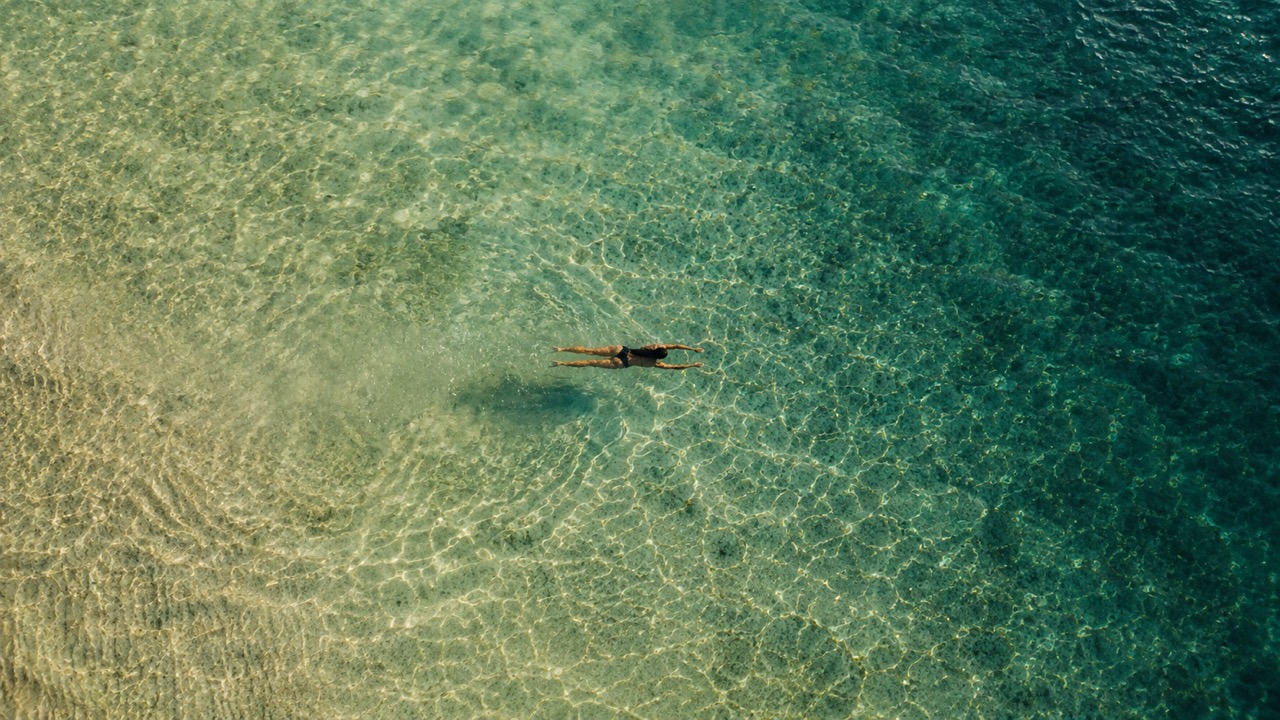
Lakes — of which Finland contains an almost incomprehensible 188,000 — reflect a sky that seems to have absorbed some private, extra-luminous quality during the long months of winter and is now releasing it in slow, steady exhalation. The country’s lakeland heart, the Saimaa region, offers a summer of swimming, rowing, and the contemplative practice of sitting on a sauna jetty at eleven in the evening watching the light change colours it has no name for. The Finnish summer is extraordinarily quiet, in a way that feels earned rather than merely geographical.
Autumn’s Burning Hours
Ruska is the Finnish word for autumn’s colour change, and it is treated with the seriousness due to one of the country’s most spectacular natural events. In Lapland, where the birch and aspen grow in stands of blazing gold, and the cloudberry plants turn amber and the reindeer are in full winter preparation, ruska arrives in late August and September with the quality of a sustained crescendo. Hikers on the Kungsleden and the fell trails of Urho Kekkonen National Park report a peculiar emotional intensity in this season — the combination of burning colour, cool air sharp with pine and earth, and the knowledge that the dark is coming — that has no equivalent in the more temperate south.
The gastronomic possibilities of Finnish autumn deserve particular attention. Wild mushrooms emerge from the forest floor in extraordinary abundance — chanterelles and porcini among them — and the picking of them is a national practice engaged in with a quiet seriousness that speaks to something deep in the Finnish relationship with the land. Lingonberries, cloudberries, and bilberries follow; the hedgerows and bogs give generously to those who know where to look.
The Dark Gift of Winter
Winter in Finland is, to the uninitiated eye, a problem of darkness. Above the Arctic Circle, the sun does not rise at all during the kaamos, the polar night, and even in Helsinki the winter days are so brief — four hours at their shortest — as to fundamentally reorganise the rhythms of daily life. And yet the Finns do not regard this as deprivation. They have arranged their entire culture — the sauna, the warmth of the home, the particular quality of Finnish candlelit interior life, the art of conversation and silence in equal measure — around the experience of winter as a state of chosen interiority.
The aurora borealis, the northern lights, appear above Finnish Lapland on roughly two hundred nights each year. To stand in a clearing in Saariselkä or Inari, in temperatures that have fallen to minus twenty-five, watching curtains of green and violet and crimson move across a sky ablaze with stars, is one of the most transporting experiences available anywhere on earth. The phenomenon is entirely free of the aesthetic and cultural apparatus that makes human beauty — art, architecture, fashion — so dependent on context. It is simply there, immense and indifferent and impossibly beautiful.
Spring’s Quiet Promise
Finnish spring is perhaps the most tender of the four seasons, and the most intimately understood by those who have spent a winter there. It announces itself in small, incremental acts: the crack of ice on a lake surface, the first three minutes of additional daylight accumulated each day in March, the tentative appearance of catkins on birch branches still dusted with the last of the snow. After the austere grandeur of winter, these small signs are received with an almost painful gratitude.
May brings the cuckoo, whose call arrives simultaneously across the Finnish landscape as if by collective agreement, and with it a palpable lifting of the national spirit. The ice breaks on the great lakes in a phenomenon known as jäiden lähtö — the going of the ice — that Finns have tracked and debated and recorded for centuries. Spring in Finland is a season not merely of natural renewal but of personal relief, of the particular human joy that comes from having survived something difficult and arrived, intact, at something beautiful.
A year in this landscape is an education in impermanence of the most exhilarating kind. Each season teaches that what came before it was not permanent, and neither is what has arrived. The country’s singular genius is to make this lesson feel not like melancholy but like the most luminous form of hope.