
Cyprus is an island of layered civilisations, each deposited upon the last like the strata of geological time made visible. Phoenician traders established coastal settlements three thousand years ago. Greek colonists brought their language, their gods, and their architectural ambitions. Rome paved the roads and built the amphitheatres. Byzantium covered the mountain churches with gold-ground mosaics of unearthly beauty. The Lusignans raised Gothic cathedrals in the Levantine heat. Venice fortified the harbours. The Ottomans added minarets to the skyline. And through all of this — through conquest, conversion, partition, and the complicated politics of the modern era — the Cypriot craft traditions have endured with a quiet stubbornness that says more about the island’s character than any political history can.
Lefkara Lace: The Thread That Connects Centuries
The village of Lefkara, terraced into the southern slopes of the Troodos Mountains, has been producing its distinctive embroidery — lefkaritika — for at least five centuries. The legend insists that Leonardo da Vinci visited in 1481 and purchased a cloth to adorn the altar of the Duomo in Milan; whether or not the story is true, it speaks to the quality of the work, which UNESCO recognised in 2009 by inscribing lefkaritika on the Representative List of the Intangible Cultural Heritage of Humanity. The technique is a form of whitework embroidery executed on linen, combining geometric patterns drawn from the Venetian tradition with a fluidity of design that is distinctively Cypriot. The women of Lefkara — for it remains, in practice if not in principle, a women’s art — work on their doorsteps in the warm months, the linen stretched on wooden frames, their needles moving with a speed and precision that makes the complexity of the finished patterns almost impossible to credit.
The finest lefkaritika pieces — tablecloths, curtains, ceremonial cloths — represent hundreds of hours of work, and the best of them have a density and an evenness of stitching that approaches the condition of fabric rather than embroidery. The village itself, with its limestone houses and its narrow streets climbing toward the church of the Holy Cross, is among the most beautiful in Cyprus, and the combination of the setting with the spectacle of the craft in progress makes Lefkara one of the essential stops on any journey through the island’s cultural landscape.
Cypriot Silversmithing: The Lusignan Inheritance
The silversmithing tradition of Cyprus reaches its highest expression in the filigree work produced in Nicosia and Larnaca — intricate constructions of fine silver wire twisted, coiled, and soldered into patterns of extraordinary delicacy. The technique arrived with the Lusignan dynasty in the twelfth century and absorbed influences from every subsequent occupying culture: Venetian, Ottoman, British. The result is a decorative vocabulary uniquely Cypriot — neither wholly Western nor wholly Eastern, drawing from both traditions with an eclecticism that reflects the island’s position at the crossroads of three continents.
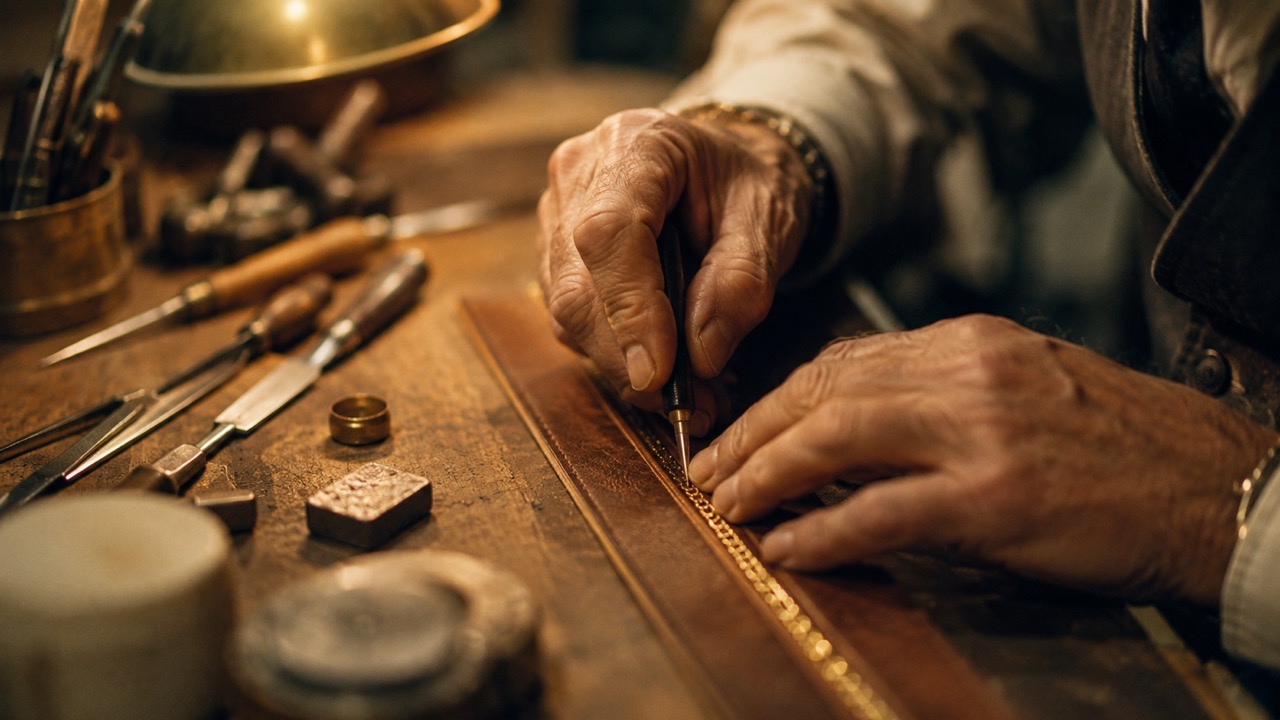
The contemporary silversmiths who maintain this tradition work in workshops that have changed remarkably little in their essential equipment and methods. The tools are hand-forged. The silver is drawn into wire by hand. The soldering is done with a mouth-blown torch whose flame the silversmith directs with the precision of a surgeon. A filigree pendant or a pair of earrings produced in this way carries within it not merely decorative beauty but the physical evidence of a making process that connects the contemporary craftsperson to the Lusignan workshops of the thirteenth century.
Basket Weaving and Pottery: The Earth Traditions
The less celebrated but equally significant craft traditions of rural Cyprus — the basket weaving of the Paphos district, where the native cane is harvested from the river banks and woven into forms that have served agricultural and domestic purposes for millennia; the pottery of Kornos and Phini, where the red clay of the Troodos foothills is shaped on kick-wheels and fired in wood-burning kilns — represent a relationship with local materials that industrial production has made rare but has not yet made extinct. The potters of Kornos produce a terracotta that is, to the practised hand, unmistakable: a particular weight, a particular colour that owes its warmth to the iron content of the local clay, a particular resonance when tapped that distinguishes it from pottery made elsewhere.
The Guardians
The artisans who maintain these traditions are, in many cases, the last generation to have learned them directly from predecessors who practised them as a living economic activity rather than a cultural preservation exercise. This gives their work a particular urgency and a particular authenticity: they are not re-enactors but continuators, and the knowledge they hold — of materials, of techniques, of the small adjustments and improvisations that distinguish the masterful from the merely competent — cannot be fully captured in documentation or instruction. To visit their workshops, to watch the lace take shape on the frame or the silver wire curl under the flame, is to witness not a performance but a practice: a daily engagement with material and tradition that is, in its quiet way, among the most moving cultural experiences the Mediterranean has to offer.