
Bulgaria has spent decades in the peripheral vision of European travel — acknowledged, perhaps, for its ski resorts or its Black Sea package holidays, but rarely considered as a destination for the culturally serious traveller. This is changing, quietly and decisively. Beneath the radar of the guidebook mainstream, Bulgaria offers a concentration of ancient history, living tradition, and emerging creative energy that rivals countries ten times more visited. Those who arrive now, before the inevitable acceleration of discovery, will find themselves in possession of something increasingly rare: a European country that has not yet been curated for outside consumption.
The Thracian Underground
Bulgaria’s Thracian heritage constitutes one of Europe’s great archaeological narratives, yet it remains astonishingly underpublicised. The Kazanlak Tomb — a fourth-century BCE burial chamber whose frescoes depict a funerary feast with a tenderness and sophistication that challenge received hierarchies of ancient art — is merely the most famous of dozens of Thracian sites scattered across the Valley of the Roses. The Sveshtari Tomb’s caryatids, the gold treasures of Panagyurishte and Rogozen, the ritual complexes at Perperikon and Starosel: collectively, they reveal a civilisation of extraordinary refinement that flourished contemporaneously with classical Greece, traded with it, and developed an aesthetic language entirely its own.
The Rose Valley and Its Alchemy
Between the Balkan range and the Sredna Gora mountains, the Valley of the Roses has produced Rosa damascena — and its precious attar — since Ottoman times. The harvest comes in a three-week window each May, when the flowers must be picked before dawn, their oil content highest in the cool hours. It takes approximately three thousand kilograms of petals to produce one kilogram of rose oil, making Bulgarian attar one of the most labour-intensive luxury materials on earth. The distilleries around Kazanlak and Karlovo operate with a combination of industrial precision and artisanal care that recalls Grasse at its most serious. The Rose Festival, held annually in early June, is spectacle — but the real fascination lies in the distilleries themselves, where copper alembics transform floral abundance into concentrated essence.
Plovdiv: Layered City
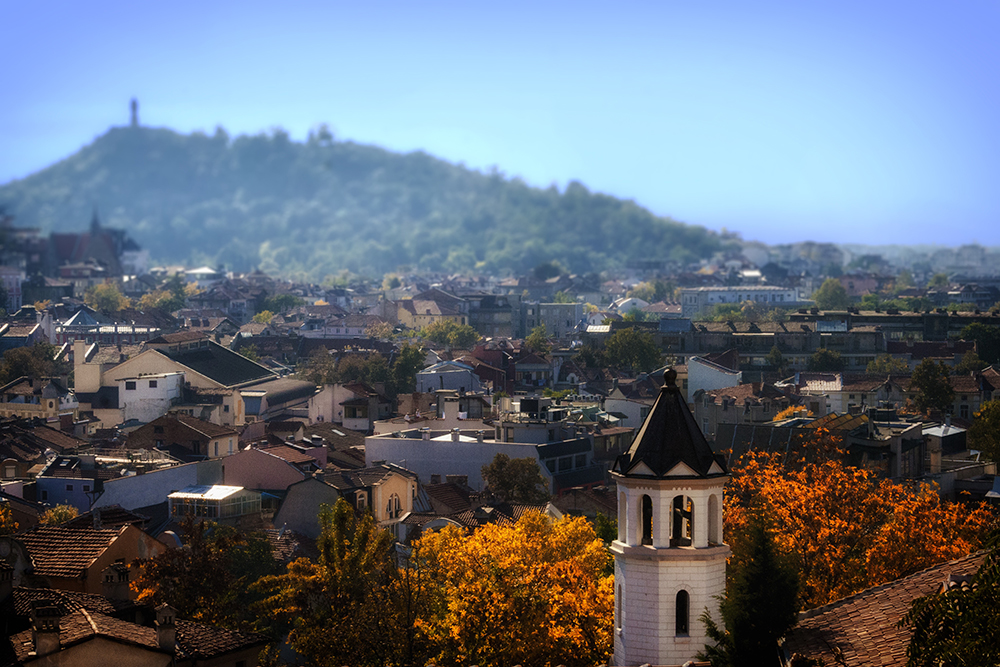
Plovdiv claims, with justification, to be Europe’s oldest continuously inhabited city — its layers visible in a single glance from Nebet Tepe, where Thracian walls support Roman columns beneath Ottoman fountains and nineteenth-century Revival houses painted in the exuberant Baroque style of the Bulgarian National Revival. The Roman amphitheatre, seating seven thousand, was rediscovered in the 1970s during construction work and now hosts summer performances whose audiences sit where second-century spectators once watched gladiatorial combat. The old town’s cobbled streets wind between merchant houses whose curved wooden façades and frescoed interiors represent a domestic architecture of remarkable confidence and beauty. But Plovdiv’s present is as compelling as its past: its 2019 European Capital of Culture designation catalysed an arts infrastructure — the Kapana creative district, the SARIEV Contemporary gallery, the One Dance Week festival — that has persisted and matured well beyond the ceremonial year.
The Black Sea, Before
Bulgaria’s Black Sea coast divides into the developed south — Sunny Beach and its concrete legacies — and the wilder reaches of the north and the far south near the Turkish border. At Sinemorets, the Veleka River meets the sea through a forested gorge of startling beauty. Sozopol, founded as the Greek colony Apollonia in the seventh century BCE, retains its timber-and-stone old town on a peninsula that might be a quieter Dubrovnik, its fish restaurants unpretentious, its evening promenade entirely local. Kamen Bryag, on the northern coast, offers cliff-edge solitude and access to Yailata — a cave settlement turned archaeological park where human occupation spans five millennia. The Black Sea here is not the Mediterranean; its character is darker, more reticent, its beauty earned rather than offered.
The Wine Renaissance
The Thracian Lowlands — the broad plain south of the Balkans where the climate approaches Mediterranean warmth — have produced wine since antiquity. But Bulgaria’s contemporary wine revolution dates to the post-2000 emergence of boutique estates: Bessa Valley (a collaboration with Comte Stephan von Neipperg of Canon-la-Gaffelière), Midalidare, Rossidi, Castra Rubra. Indigenous varieties — Mavrud, Rubin, Melnik — produce wines of genuine character, their tannin structures and aromatic profiles unlike anything from more established regions. The infrastructure remains charmingly undeveloped: tastings conducted in converted farmhouses, winemakers personally pouring, the vineyards backed by the Rhodope Mountains’ blue silhouette. The entire experience is unmarred by the commercial machinery that attends wine tourism in Tuscany or Bordeaux — here, one still encounters the winemaker’s dog underfoot and the winemaker’s grandmother offering homemade banitsa between pours.
Bulgaria’s moment is arriving with the unhurried inevitability of a country that has waited two millennia to be properly seen. Those who go now — with curiosity, without preconception — will discover not a rough diamond awaiting polish but a fully formed culture whose pleasures have simply been, until now, a well-kept secret between the Balkans and the sea.