
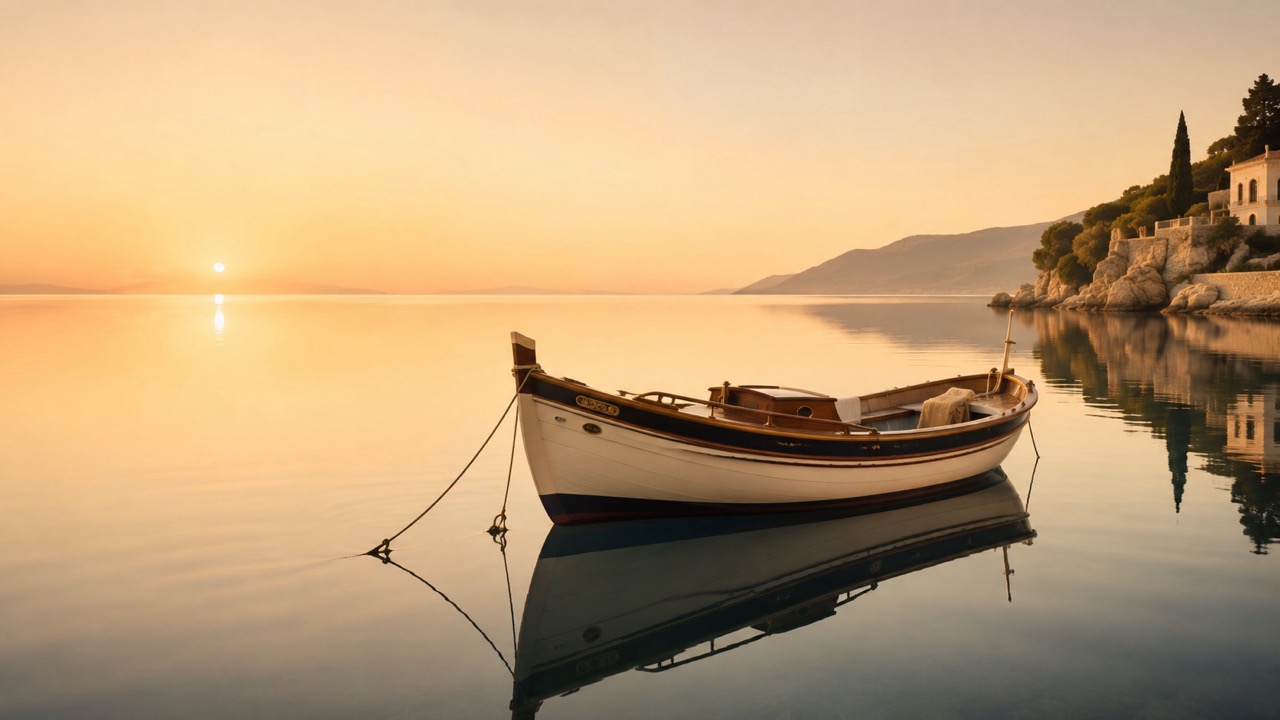
Summer, at its finest, is not merely a season — it is a philosophy. The elongated days carry within them a particular quality of time that the other months cannot offer: an expansiveness, a willingness to linger, a permission to be fully present in beauty rather than merely passing through it. And if the philosophy of summer is best expressed anywhere, it is in the act of travel — considered, unhurried, curated with the same care one might bring to selecting a wine or assembling a wardrobe.
Puglia, Italy: The Slow South
The heel of Italy’s boot offers a summer experience of ravishing authenticity. Puglia — with its bone-white trulli houses, its groves of ancient olive trees whose twisted silver trunks have been standing since before the Norman conquest, its long Adriatic beaches backed by fragrant macchia — moves at a pace that feels curative. The masserie, the great farmhouse estates that have been converted into some of Italy’s most magnificent retreats, provide a base from which to explore the baroque extravagance of Lecce, the whitewashed labyrinth of Ostuni, and the extraordinary coastline of the Salento peninsula. The local cuisine — orecchiette with cime di rapa, burrata so fresh it trembles, fava bean puree with bitter greens — is among the most honest and nourishing in all of Mediterranean gastronomy.
The Azores, Portugal: Volcanic Solitude
For those who require their summer to contain genuine wildness — drama on a geological scale — the Azores archipelago in the mid-Atlantic delivers without compromise. São Miguel, the largest island, is a study in elemental beauty: volcanic calderas filled with impossibly green lakes, thermal hot springs rising from cliffsides above the sea, pastures of such vivid emerald intensity that they seem digitally enhanced. This is summer without artifice, without crowds, without the performative quality of the Mediterranean’s more celebrated destinations. Those who find their way here tend to return annually, with the quiet devotion of people who have discovered something they have no interest in sharing too widely.
Montenegro’s Bay of Kotor: Adriatic Grandeur
Europe’s southernmost fjord — for so the Bay of Kotor is sometimes described, though technically a submerged river canyon — frames one of the continent’s most dramatically beautiful seascapes. The medieval walled city of Kotor, a UNESCO World Heritage Site, sits where the mountains meet the water with operatic effect. The surrounding Boka Bay offers a summer of sea-swimming in pellucid water, of exploring Venetian-era coastal villages by boat, of ascending the fortress walls above the city at dusk to watch the light die on limestone that has been quarried and shaped and inhabited for two thousand years. Montenegro remains, by the standards of the Adriatic, genuinely undiscovered.
The Scottish Highlands: Sublime Remoteness
Summer in the Scottish Highlands is a proposition of a different order entirely — one for those whose idea of luxury includes the total absence of other people against a backdrop of scenery that rearranges one’s sense of scale. The long northern evenings, when the sky remains luminous until ten o’clock and beyond, lend the landscape a quality of almost hallucinatory beauty. The Assynt peninsula, the Torridon mountains, the beaches of the Outer Hebrides — white sand, turquoise water, a north wind that carries salt and solitude in equal measure — constitute a summer destination of profound and demanding magnificence.
Kyoto, Japan: The Cultivated Garden
Japan’s ancient imperial capital reaches its most refined state in late summer and early autumn, when the heat breaks and the maples begin their slow conversation with colour. Kyoto’s summer — humid, intensely fragrant, punctuated by the extraordinary spectacle of Obon festival fires lit on the surrounding hills — is a deeply cultural experience: the tea ceremony, the kaiseki dinner performed with almost liturgical precision, the early morning light in Arashiyama’s bamboo forest when no one else is present. To stay in a ryokan of the traditional sort, sleeping on tatami, bathing in a hinoki-wood tub, eating a breakfast of grilled salmon and pickled plum in a garden that has been maintained with daily devotion for three centuries, is to understand that luxury, at its most essential, is the product of sustained human attention.
Namaqualand, South Africa: The Flowering Desert
In the southern hemisphere’s summer, South Africa’s Namaqualand undergoes a transformation of surpassing beauty: one of the world’s most arid landscapes erupts in an ocean of wildflowers — Namaqualand daisies, gazanias, pelargoniums — that stretches to every horizon and attracts a migration of pilgrims who have seen photographs and cannot quite believe them. The reality exceeds the photographs. This is summer as spectacle on a natural scale no human arrangement can rival.
Rajasthan, India: Pink Cities and Palace Summers
Jaipur, Jodhpur, Udaipur — the great pink and blue and white cities of Rajasthan, shimmering in a heat that turns the air to hammered gold. To occupy a palace hotel in this landscape in summer is to inhabit a world of extraordinary visual richness: the turbans, the mirrored interiors, the lake views at sunset, the scent of jasmine garlands and incense and the precise perfume that seems to belong to Rajasthan alone. The crowds that descend during the cooler months are absent; what remains is the architecture, the culture, and the particular intensity that heat imparts to all sensory experience.
The season, in the end, rewards those who choose with intention rather than instinct — who select their summer not merely for the pleasures it provides but for the understanding it deepens. The world’s most extraordinary places give their finest secrets only to those willing to arrive prepared to receive them.