
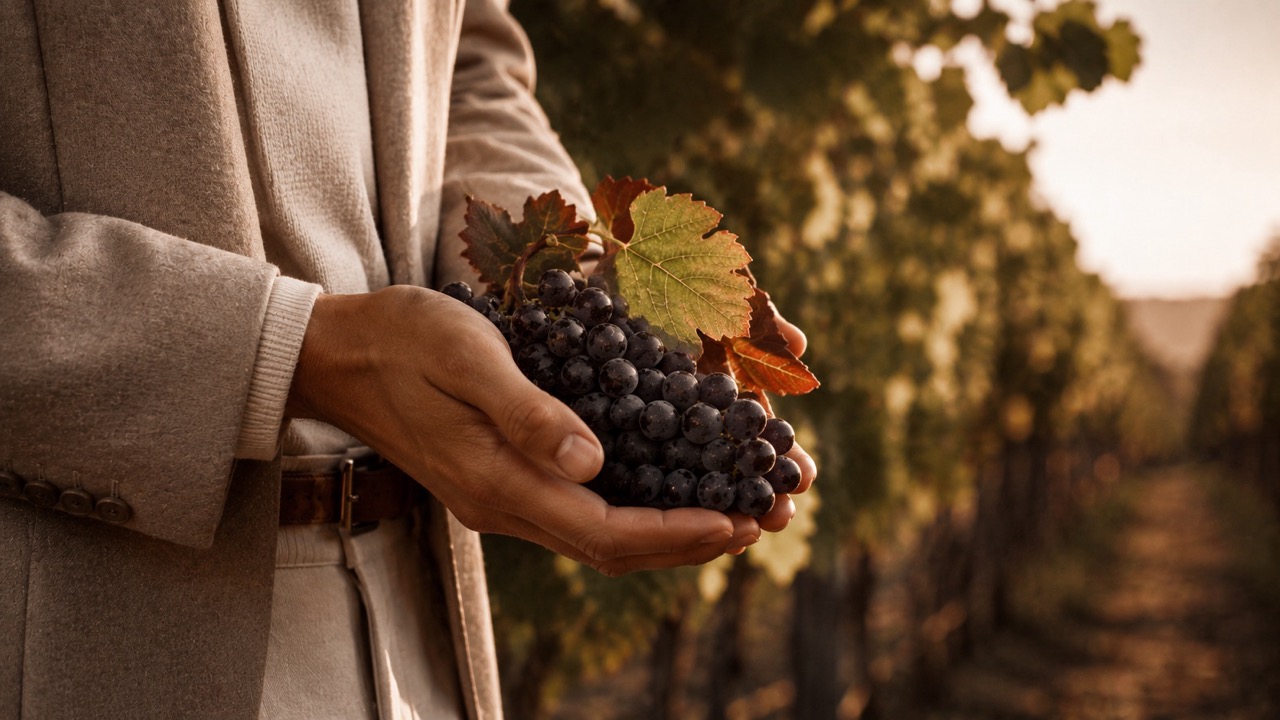
There is a moment in the wine year — it arrives in September in the northern hemisphere, in March in the southern — when the vineyard ceases to be a landscape and becomes a workplace. The nets go up. The picking teams assemble. The winery, dormant since the previous vintage was racked into barrel, comes alive with the hum of crushers, the scent of fermenting juice, and the particular quality of controlled urgency that attaches to work whose timing is determined not by a schedule but by a berry’s sugar level. Harvest — vendange in French, vendemmia in Italian, vendimia in Spanish — is the axis around which the wine year turns, and for the visitor who arranges to be present, it offers an understanding of wine that no amount of tasting, reading, or cellar-visiting can replicate.
Burgundy: The Discipline of Precision
In Burgundy, where the unit of quality is the individual vineyard and where the difference between a village wine and a grand cru can be a matter of metres, harvest is an exercise in precision that borders on the obsessive. The picking date for each parcel is determined separately, based on daily sugar and acid measurements that the vigneron records with the attentiveness of a medical chart. The grapes are picked by hand — machine harvesting is prohibited for most appellations — and sorted on tables in the winery with a rigour that eliminates every underripe, overripe, or damaged berry before it reaches the crusher. To stand in a Burgundian sorting room during harvest — watching the hands of the trieuses moving through the grapes with a speed and a discrimination that would impress a diamond sorter — is to understand why great Burgundy costs what it does and why it tastes as it does: it is the product of an attention to detail that begins in the vine and does not relent until the wine is in the bottle.
Tuscany: Harvest as Festival
The Tuscan vendemmia carries a social dimension that the more austere Burgundian harvest does not attempt. The picking, in many estates, is still a communal activity — families, neighbours, seasonal workers gathering in the vineyard in the early morning, the day punctuated by meals served at long tables beneath the olive trees, the evenings concluding with the kind of spontaneous conviviality that Tuscans consider not a luxury but a necessity. The estates that welcome visitors during harvest — Antinori, Frescobaldi, Castello di Ama, and a growing number of smaller producers — offer an immersion in this culture that transforms the relationship between the wine drinker and the wine: the bottle opened at a dinner six months later carries within it the memory of the morning spent picking the grapes from which it was made.
The Douro Valley: Harvest in Extremis
Harvest in the Douro is an athletic event. The terraced vineyards, too steep for machinery, are picked by hand under a September sun that routinely pushes temperatures above forty degrees Celsius. The grapes are carried from the vineyard in baskets on the pickers’ backs — a practice that has not changed in centuries — and the traditional method of crushing, by foot in stone lagares, survives at the estates committed to the highest quality of Port production. Quinta do Noval, Quinta do Vesúvio, and Taylor’s Quinta de Vargellas maintain the lagar tradition not from nostalgia but from conviction: the human foot, they argue, extracts colour and tannin from the grape skin with a gentleness that no mechanical crusher can match. To participate in a lagar treading — feet purple to the ankle, the rhythm set by an accordion, the must rising slowly through the mass of skins — is an experience of such visceral engagement with winemaking that it recalibrates the act of drinking.
What Harvest Teaches
The lesson of harvest is patience. The vine takes a year to produce its fruit. The winemaker waits — through frost risk, through flowering, through véraison, through the anxious final weeks when a single hailstorm can destroy what twelve months of work have created — for the moment when the grape is ready. Not early, because the flavour will be thin. Not late, because the acidity will have fallen and the alcohol will be too high. Precisely ready, at a moment that can be measured but not predicted, and that arrives when it arrives regardless of the winemaker’s calendar. This patience — agricultural, unglamorous, non-negotiable — is the quality that separates great wine from merely good wine, and the visitor who witnesses it firsthand understands something about the contents of the glass that the most eloquent tasting note cannot convey.