
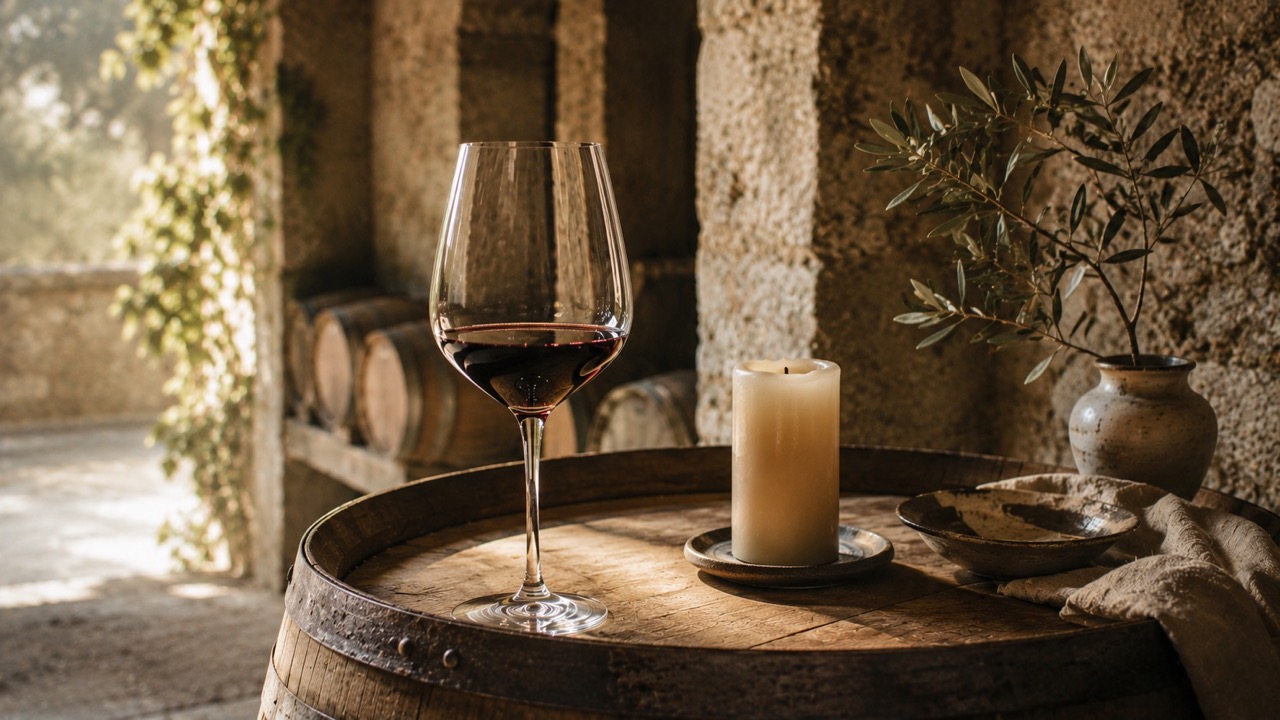
The word itself is a fortress. Five syllables that contain within them a specific geography, a particular geology, a climate unlike any other, and a legal apparatus so formidable that merely uttering the word on a label without authorisation constitutes an act of war. Champagne is not merely a wine. It is a proposition about the relationship between place and product — and the lengths to which a community will go to defend that proposition across centuries.
The Legal Ramparts
The Comité Interprofessionnel du Vin de Champagne maintains what is arguably the most aggressive geographical-indication enforcement operation in the world. Their lawyers pursue infringement in every jurisdiction, against every category of product — not merely sparkling wines from other regions but perfumes, biscuits, nail polishes, and cocktail bars that dare invoke the name. This is not pettiness. It is existential defence. The CIVC understands that a geographical indication diluted is a geographical indication destroyed, and that the erosion happens gradually, imperceptibly, one casual usage at a time.
The legal architecture is built upon centuries of precedent and the particular French understanding that terroir is not a marketing concept but a material reality. The chalk soils of the Côte des Blancs, the clay and limestone of the Montagne de Reims, the specific interplay of latitude, altitude, and Atlantic influence — these produce a base wine of such distinctive acidity and mineral character that no other region can replicate it. The law merely codifies what the land already asserts.
The Family Burden
Behind the legal machinery stand the families. Bollinger, still family-controlled after nearly two centuries, where Lily Bollinger’s famous declaration — that she drinks champagne when she is happy and when she is sad — has become not merely a quotation but a brand philosophy. Pol Roger, whose relationship with Churchill produced a cuvée that must, generation after generation, live up to the memory of its namesake’s palate. Krug, where the concept of multi-vintage blending has been elevated to an art form so complex that each bottle contains wines from more than ten harvests, assembled in the mind of a single individual.
To inherit such a house is to inherit not freedom but obligation. The chef de cave — the cellar master — of a great champagne house does not create; they perpetuate. Their task is not expression but consistency: to produce, year after year, regardless of what the weather delivers, a wine that tastes unmistakably of itself. The house style must persist across decades, through warm vintages and cold ones, abundant harvests and meagre ones. The consumer who opens a bottle must find the same essential character they found ten years ago, twenty years ago, a generation ago.
The Cellar Master’s Impossible Art
Consider the complexity of this task. Each harvest delivers different raw material — different sugar levels, different acidities, different aromatic profiles. The chef de cave must blend across grape varieties (Pinot Noir, Chardonnay, Meunier), across villages (each with its own classification, its own terroir signature), and across years (using reserve wines held back from previous vintages specifically for this purpose). The number of possible combinations is effectively infinite. From this infinity, the cellar master must select the single blend that maintains continuity with everything that has come before.
This is memory made liquid. The chef de cave must hold in their sensory memory the precise character of their house’s wine — not as a flavour note or a technical specification but as an identity. They must taste a young, still, acidic base wine and project forward three years, five years, ten years, imagining what it will become after secondary fermentation, after ageing on lees, after disgorgement. They must taste the future in the present and ensure that future remains faithful to the past.
Heritage as Architecture
The great champagne houses are built, quite literally, upon their history. The chalk cellars beneath Reims and Épernay — some carved by Romans, all expanded over centuries — hold millions of bottles in various stages of maturation. These cellars are not merely storage; they are instruments. Their constant temperature, their humidity, their particular atmosphere of chalk dust and yeast create conditions that cannot be replicated above ground. The wine ages here not because it is convenient but because the cellars themselves contribute to its character.
Walking these galleries — kilometres of them, bottle-lined and cathedral-silent — one understands that heritage in Champagne is not an abstraction. It is a physical reality: millions of bottles waiting, improving, becoming themselves across years of patience. Each bottle represents a decision made by a cellar master who may no longer be living, a bet placed on time that only time can redeem.
This is both the burden and the treasure of a great name in Champagne: the knowledge that every decision you make today will be judged by palates not yet formed, in a future you will not see, against standards established by predecessors whose genius you must match but can never surpass. The weight of a name, carried forward one vintage at a time, through centuries that show no sign of ending.