
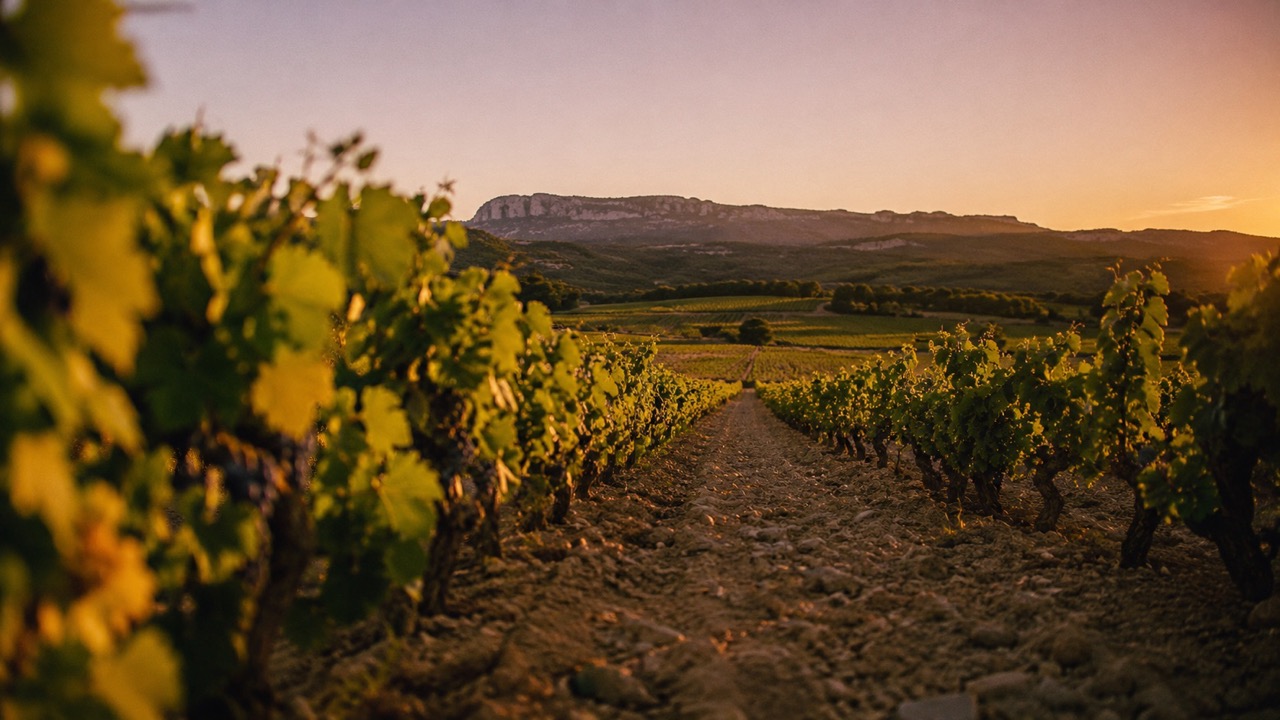
Albiera Antinori walks through the Tignanello vineyard in the Chianti Classico hills and touches a Sangiovese vine with the casual intimacy of someone greeting a relative. Her family has been making wine in Tuscany for twenty-six generations — since 1385, when Giovanni di Piero Antinori was admitted to the Arte dei Vinattieri, the Florentine winemakers’ guild. The vine beneath her hand may be thirty years old; the knowledge guiding its cultivation is six centuries deep. “We do not own these vines,” she says, with the quiet certainty of someone who has considered the matter thoroughly. “We are their custodians. They were here before us. If we do our work properly, they will be here after.”
The Weight of Inheritance
To inherit a vineyard is to inherit a conversation already centuries in progress. The vine carries in its root system a record of every season it has survived — the drought of 2003, the frost of 1956, the phylloxera crisis that rewrote European viticulture in the nineteenth century. The soil carries deeper memories still: the limestone deposited by ancient seas, the clay shaped by glacial retreat, the particular microbial communities that exist in this plot and nowhere else on earth. A winemaker who inherits such a vineyard inherits not merely land but a living archive — a repository of accumulated biological intelligence that no amount of money or technology can recreate from scratch.
The Hugel family in Riquewihr, Alsace, has been making wine since 1639. Their Grand Cru Schoenenbourg vineyard, planted on the marled slopes above the village, produces Rieslings of such mineral precision that blind tasters routinely identify them not merely as Alsatian but as Hugel — the family’s style, developed over nearly four centuries, is that distinctive. Étienne Hugel, thirteenth generation, describes the family’s role in terms more philosophical than commercial: “Each generation must leave the vineyard in better condition than they found it. That is the only obligation. Everything else — the wine, the reputation, the business — follows from that.”
Torres: Five Generations of Reinvention
If the Hugels represent continuity, the Torres family of Penedès embodies the productive tension between tradition and reinvention that defines the greatest wine dynasties. Miguel Torres Sr., returning from studying oenology in Dijon in the 1960s, introduced temperature-controlled fermentation to Spain — a revolution that his traditionalist father regarded with deep suspicion. His son, Miguel Torres Macia, has committed the family to carbon neutrality and the recovery of pre-phylloxera indigenous grape varieties, some rescued from single surviving vines found in abandoned mountain plots.
This pattern — each generation honouring the inheritance while challenging its assumptions — is what distinguishes a living tradition from a museum. The Torres wines of today bear almost no resemblance to those of the 1950s, yet they remain unmistakably Torres: ambitious, regionally rooted, technologically curious, driven by a sense of responsibility to place. Five generations have argued, experimented, failed, and succeeded within the framework of a shared commitment to Catalan viticulture. The vineyard absorbs all of this — the arguments and the innovations alike — into its continuing story.
The Vine as Living Memory
Old vines — those that have survived fifty, eighty, a hundred years — possess qualities that young vines cannot replicate. Their root systems, having penetrated deep into subsoil over decades, access mineral nutrients and water reserves unavailable to younger plants. Their yields decline naturally with age, concentrating flavour in fewer, smaller berries. Their wood carries microbial populations developed over a lifetime of interaction with the specific soils and climate of their site. A wine made from such vines is not merely a beverage; it is a distillation of lived time, a liquid expression of decades of growth in one unrepeatable place.
In Barossa, Australia, the Henschke family tends Shiraz vines planted in the 1860s — pre-phylloxera material on its own roots, surviving because Australia’s sandy soils and isolation spared it from the louse that devastated Europe. The Hill of Grace vineyard, from which Henschke produces one of the southern hemisphere’s most celebrated wines, is a living reliquary — vines that have been continuously cultivated for over a century and a half, tended now by the sixth generation of the same family. The wine is expensive, yes. But its price reflects not luxury in the conventional sense but rarity in the deepest sense — the irreproducibility of time itself.
The Tension That Makes Great Wine
Every multi-generational wine family lives within a creative tension that lesser enterprises never face. The weight of history demands respect; the demands of the present require adaptation. Climate change is redrawing the viticultural map. Consumer tastes evolve. Markets shift. A family that merely repeats what previous generations did will produce increasingly irrelevant wine; a family that abandons its inheritance in pursuit of fashion will lose the very thing that distinguishes it. The great dynasties navigate this tension with grace — honouring the past by refusing to be imprisoned by it, innovating always in service of the vineyard’s long-term health rather than short-term profit.
This is what the vineyard teaches, to those patient enough to listen across generations: that legacy is not a fixed inheritance but a living negotiation between what was, what is, and what must be. The families who have tended the same vines for centuries understand something that the modern world, with its quarterly reporting and annual vintages, often forgets — that the truly valuable things in life are those measured not in years but in lifetimes, and that the most profound act of creation is not making something new but sustaining something ancient into an uncertain future.