
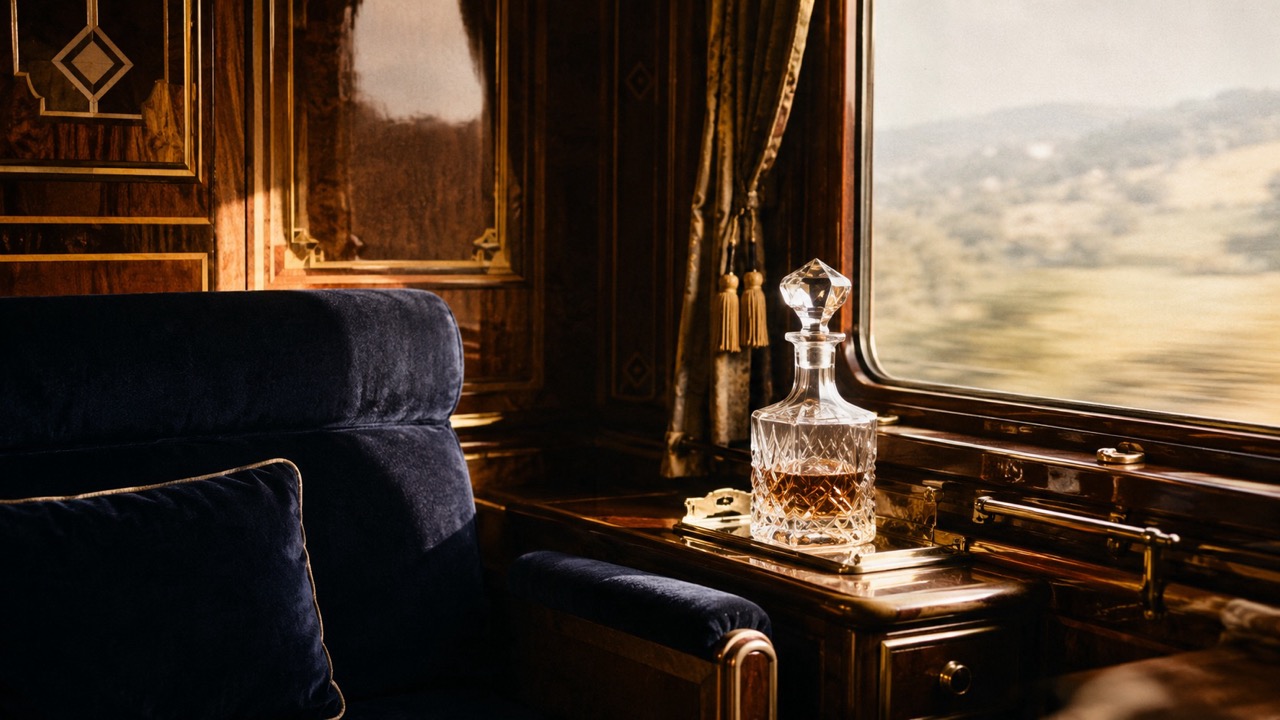
The great European train journeys are well known — too well known. The Orient Express has been aestheticised into a luxury brand. The Glacier Express sells its panoramic windows at panoramic prices. The high-speed networks serve business travellers who want to arrive rather than travel. But Europe’s railways hold secrets that no guidebook prominently features — routes of staggering beauty running on ordinary timetables, at ordinary fares, through landscapes that seem designed to reward precisely the kind of traveller who prefers not to be marketed to.
Belgrade to Bar: The Impossible Railway
The railway from Belgrade to the Montenegrin coast should not exist. It crosses the Dinaric Alps through terrain so hostile that its construction — completed in 1976 after decades of engineering struggle — required 254 tunnels and 435 bridges. The Mala Rijeka viaduct, at 198 metres above the riverbed, was the highest railway bridge in the world at its completion. The train climbs from the Danube plain to over a thousand metres, threads through canyons that have no road access, and descends to the Adriatic through a landscape of such dramatic violence that passengers routinely fall silent.
The service runs once daily. The rolling stock is elderly. The journey takes approximately eleven hours. None of these facts diminishes the experience — they constitute it. This is railway travel as it existed before speed became the sole metric of value: slow, unreliable, magnificent. The traveller arrives in Bar not merely transported but transformed — having witnessed, from the intimate proximity that only a railway provides, some of the most savage and beautiful terrain in Europe.
The Douro Line: Portugal’s Wine Country
The railway along the Douro River from Porto to Pocinho traces one of Europe’s most spectacular river valleys — the same valley whose terraced hillsides produce port wine and whose microclimate, trapped between granite walls, creates conditions of almost Mediterranean warmth in northern Portugal. The train runs at river level, so close to the water that reflections of the terraces shimmer in the carriage windows. Every bend reveals a new quinta, a new perspective on the extraordinary human engineering that has shaped these slopes for centuries.
The line beyond Régua — into the Superior Douro, where the valley narrows and the terraces steepen — is among the most beautiful railway journeys in southern Europe. It operates with regional trains at regional prices, carrying local passengers between towns whose names read like a port-wine education: Pinhão, Tua, Ferradosa. No supplements. No reservations required. No one will photograph you boarding.
The Bernina Alternative
The Bernina Express is a tourist product — a panoramic train with tilted windows and a supplement that doubles the fare. The Bernina railway, however, is a railway — a standard-gauge regional line operated by the Rhaetian Railway that happens to cross the Alps between Chur and Tirano via the highest railway crossing in the Alps without a tunnel. The same route. The same extraordinary spiral viaducts, frozen lakes, and glacier views. But on ordinary trains, at ordinary fares, among ordinary passengers going about ordinary business.
The regional service stops at every station — which means the traveller can break the journey at Alp Grüm, at Ospizio Bernina, at any of the halts perched impossibly above the Poschiavo Valley. A journey that the tourist train offers as a continuous spectacle, the regional service offers as an explorable landscape. One passes through. The other invites you to stop, to walk, to return on the next train an hour later. The difference is the difference between viewing and inhabiting.
Sweden’s Arctic Railway to Narvik
The Malmbanan — the Iron Ore Line — runs from Luleå on the Gulf of Bothnia through Swedish Lapland, across the Norwegian border, and down to the ice-free port of Narvik. It was built to carry iron ore from the mines of Kiruna and Gällivare. It also carries, on overnight trains that few foreign travellers know about, passengers through one of Europe’s last genuinely wild landscapes: boreal forests giving way to tundra, frozen lakes stretching to horizons unmarked by any human structure, the northern lights in winter burning above a landscape of absolute silence.
North of the Arctic Circle, the railway enters a different world — one where darkness lasts twenty hours in December and light lasts twenty hours in June. The descent to Narvik, through the Ofoten mountains, is among the most dramatic railway approaches to any coast in Europe: the train drops from the high plateau through a series of tunnels and bridges, the Ofotfjord appearing suddenly below, the Arctic Ocean stretching north into infinity.
The Civilised Secret
What connects these journeys is not obscurity — they can all be found in any railway timetable — but a particular quality of experience that resists commercialisation. They are too slow for the efficiency-minded, too unglamorous for the luxury market, too demanding for the casual tourist. They reward precisely the traveller who values the journey over the arrival, the landscape over the amenity, the authentic rhythm of a working railway over the curated performance of a tourist product.
These are Europe’s secret journeys — hidden in plain sight on public timetables, available to anyone with the patience to find them and the wisdom to prefer them. They require nothing but a ticket, a window seat, and the civilised understanding that the finest way to see a continent is slowly, at track level, with no one trying to sell you the view.