
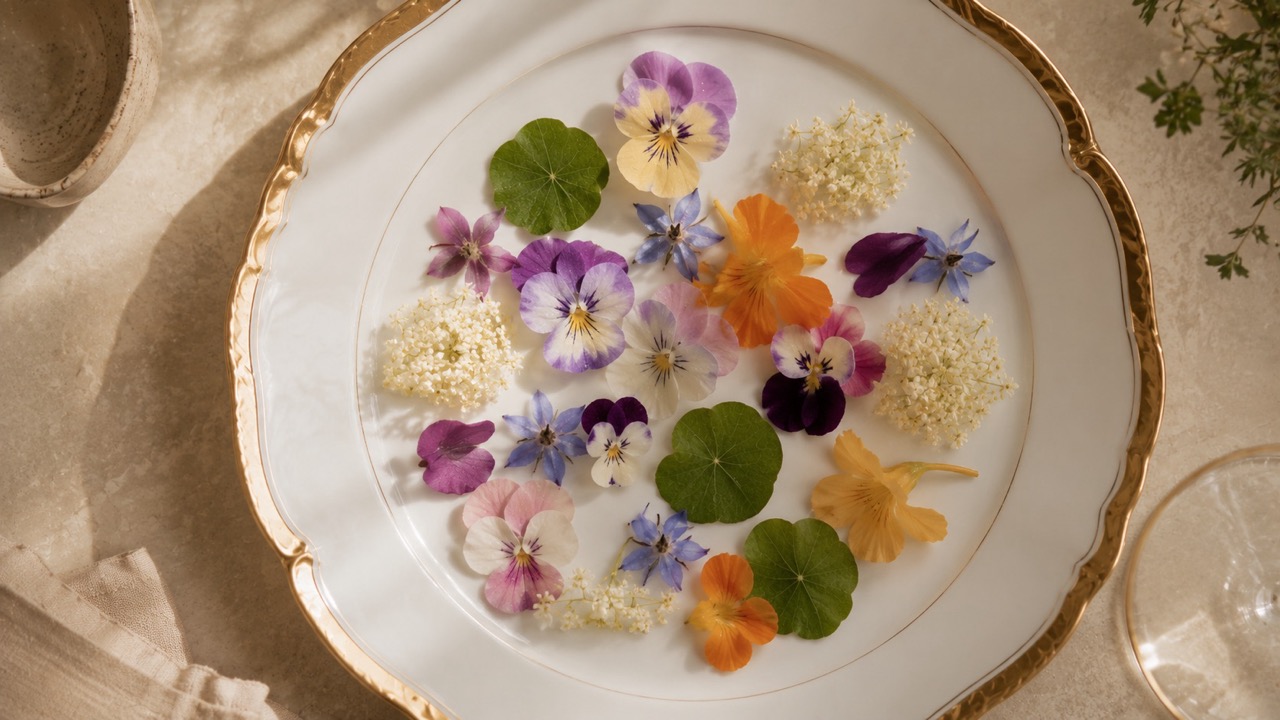
The table, fully set, is a composition — as deliberate in its arrangement of colour, texture, proportion, and material as any painting hung on the wall behind it. The greatest hosts have always understood this: that the table set before the guests arrive is the first course, consumed by the eye, and that its message — of care, of taste, of the kind of attention that transforms a meal into an event — is communicated in the seconds before anyone speaks, pours, or lifts a fork. The contemporary renaissance of tablescaping is not a social media phenomenon, though social media has amplified it. It is a return to a tradition of domestic artistry that previous centuries practised as a matter of course and that our own has only recently begun to recover.
The Table as Theatre: Lessons from the Grand Siècle
Louis XIV understood the table as an instrument of statecraft. The state dinners at Versailles, orchestrated by the Maître d’Hôtel with the precision of military campaigns, were exercises in persuasion: the silver-gilt nef (a ship-shaped centrepiece that held the king’s napkin), the crystal goblets from Saint-Louis, the Sèvres porcelain that appeared at each place setting as evidence of French manufacturing supremacy. The message was clear: a nation capable of producing objects of this beauty was a nation to be reckoned with. The contemporary host, operating at a domestic rather than diplomatic scale, inherits this tradition in miniature: every table setting is, in its quiet way, an argument about values — about what the host considers beautiful, important, and worth sharing.
Material Choices: The Vocabulary of the Table
The cultivated table draws from a vocabulary of materials whose combinations produce effects as varied and as specific as musical chords. Linen — heavy, creased, in the off-white that the French call écru and the Italians call greggio — establishes a foundation of natural warmth that starched cotton, for all its crispness, cannot match. Porcelain provides the formal register; stoneware, with its earthier weight and matte surface, provides the informal. Crystal refracts and sparkles; hand-blown glass, with its slight imperfections and its softer refractive quality, creates an atmosphere of artisanal ease. Sterling silver gleams with authority; matte-finished cutlery in brushed stainless steel reads as contemporary and understated. The host who understands these materials — and, more importantly, understands how to combine them — possesses the fundamental skill of tablescaping.
The Art of the Centrepiece
The centrepiece has evolved from the architectural follies and sugar sculptures of the eighteenth-century banquet into something simultaneously simpler and more demanding: a floral composition, an arrangement of objects, or a combination of both that establishes the table’s aesthetic centre without impeding conversation across it. The cardinal rule — nothing above eye level, nothing that blocks the sightline between seated guests — is ancient wisdom that contemporary tablescaping frequently violates. The best centrepieces are low, dense, and generous: a brass trough overflowing with garden roses and trailing ivy, a collection of pillar candles of varying heights on a mirrored tray, a line of small ceramic vases each holding a single stem. The principle is abundance without obstruction: the table should feel full but not crowded, rich but not cluttered.
Colour Theory at the Table
The chromatic choices of the table setting establish mood before a word is spoken. Warm metallics — gold, brass, copper — create an atmosphere of celebratory richness that works best by candlelight. Cool palettes — white porcelain, clear crystal, silver, grey linen — project a Scandinavian calm that suits the summer lunch. Jewel tones — deep burgundy napkins, emerald glassware, cobalt-rimmed plates — create an intensity that demands food of comparable ambition. The monochromatic table — all white, all cream, all natural — provides the most flexible canvas, allowing the food itself to supply the colour.
The Personal Table
The most memorable tables are, finally, personal — assembled not from a catalogue or a magazine spread but from the host’s own collection, accumulations, and discoveries. The plates found at a market in Provence, each slightly different. The linen inherited from a grandmother and bearing the monogram of a previous generation. The candlesticks bought on a trip to Morocco. The hand-blown glasses from a studio in Murano. These objects carry stories, and stories at the table are the point: they give the guests something to ask about, something to hold, something that connects the meal to the larger life of the host. The table set entirely from a single retailer, however elegant, lacks this quality. The table set from a life lived attentively has it in abundance.