
There are cities that exist twice — once in geography and once in literature — and the visitor who arrives having read the right book encounters not a single destination but a palimpsest: the real city and the imagined one overlaid, each enriching the other in ways that neither, experienced alone, could achieve. The literary journey — the trip undertaken in conscious dialogue with a novel, a poem, a memoir that has shaped the world’s understanding of a place — is among the most rewarding forms of cultural travel, and the cities that have been most thoroughly written about are, not coincidentally, the cities most worth visiting.
Lisbon Through Pessoa and Saramago
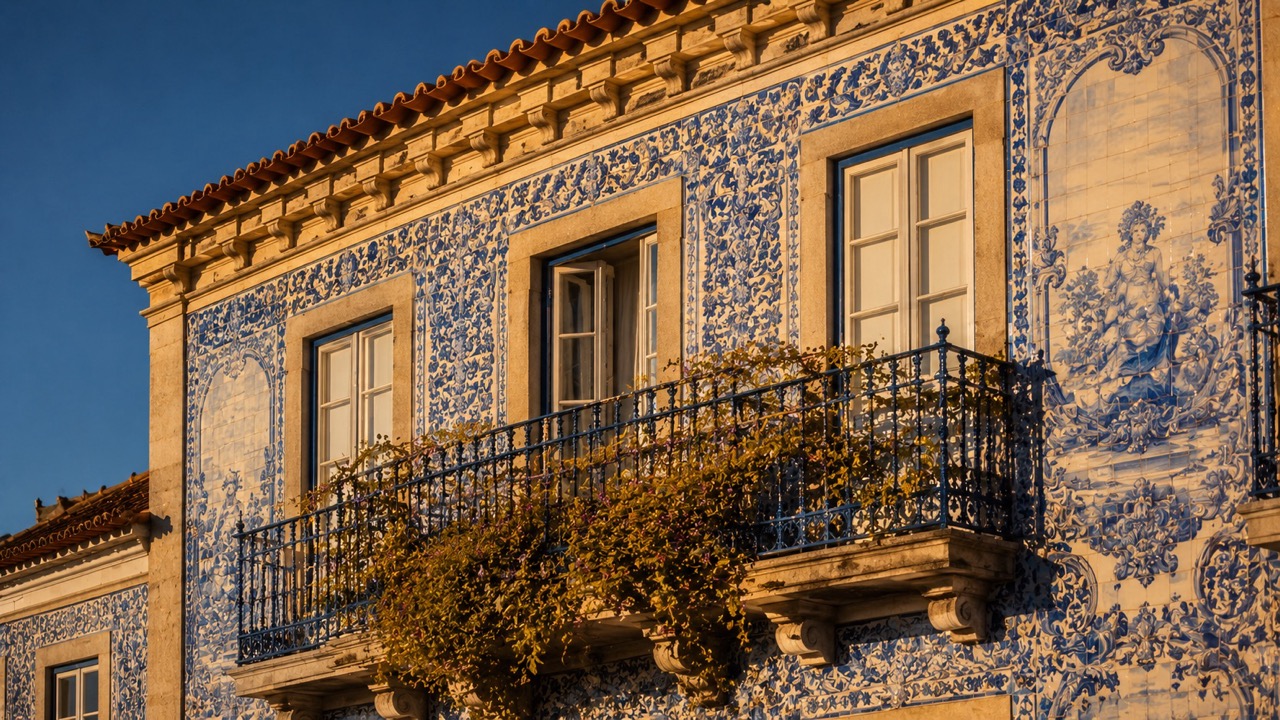
Fernando Pessoa’s The Book of Disquiet, that extraordinary assemblage of meditations composed in the cafés and rented rooms of Baixa Lisbon, provides the visitor with something no guidebook can: a quality of attention. Pessoa’s Lisbon is a city of details — the light on a particular wall at a particular hour, the sound of a tram’s bell reverberating through the narrow streets of Alfama, the melancholy that settles over the Tagus at dusk like a second twilight. To walk through Lisbon with Pessoa’s sentences in mind is to see more, and differently, than the unaccompanied eye permits. The Café A Brasileira in Chiado, where Pessoa wrote and where his bronze likeness now sits at a pavement table, is the obvious pilgrimage — but the deeper journey is into the side streets of Mouraria and Graça, where Pessoa’s restless, observant ghost still seems to walk.
Istanbul Through Pamuk
Orhan Pamuk’s Istanbul: Memories and the City is not a guidebook but a portrait of a state of mind — the quality the Turks call hüzün, a communal melancholy that Pamuk locates in the city’s relationship with its own imperial past. To read Pamuk’s Istanbul before visiting is to arrive prepared for the particular emotion that the city’s layered history produces: the sensation of walking through a place where the Ottoman, the Byzantine, and the modern coexist not in harmony but in a productive, occasionally anguished tension. The Museum of Innocence, Pamuk’s physical realisation of the novel of the same name — a cabinet of curiosities assembled in a Çukurcuma townhouse, each exhibit corresponding to a chapter — blurs the boundary between fiction and reality so thoroughly that the visitor emerges uncertain whether the city outside the museum is more or less real than the one inside it.
Dublin Through Joyce
Ulysses maps Dublin with a cartographic precision that has made the novel a functioning guide to a city that, in many of its essentials, has not changed as much as one might expect since 16 June 1904, the single day the novel describes. Davy Byrne’s pub still serves lunch at the bar. The Martello tower at Sandycove still stands above the sea. The streets that Leopold Bloom walks — Eccles Street, Grafton Street, Sandymount Strand — still carry their names and, in the case of Sandymount, their sand. Bloomsday, the annual celebration of the novel held each June 16th, has become one of the great literary festivals — a day when the city performs its most famous novel, reading passages aloud on the streets where they are set, retracing Bloom’s steps with a devotion that blurs the line between homage and re-enactment.
Tangier Through Bowles
Paul Bowles arrived in Tangier in 1947 and stayed for fifty-two years, producing a body of work — novels, short stories, translations of Moroccan oral literature, and a voluminous correspondence — that created the Western world’s imaginative relationship with the city. The Sheltering Sky, his most celebrated novel, is set not in Tangier but in the Sahara; yet it is Tangier that haunts the work — the sensation of the threshold, the place where Europe and Africa meet and neither is entirely itself. The city that Bowles knew — the International Zone, the literary cafés, the community of expatriate writers and artists that included William Burroughs, Brion Gysin, and Jean Genet — has largely vanished, but its traces remain: the Café de Paris on the Place de France, the American Legation Museum in the medina, and the quality of light over the Strait of Gibraltar that drew Bowles there in the first place and that draws the literary traveller still.
The literary journey is, in the end, a journey of doubled attention: the eye sees the city, and the mind sees the city as it has been imagined. The two visions do not compete but collaborate, and the result is a quality of travel experience — layered, resonant, personally meaningful — that the purely geographical journey, however luxurious, cannot match.