
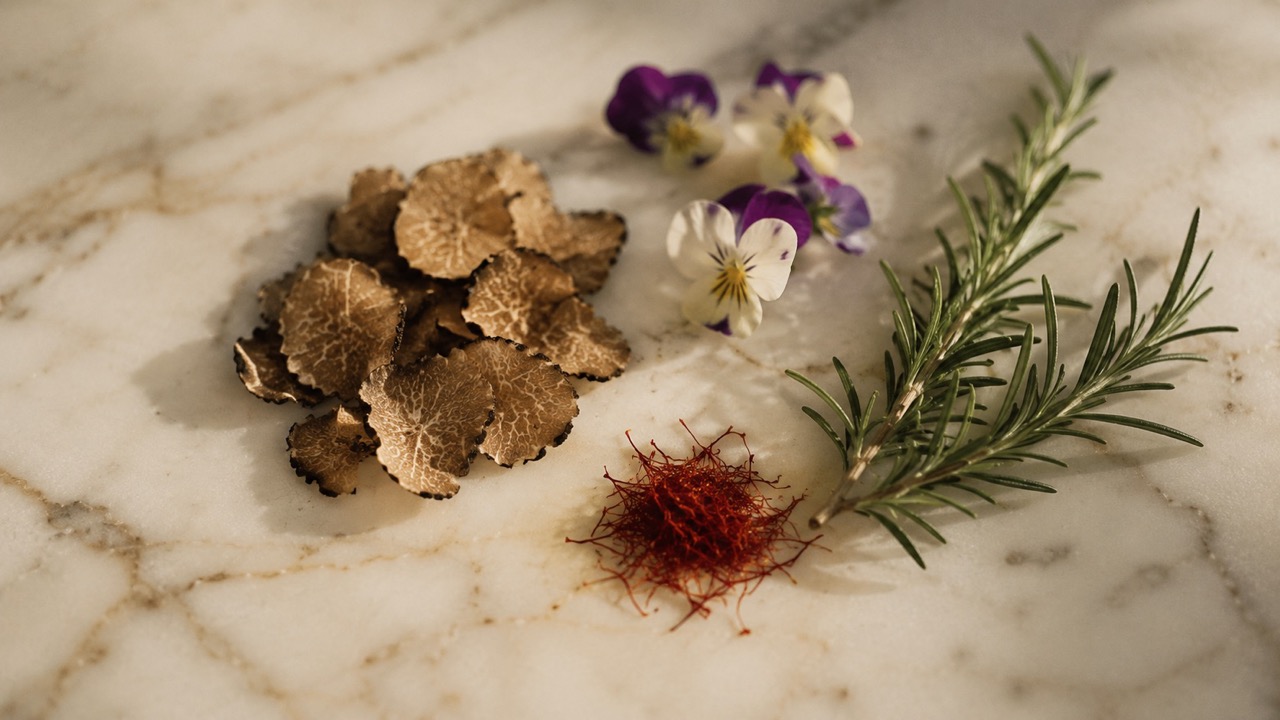
Fine dining is undergoing its most profound transformation since Escoffier codified the brigade system. The white tablecloth is not dead — it merely no longer constitutes the entire conversation. A generation of chefs has emerged for whom the restaurant is not a temple of service but a laboratory of ideas, a site of cultural inquiry, a means of asking questions about place, memory, and the politics of what we eat. They share no single aesthetic. What they share is the conviction that cuisine, at its highest level, is an intellectual and artistic discipline — not merely a hospitality one.
After Noma: The Redzepi Legacy
When René Redzepi closed Noma’s final conventional service, he did not retire. He shifted the frame. The Noma laboratory continues; the fermentation projects multiply; the influence disperses through a diaspora of alumni who now run some of the world’s most important kitchens. But Redzepi’s true legacy is conceptual rather than operational. He demonstrated that fine dining could be built upon radical localism — that a restaurant in Copenhagen need not look to France for its vocabulary, that seaweed and ants and wild berries constitute a cuisine as serious as any classical canon.
This permission — to build from the ground up, from the specific ingredients of a specific place — has liberated an entire generation. The chefs who follow are not imitating Noma’s aesthetic. They are applying its methodology to their own geographies, their own traditions, their own obsessions.
Altitude as Narrative: Virgilio Martínez
At Central in Lima, Virgilio Martínez has constructed something unprecedented: a tasting menu organised not by course but by altitude. Each dish represents a specific elevation of the Peruvian landscape — from the Pacific coast to the high Andes, from sea level to four thousand metres. The ingredients at each altitude are different; the cooking techniques appropriate to each ecosystem are different; the cultural traditions that surround food at each elevation are different. The meal becomes a vertical journey through an entire country’s geography and biodiversity.
This is not gimmick. It is rigorous ethnobotanical research expressed as cuisine. Martínez’s team spends months in remote communities, learning techniques, identifying ingredients, understanding the ecological relationships that make each altitude zone unique. The result is a meal that is simultaneously delicious and educational — that expands the diner’s understanding of Peru’s extraordinary biological wealth without ever feeling didactic.
The Indian Reimagination: Gaggan Anand
Gaggan Anand’s work represents something more confrontational: the insistence that Indian cuisine — one of the world’s most complex and ancient culinary traditions — deserves the same intellectual seriousness that Western fine dining accords to French or Japanese cooking. His progressive Indian cuisine takes classical preparations and subjects them to modernist technique not to improve them but to reveal their inherent sophistication.
A yoghurt sphere that bursts on the tongue, releasing raita. A curry presented as a single concentrated drop. These are not parlour tricks; they are acts of translation, rendering familiar flavours in unfamiliar forms to force recognition of their complexity. Anand’s genius lies in understanding that Indian food does not need elevation — it needs the kind of concentrated attention that fine dining’s formal structures can provide.
The Valley and the World: Ana Roš
Ana Roš at Hiša Franko works in conditions that would defeat most chefs: a small hotel restaurant in the Soča Valley of Slovenia, far from any major city, supplied by an ecosystem so specific that her menu is dictated almost entirely by what the valley produces in any given week. This constraint has become her art. Roš cooks what is available — the trout from the river, the cheese from the high pastures, the herbs from the surrounding forests — and from these limitations produces food of extraordinary creativity.
Her work demonstrates that the future of fine dining may not lie in cities at all — that the most interesting food emerges from the most specific places, where a chef’s relationship with their immediate landscape is so intimate that every dish is a portrait of a particular moment in a particular geography.
What They Share
These practitioners are not a movement — they would resist the label. But they share certain convictions. That cuisine at its highest level is a form of knowledge, not merely a form of pleasure. That the restaurant is a site of inquiry rather than mere consumption. That ingredients carry meaning beyond flavour — historical, ecological, political meaning that a thoughtful chef can articulate through the act of cooking. And that fine dining’s future lies not in escalating luxury but in deepening intelligence: meals that make us think differently about what we eat, where it comes from, and what it costs the world to produce it.
The white tablecloth remains. But what it supports has changed entirely.