
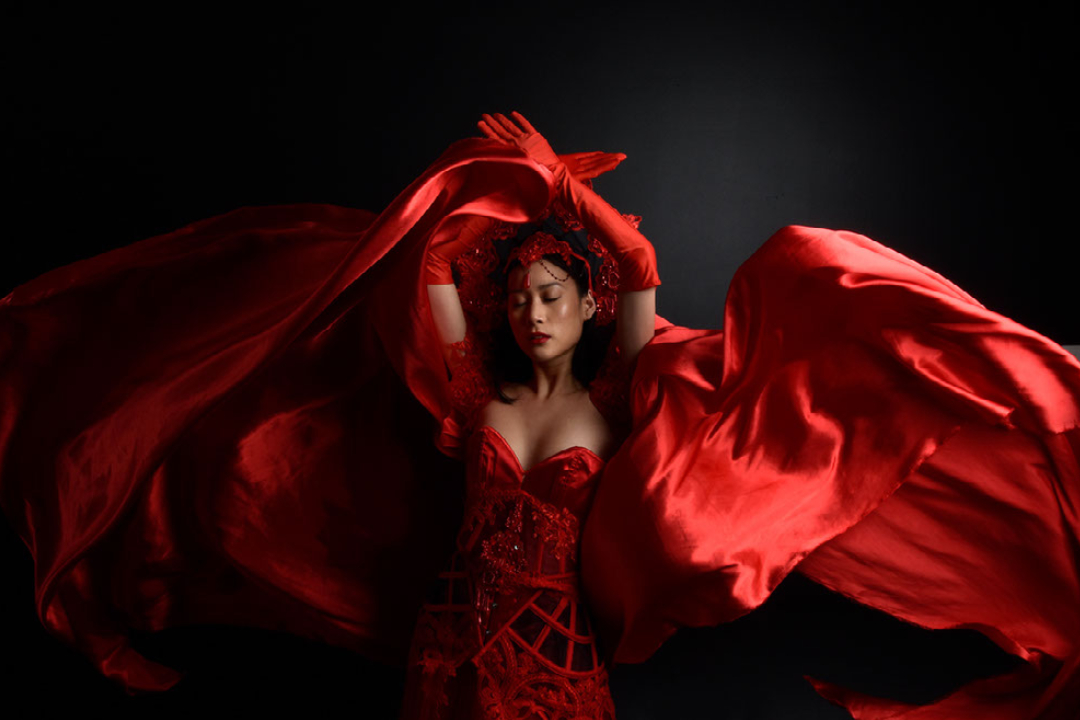
Style is not decoration. It is language — one of the oldest and most intimate forms of human expression, spoken before a word is uttered, understood across borders and centuries with a fluency that transcends translation. To dress is to communicate: one’s values, one’s history, one’s relationship to the world. When understood at its deepest level, personal style is not about clothes at all. It is a continuous, living act of self-authorship.
The Wardrobe as Self-Portrait
Every deliberate choice of garment is, in miniature, an artistic decision. The painter chooses pigment and texture to convey emotion; the dresser chooses fabric, silhouette, and proportion to convey self. The analogy is not merely poetic — it is structural. The great couturiers have always understood this. Cristóbal Balenciaga spoke of sculpting the body rather than covering it. Madeleine Vionnet believed that a dress should move with a woman as naturally as her own skin. They were not manufacturing product; they were offering vocabulary.
What separates the person with genuine style from the well-dressed is precisely this: the former uses clothing as a medium of thought. The choice of a particular shade of camel over beige, a slightly elongated lapel, a certain weight of linen — these are not accidents or defaults. They are decisions, made with the considered attention of an artist in front of a canvas.
The Grammar of Dress
Like any language, dress has its grammar — the structural rules that create meaning. Proportion governs relationship between the body and the garment. Colour communicates tone and emotion with the immediacy of music. Texture speaks to touch before touch occurs. Silhouette is the broadest declaration: architectural, fluid, restrained, exuberant.
To master the grammar is not to follow it slavishly, but to understand it well enough to break it with intention. Coco Chanel’s great insight was not to abolish the rules of femininity, but to rewrite them from within — borrowing the ease of menswear and returning it transformed. Rei Kawakubo dismantles proportion itself, challenging the eye to find beauty in asymmetry and incompleteness. Both are fluent in the grammar; both have earned the authority to subvert it.
For the individual, fluency begins with attention. Notice what you reach for instinctively, and then ask why. Is it the weight of the fabric — its substance, its authority? Is it a particular length that changes your posture, your pace? These instincts are the raw material of a personal style, and they are worth cultivating with the same seriousness as any aesthetic education.
Influence, Reference, and Authenticity
No artist works in isolation, and no dresser operates outside the vast conversation of history. Style is always in dialogue — with the past, with culture, with the moment. The Parisian femme d’un certain âge who has worn her cashmere cardigan the same way for thirty years is referencing something deeper than trend: she is in conversation with an ideal of understatement that stretches from the salons of the Rive Gauche through generations of French women who chose elegance over spectacle.
Reference is not imitation. The woman who wears a fluid bias-cut dress is not merely copying Vionnet; she is participating in a continuing aesthetic argument about the relationship between the body and fabric, and casting her vote. The man who chooses a perfectly plain white shirt and nothing else is aligning himself with a long and distinguished tradition of radical restraint — from Le Corbusier to Steve Jobs, simplicity as the ultimate refinement.
Authenticity in dress, then, is not about originality at any cost. It is about the coherence between inner life and outer expression. The most stylish individuals are those whose clothes feel inevitable — as though no other choice could have been made — because the choices arise from a genuine point of view, held and refined over time.
The Quiet Power of a Considered Wardrobe
In a world of relentless novelty, the carefully tended wardrobe has become a quiet act of resistance. To invest in fewer, better things — chosen with attention to craft, provenance, and enduring beauty — is to opt out of the cycle of disposability that has diminished both fashion and its relationship to the self. A coat worn for twenty years tells a different story than one discarded after a season. It accumulates meaning. It becomes, in the fullest sense, personal.
The great wardrobes — those we read about in diaries and biographies, those preserved in museum archives — share this quality of deliberateness. They are not random accumulations but curated bodies of work, each piece chosen because it earned its place. They speak of a life lived with intention, of a self constructed with care.
To think of one’s dress as art is not vanity. It is, perhaps, the most democratic art form available — one practiced daily, worn on the body, carried through the world. It asks only that we bring to it the same quality of attention we might bring to a painting, a piece of music, or a beautifully written page: the willingness to look, to feel, and to mean something by what we choose.