
On the Japanese island of Okinawa, there is a phrase spoken at the beginning of every meal: hara hachi bu. It means, roughly, “eat until you are eighty percent full” — a Confucian principle of caloric restraint that has been practised here for centuries, long before any scientist thought to measure its effects on longevity. Okinawans have, historically, among the longest lifespans on earth. They also have among the lowest rates of heart disease, cancer, and dementia. The connection between these facts and their relationship to food is not incidental; it is central. In Okinawa, eating is not a separate category of life — it is life’s organising principle, woven inseparably into the social, spiritual, and agricultural fabric of the community.
The Sardinian Shepherd’s Table
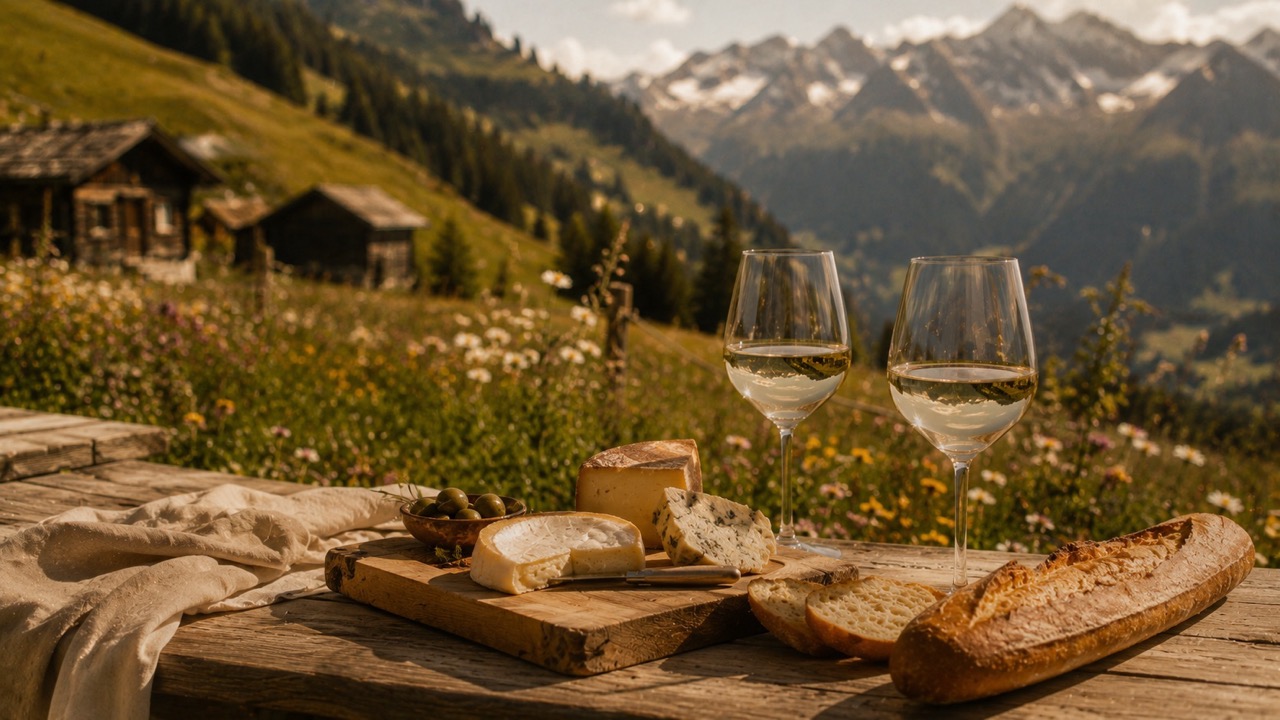
In the mountainous interior of Sardinia — the Barbagia region, where the roads narrow and the villages seem to hang from the hillsides like clusters of stone grapes — the oldest men in Europe still tend their flocks. They eat what they have always eaten: a diet of remarkable simplicity and striking consistency. Pecorino cheese made from their own sheep’s milk. Pane carasau, the paper-thin flatbread that shepherds carried into the mountains because it kept for weeks. Wild fennel, myrtle, and the bitter greens that grow between the rocks. Red wine — Cannonau, the local Grenache — in moderate but daily quantities, its resveratrol concentration among the highest of any wine on earth.
What is striking about the Sardinian diet is not its exotic ingredients — there are none — but its utter consistency across generations. The shepherds eat what their grandfathers ate, which is what their grandfathers’ grandfathers ate. The diet has not been designed or optimised; it has been inherited, an unbroken tradition of nourishment that has proved, over centuries of unconscious experiment, to be compatible with extreme longevity. No nutritionist devised it. No study validated it. It simply persisted, because the men who followed it kept living.
Ikaria: Wine, Greens, and the Afternoon Nap
The Greek island of Ikaria — named, with appropriate irony, for the mythological boy who flew too close to the sun — has been called “the island where people forget to die.” Its residents reach ninety at rates roughly two and a half times the European average, and they do so while consuming generous quantities of red wine, taking daily afternoon naps of thirty minutes or more, and maintaining social calendars that would exhaust people half their age. The Ikarian diet centres on wild greens — over 150 varieties, many unique to the island, foraged from hillsides and fields — olive oil of extraordinary quality, honey, legumes, and a herbal tea made from local mountain oregano, sage, and rosemary that has been shown to possess significant antioxidant and anti-inflammatory properties.
But to isolate the diet from its social context is to misunderstand it entirely. Ikarians eat together — extended family lunches that last two or three hours, during which food is consumed slowly, wine is sipped rather than drained, conversation is robust, and no one checks a telephone because many of the oldest residents have never owned one. The meal is not fuel; it is the occasion for community. The table is not a surface for consuming calories; it is the centre of social life. The longevity, researchers increasingly believe, resides not in any single ingredient but in the totality — the slow eating, the social connection, the absence of isolation, the daily rhythm that treats food as an event rather than an interruption.
The Blue Zone Principle
Dan Buettner’s identification of five “Blue Zones” — Okinawa, Sardinia, Ikaria, Nicoya in Costa Rica, and the Seventh-day Adventist community of Loma Linda, California — revealed a pattern that no single-nutrient theory can explain. These populations share almost no specific foods. The Okinawan diet is built on sweet potato and tofu; the Sardinian on pecorino and flatbread; the Ikarian on wild greens and wine. What they share is not ingredients but principles: predominantly plant-based eating, moderate caloric intake, meals consumed in social settings, food grown or raised locally, and — crucially — the absence of any concept of “dieting.” These cultures do not restrict; they simply eat in ways that their ancestors ate, in quantities that their traditions prescribe, in social settings that their communities maintain.
The Western impulse is to extract the active ingredient — to identify the compound in Cannonau, the antioxidant in mountain tea, the polyphenol in sweet potato — and sell it as a supplement. This misses the point so comprehensively that it amounts to a category error. The longevity of these populations is not chemical; it is cultural. It resides not in what is eaten but in how — how slowly, how socially, how traditionally, how unselfconsciously. The supplement cannot replicate the two-hour family lunch. The extracted polyphenol cannot replicate the afternoon nap. The optimised diet plan cannot replicate the absence of dietary anxiety that characterises cultures in which food has never been a problem to be solved.
The Table as Teacher
What the world’s longest-lived cultures teach is not a recipe but a relationship — a way of being with food that the industrialised world has largely lost. They teach that eating is inherently social, that meals are occasions rather than obligations, that food connects the eater to a specific landscape and a specific tradition, and that the healthiest relationship to nourishment is one governed not by calculation but by culture. The Okinawan does not count calories; she stops at eighty percent. The Sardinian does not measure resveratrol; he drinks his daily glass of Cannonau because his father did and his grandfather did. The Ikarian does not optimise her nutrient intake; she eats the greens that grow on her hillside because they have always grown there and have always been eaten.
In these cultures, food, community, and longevity form an inseparable trinity — each sustaining the others, none comprehensible in isolation. The longevity table is not a menu to be copied but a philosophy to be absorbed: that the best thing you can do for your health is sit down with people you love, eat food that grew near you, take your time, and never, ever eat alone.