
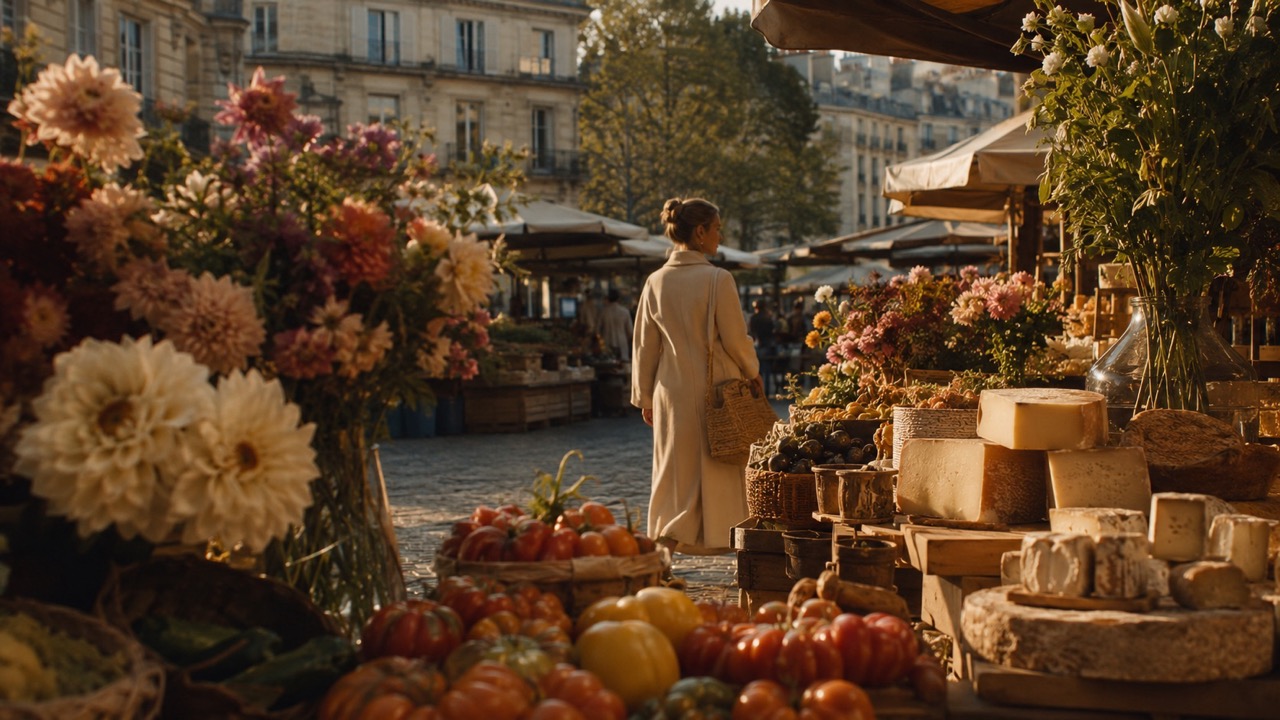
The covered market is, in its fullest expression, a building that does three things simultaneously: it encloses a civic function (the buying and selling of food), it expresses an architectural ambition (the creation of a public interior of beauty and grandeur), and it performs a social ritual (the daily gathering of a community around the shared act of choosing what to eat). The greatest covered markets of the world achieve all three with such conviction that to walk through them is to experience a form of urban life that no shopping centre, no supermarket, and no online delivery service has managed to replicate. They are, in the truest sense, irreplaceable — and the cities that maintain them are, for the traveller who cares about the intersection of food, architecture, and civic culture, among the most rewarding on earth.
La Boqueria, Barcelona
The Mercat de Sant Josep de la Boqueria, occupying a site on the Rambla that has hosted a market in some form since the thirteenth century, is the most celebrated food market in Europe and, despite its celebrity, still merits the superlative. The current iron-and-glass structure, built in the 1840s and renovated with intelligence in subsequent decades, encloses an inventory that constitutes a comprehensive survey of Catalan gastronomy: the jamón ibérico de bellota sliced to translucency at stalls whose ham legs hang in orderly forests; the seafood displays whose arrangement of langoustines, percebes, and razor clams has the visual precision of a Dutch still life; the juice bars whose staff extract the essence of a mango with the practiced efficiency of a surgical team. The market’s central bars — Pinotxo, El Quim de la Boqueria — serve counter food of a quality and an originality that many white-tablecloth restaurants in the city cannot match.
The Grand Bazaar, Istanbul
The Kapalıçarşı — the Grand Bazaar — is not, strictly speaking, a food market. It is something more comprehensive: a covered city within a city, built in the fifteenth century, expanded over five centuries, and now encompassing sixty-one covered streets, more than four thousand shops, and a social ecosystem of tea-carriers, porters, moneylenders, and conversationalists whose presence has been continuous since the bazaar’s construction by Mehmed the Conqueror. The food component — the spice stalls of the adjacent Mısır Çarşısı (the Spice Bazaar), the lokanta restaurants that serve the market workers, the Turkish delight and dried-fruit sellers whose displays of colour and geometry constitute a form of edible art — is inseparable from the bazaar’s broader identity as a place where the act of buying is also the act of talking, of bargaining, of participating in a mercantile culture whose protocols have been refined over half a millennium.
The Mercato Centrale, Florence
The Mercato Centrale, housed in Giuseppe Mengoni’s cast-iron structure of 1874 (the same architect who designed Milan’s Galleria Vittorio Emanuele II), operates on two levels that represent two different models of the covered market. The ground floor is the traditional market: butchers, fishmongers, cheese sellers, vegetable vendors, and the tripe stall that has served lampredotto — the Florentine street food of slow-cooked tripe — from the same position for generations. The upper floor, opened in 2014, houses a more contemporary proposition: artisan food stalls, a wine bar, a bookshop, and the kind of curated food-hall experience that cities worldwide have since attempted to replicate.
Tsukiji Outer Market, Tokyo
The inner wholesale market has moved to Toyosu, but the outer market — the network of narrow streets and small shops that grew up around the original Tsukiji fish market — remains, and its transformation from a wholesale supply zone into a destination for serious eaters has, if anything, enhanced its appeal. The tamagoyaki stalls that produce the sweet Japanese omelette in front of the customer, the knife shops whose blades are forged by artisans who supply the city’s finest sushi restaurants, the tiny counters where a breakfast of the freshest sashimi in the world can be had for a modest price — these constitute a market experience of extraordinary intensity, compressed into a few hundred metres of Tokyo streetscape.
The grandest covered markets share a quality that transcends their architectural and culinary differences: they are democratic. The banker and the pensioner, the tourist and the cook, the child sent on an errand and the chef sourcing for a Michelin-starred kitchen — all navigate the same aisles, examine the same produce, and participate in the same ritual of selection and purchase. This democracy of appetite, conducted beneath iron and glass in some of the most beautiful civic interiors ever built, is what the covered market offers that no other form of food retail can: the experience of eating as a communal act, housed in architecture that takes the act seriously enough to be grand.