
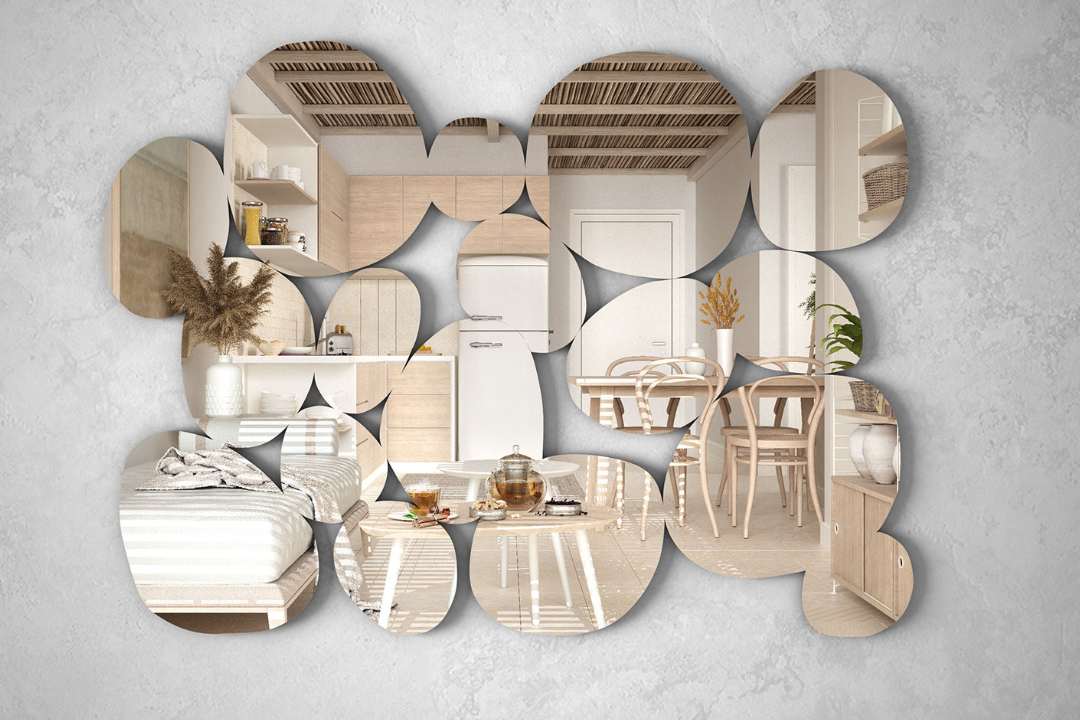
There is a particular pleasure in the moment when an everyday object reveals itself as something more — when the cup you drink from each morning turns out to have been thrown on a wheel in a Mashiko workshop by a potter whose family has worked that clay for four generations, when the knife you use to slice bread was forged by a bladesmith in Thiers who still tempers steel over charcoal, when the linen napkin you unfold at dinner was woven on a jacquard loom in Gerardmer by a maison that has supplied the same cloth to the same Parisian restaurants since 1847. These are not luxury goods in the conventional sense — they do not announce themselves, they do not display logos, they carry no price tag that would cause alarm at a dinner party. They are simply objects made with a seriousness that most of us have been trained, by decades of disposable abundance, to stop noticing.
The Kitchen as Atelier
The most revealing test of a household’s relationship with craft is the kitchen. A pressed-steel knife from an industrial manufacturer cuts; a hand-forged blade from Sakai, the Japanese city that has produced blades since the fourteenth century, transforms the act of cutting into something else entirely — a sensory engagement with material, an awareness of edge geometry, a moment of quiet concentration that the object itself seems to require. The difference is not merely functional. It is philosophical. The handmade knife insists, by the quality of its making, that the act of preparation matters as much as the act of consumption.
The same principle extends to every surface the kitchen presents. A cutting board milled from a single piece of end-grain maple by a woodworker in Vermont. A mortar and pestle carved from Carrara marble by a stone mason in Pietrasanta. A set of ceramic mixing bowls thrown by a potter in the Luberon whose glaze — a celadon green achieved through a reduction firing technique that has not changed in centuries — makes even the whisking of eggs feel like a civilised act. These objects cost more than their industrial equivalents, but their cost per year of use — for they are, almost without exception, objects that outlast the people who buy them — is negligible.
The Table: Where Craft Becomes Ceremony
Setting a table with handmade objects changes the meal. This is not sentimentality; it is physics. A hand-thrown plate has a weight and a slight irregularity of form that the machine-made plate lacks. The glaze pools differently in every piece. The rim has a thickness that the lip registers. These micro-variations communicate, below the threshold of conscious attention, a quality of care that extends from the maker to the cook to the guest. A table set with artisan stoneware, hand-blown glassware from a Murano or Biot workshop, and flatware forged by a silversmith rather than stamped from sheet metal does not look dramatically different from a well-appointed conventional table. It feels different. And the feeling is hospitality at its most articulate.
The Bedroom and the Bath: Intimate Craft
Linen — true linen, woven from flax by the European houses that have perfected the fibre over centuries — is perhaps the single most transformative upgrade available to the everyday domestic environment. A set of sheets from a Lithuanian or Belgian weaver, slept in nightly and laundered weekly, develops over years a softness that cotton cannot approach and a coolness that synthetic fibres cannot imagine. The initial stiffness that surprises first-time linen users is not a defect but a promise: the fabric is in the early stages of a transformation that will continue for decades, growing softer and more luminous with every wash until it achieves the quality the French call le vieux linge — old linen — which is, by universal agreement among those who have experienced it, the finest thing a human body can sleep against.
In the bath, the artisan’s hand is equally present in the soaps made by the savonneries of Marseille and Aleppo — houses that have cured olive oil and laurel into bars of such gentle efficacy that their formulations have remained unchanged for centuries — and in the towels woven by Turkish looms in Denizli, where the art of terry weaving has been practised long enough for the local weavers to understand cotton’s behaviour at a molecular level.
The Ethic of Attention
What these objects share — the Sakai knife, the Murano tumbler, the Lithuanian sheet, the Marseille soap — is not a price point or a provenance but an ethic: the conviction, held by their makers and transmitted through the quality of the making, that ordinary life deserves extraordinary attention. To fill a home with such objects is not an act of conspicuous consumption. It is the opposite: a quiet insistence that the daily acts of cooking, eating, sleeping, and bathing are worthy of the same care that we routinely lavish on the occasional and the exceptional. The luxury of the ordinary is, in the end, the most sustainable luxury of all.