
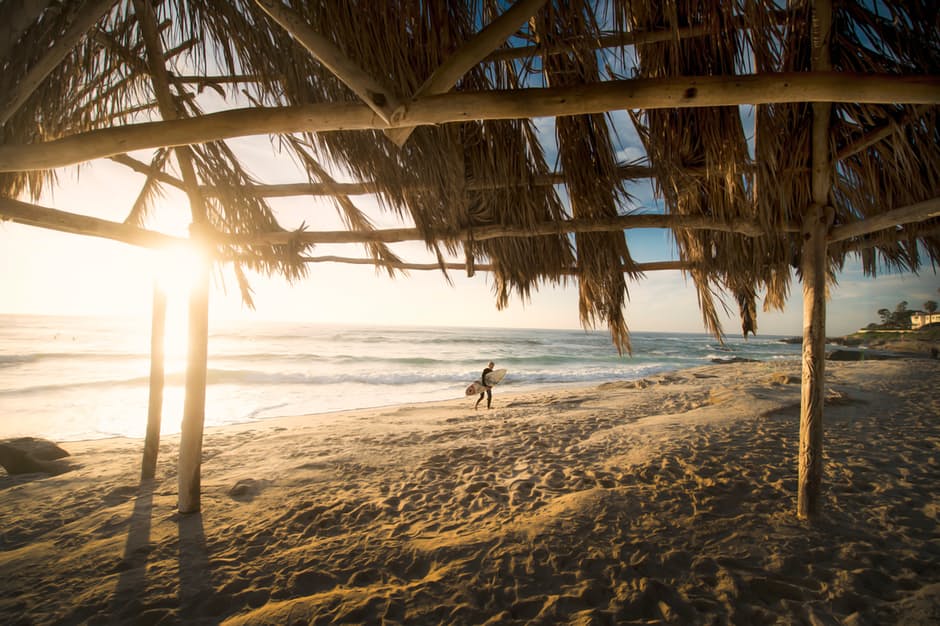
The dhow appears at dusk, its lateen sail catching the last of the Indian Ocean light as it rounds the headland into Stone Town harbour. On the waterfront, the muezzin’s call mingles with the smell of grilling mishkaki and the sound of children diving from the old customs pier. Zanzibar arrives as all great island destinations should — through the senses rather than the intellect, overwhelming before you have time to analyse exactly what is overwhelming you.
Stone Town: UNESCO and the Living City
Stone Town is not a museum. This is the crucial distinction that separates Zanzibar’s capital from other UNESCO World Heritage sites where preservation has calcified life into spectacle. Here, the carved wooden doors that are the town’s most famous architectural feature still open onto functioning homes. The narrow alleys — designed for shade in the equatorial heat, too narrow for cars, exactly right for the human body — lead to schools, mosques, markets, and homes where families have lived for generations. The architecture layers Omani, Indian, Swahili, and European influences with the unselfconsciousness of a place that never planned its beauty but accumulated it through centuries of trade and exchange.
The former Sultan’s palace, the House of Wonders, the Old Fort — these are the landmarks. But Stone Town’s real texture is in the details: the tiled doorsteps, the mashrabiya screens filtering afternoon light into latticed patterns on interior walls, the rooftop terraces where the evening ritual of sunset-watching unfolds with the solemnity of a civic ceremony. Mercury Bar, named for the island’s most famous son, fills nightly with travellers and locals watching the sun descend into a sea that Freddie Mercury himself watched as a child from these same streets.
The Spice Plantations
Zanzibar was once the world’s single largest producer of cloves — an economic dominance built on the backs of enslaved people and maintained through the sultanate’s absolute control of Indian Ocean trade routes. Today, the spice plantations inland from Stone Town offer something gentler: the experience of encountering nutmeg, vanilla, black pepper, cinnamon, and cardamom growing in their natural state, the air thick with a perfume so complex and layered that it redefines what one understands these spices to be.
The smell of a fresh clove bud, crushed between fingers on the branch, bears the same relationship to its dried commercial form as a just-picked tomato bears to a tinned one. Here, spices are not the desiccated powders of the supermarket shelf but living, aromatic, somehow urgent — plants whose volatile oils release with an intensity that explains why empires fought over their control for centuries.
The East Coast: Another World Entirely
Leave Stone Town and drive east, and within an hour the island reveals its second nature. The beaches of the east coast — Paje, Jambiani, Matemwe — offer sand of such whiteness and water of such translucent turquoise that photographs are routinely suspected of filtration. The tidal range is enormous: at low tide, local women wade hundreds of metres out to farm seaweed on underwater frames, their kangas brilliant against the pale sand, creating scenes of such chromatic perfection they seem composed rather than observed.
The Residence Zanzibar and Baraza Resort represent the island’s luxury hospitality at its most refined — properties that marry Arabic architectural tradition with contemporary comfort, their private villas opening onto the Indian Ocean with a sense of pavilion living that the tropical climate demands. The service style borrows from both Omani formality and Swahili warmth, creating something unique: attentive without hovering, knowledgeable without performing, present without intrusive.
The Fusion Table
Zanzibari cuisine is the edible evidence of the island’s history — a fusion so complete and so ancient that its components can no longer be separated into their originating cultures. Swahili pilau rice, fragrant with cardamom and clove; Indian-influenced biryani made with fresh-caught kingfish; Arabic-style halwa; Portuguese-influenced grilled piri-piri prawns; and everywhere the coconut that serves as the cuisine’s binding agent, appearing as milk, cream, oil, and fresh flesh across every meal.
The Forodhani Gardens night market — chaotic, smoky, theatrical — offers the island’s cuisine in its most democratic form: urojo soup, Zanzibar pizza (a street-food crêpe bearing no resemblance to its Italian namesake), grilled octopus, sugarcane juice, and the seafood that the island’s position in fish-rich waters makes extraordinary and impossibly affordable. To eat at Forodhani is to eat as the island eats — standing, communally, choosing by pointing, paying in coins.
The Dhow and the Horizon
The traditional dhow — lateen-rigged, wooden-hulled, designed for the monsoon winds that still dictate the rhythm of Indian Ocean trade — remains Zanzibar’s defining vessel. Charter one for a sunset sail and you experience the island as its earliest traders did: from the water, the town’s silhouette resolving into individual buildings as you approach, the smell of spice and wood smoke carrying across the harbour on the evening breeze.
Zanzibar exists at a precarious moment — known enough to attract serious investment in hospitality, unknown enough that its essential character remains intact. The island’s combination of cultural depth, architectural beauty, pristine coastline, and fusion cuisine represents a proposition that few destinations in the Indian Ocean can match. It will not remain undiscovered forever. The infrastructure is improving. The flight connections are multiplying. Those who come now will remember it as it was — still unhurried, still surprising, still possessed of the languid confidence of a place that has been receiving visitors for a thousand years and intends to continue on its own terms.