
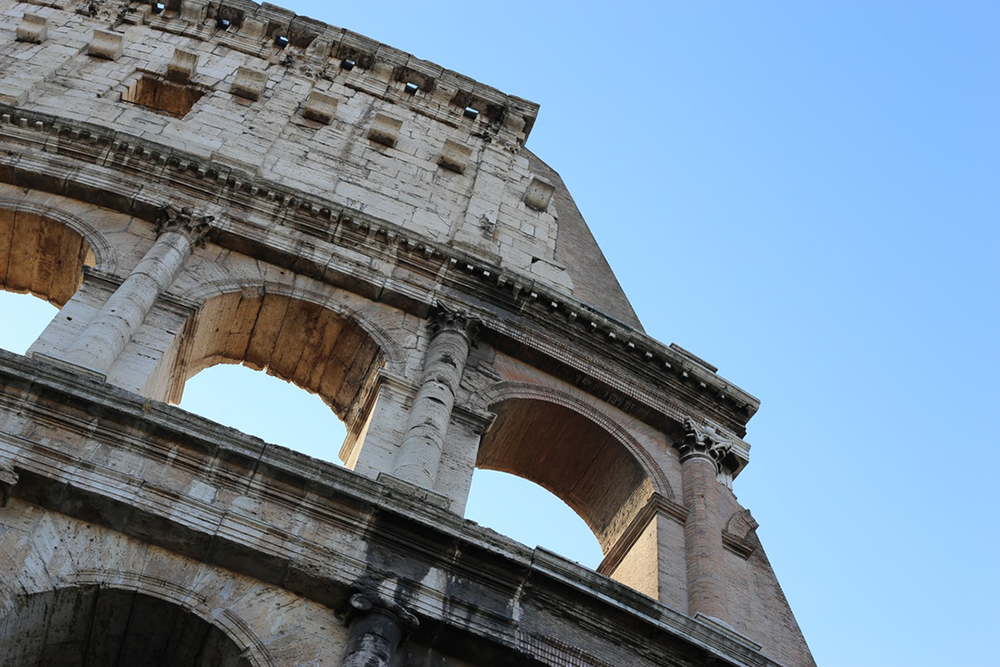
Rome does not ask to be loved. It assumes it. The city proceeds on the understanding that you have come because you could not stay away, that every previous visit has only deepened the compulsion to return, and that whatever you imagined in the interval between arrivals, the reality will exceed it. This is a city that has been receiving travellers — pilgrims, Grand Tourists, artists, emperors, conquering armies and conquered aesthetes — for more than two millennia, and it has developed, over that considerable span of time, an assurance in its own powers of enchantment that borders on the serene. Roma, eterna and unperturbed, simply waits.
The Morning Ritual
The cultured traveller’s day in Rome should begin before the tourists arrive and the light turns harsh. In the early morning — the hour when the cobblestones of Trastevere are still damp from the night’s coolness and the Campo de’ Fiori is occupied only by the flower sellers arranging their buckets — the city reveals its essential character most clearly. Find a bar of the old school, a place with a zinc counter and a barista who has been making the same coffee for thirty years, and stand as Romans stand to drink your espresso. Order a cornetto alla crema if you want to understand what pastry is for. Observe the neighbourhood coming to life around you. This is not sightseeing. This is participation.
Monuments and the Art of Seeing
Rome’s monuments are so numerous and so overwhelming in their accumulated significance that the untutored visitor risks a kind of aesthetic saturation — the Colosseum, the Forum, the Pantheon, the Borghese, Bernini and Caravaggio in every church and gallery — until meaning drains away and one is left merely ticking boxes. The remedy is selectivity practiced with genuine conviction. Choose three things for a day, not thirty. Spend an hour inside the Pantheon — not moving, not photographing, simply looking up at the oculus through which the rain falls in a perfect cylinder to the slightly concave floor designed to drain it. Understand that this building has been continuously in use since 125 AD and that the concrete of its dome, unreinforced, remains the largest of its kind in the world.
The Borghese Gallery, housed in a 17th-century villa surrounded by the largest park in Rome, requires advance reservation and rewards the effort with what is arguably the finest collection of Bernini sculpture in existence. Apollo and Daphne — the moment of metamorphosis rendered in marble with such kinetic precision that the stone seems to move — is among the greatest single works of art in any medium anywhere in the world. To stand before it is to understand something about the relationship between ambition and material that no description can convey.
The Neighbourhoods
Rome is, like all great cities, a collection of villages, each with its own character and its own pleasures. The Jewish Ghetto, established in 1555 and one of the oldest in Europe, retains a melancholy beauty in its narrow streets and opens onto a cuisine — carciofi alla giudia, the fried artichokes that are Rome’s signature vegetable preparation — that represents one of the city’s most distinctive contributions to the Italian table. Prati, across the Tiber from the Vatican, is where Romans who work in law and government live and shop and eat without tourist pressure; its trattorias serve a sincere version of Roman cooking — cacio e pepe, abbacchio, supplì — that is sometimes better than anything available in the more celebrated districts.
Parioli, the quietly wealthy neighbourhood north of the Villa Borghese, is where old Roman money has always lived, in the apartment buildings of the early 20th century with their high ceilings and deep courtyards. It has the feeling of a city within the city, one that operates by its own rhythms and rewards the walker who strays from the standard itinerary.
Where to Sleep, Where to Dine
Rome’s finest hotels are studies in the art of setting. The Hotel de Russie, tucked between the Piazza del Popolo and the Spanish Steps, has a terraced garden that constitutes one of the most civilised outdoor spaces in Europe — a place to take a Negroni at the end of an afternoon spent walking and feel that the city has been properly engaged with. The J.K. Place Roma, a more intimate address near the Pantheon, offers the experience of staying in a private palace with the services of a great hotel.
The Roman table, at its best, is one of the most satisfying in Italy — not the most elaborate or the most technically ambitious, but the most honest. Il Sanlorenzo near Campo de’ Fiori is doing serious things with the seafood of the Tyrrhenian coast. La Pergola, on the roof of the Rome Cavalieri hotel, remains the city’s only three-Michelin-star restaurant and offers what is essentially a love letter to Italian ingredients written in the language of haute cuisine.
The Eternal Return
Every serious traveller to Rome eventually understands that the city cannot be finished — that each visit opens further rooms, reveals further layers, deepens the appetite rather than satisfying it. This is not a limitation but the city’s greatest gift. Rome gives you just enough to make leaving bearable, and just enough unfinished business to ensure you will return. It has been doing this for two thousand years. It is very good at it.