
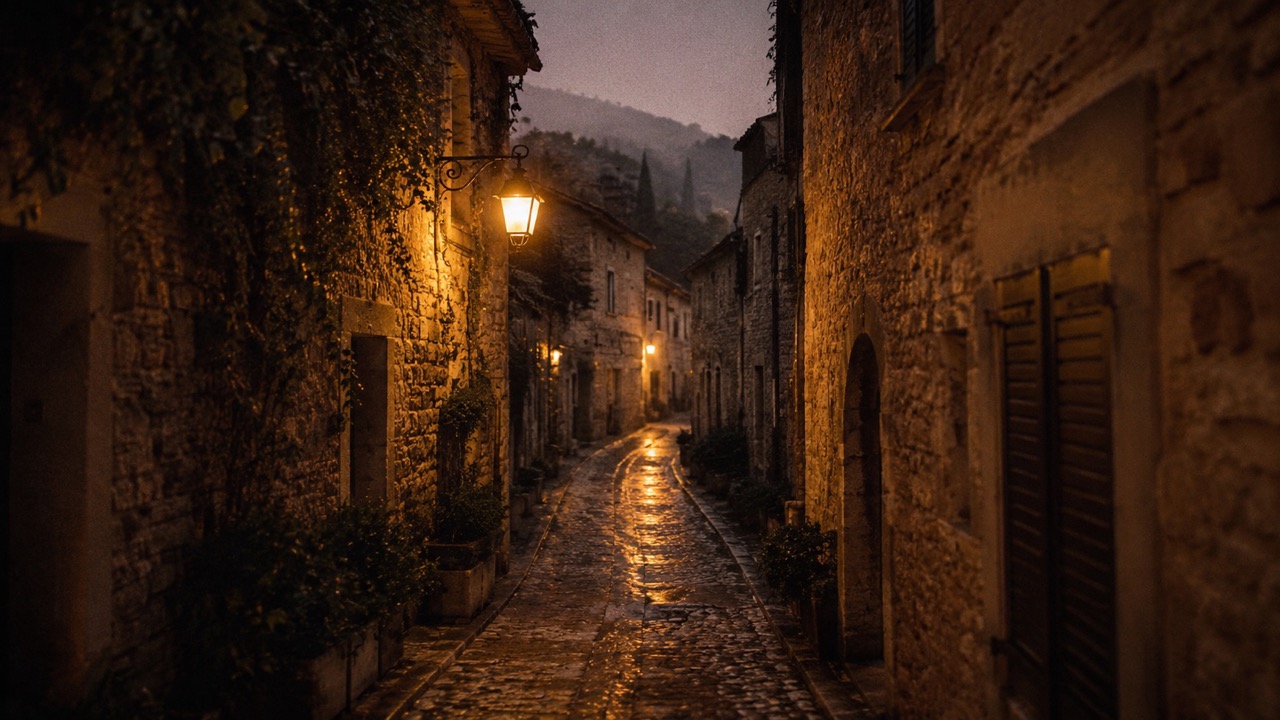
Spain is a country that punishes superficiality. Arrive with a checklist — the Sagrada Família, the Prado, the Alhambra, a glass of Rioja — and you will leave having seen the surfaces of things, which are extraordinary, while remaining entirely ignorant of the depths, which are more extraordinary still. The country is too various, too layered, too stubbornly itself in each of its regions and cities and villages to yield its essential character to the hurried itinerary. It requires, and amply rewards, the kind of attention that only those willing to move slowly and stay long can give it. This is España profunda — deep Spain, the Spain beneath the photographs.
Andalusia: Duende and Architecture
The south is where most visitors begin, and the south is where the country most forcefully announces its difference from the rest of Europe. The Alhambra in Granada — that palace complex of Nasrid architecture built between the 13th and 15th centuries, its rooms decorated with muqarnas plasterwork and geometric tilework and water flowing through channels carved into marble floors — is one of the most refined built environments in human history. The word most often used by those encountering it for the first time is “impossible”: it seems impossible that human hands made this, that this degree of beauty was achieved without the tools and materials of modernity, that it has survived at all.
Beyond Granada lies the Andalusian interior — Ronda, set on its dramatic gorge above the Tajo river; Úbeda and Baeza, Renaissance cities in the olive-blanketed province of Jaén that UNESCO has recognised as twin masterpieces of Renaissance urban planning; the white villages of the Sierra Nevada that appear on hillsides like scattered sugar cubes. The flamenco tradition, rooted most deeply in the Gypsy communities of Jerez and Cádiz, is not a tourist spectacle in these places but a living art form, a practice of the utmost seriousness, best encountered in a peña — a private flamenco club — rather than a staged performance.
The Basque Country: Excellence as Identity
No region in Spain has transformed its international reputation more dramatically or more genuinely than the Basque Country. What was once understood primarily as a place of industrial cities and political complexity is now recognised as one of the world’s great gastronomic destinations — a region where the relationship between food, culture, and identity has been pursued with an intellectual rigour and practical commitment that has produced results impossible to dispute. San Sebastián, which contains more Michelin stars per capita than any other city in the world, is the headquarters of this achievement, its Old Town pintxos bars operating as an informal but extraordinarily high-functioning network of culinary excellence.
Bilbao, which reinvented itself around Frank Gehry’s titanium-clad Guggenheim Museum and in doing so invented the concept of “the Guggenheim effect” as a model of urban regeneration, rewards extended exploration. The covered Mercado de la Ribera, the oldest covered market in Spain, the Casco Viejo with its seven original streets, the Ría de Bilbao waterfront now given over to cultural institutions and elegant promenading — these are the elements of a city that has decided to take itself seriously in all the right ways.
Extremadura: The Forgotten Grandeur
To travel to Extremadura is to understand why the phrase “off the beaten path” is most meaningful when applied to places of genuine, rather than manufactured, obscurity. This large, sparsely populated region in southwestern Spain — the birthplace of Hernán Cortés and Francisco Pizarro, those conquistadors who changed the world — is among the least visited in the country and among the most rewarding for the effort of arrival. Mérida contains the finest Roman monuments in Spain: an amphitheatre, a theatre, a circus, temples, and bridges that constitute a Roman city of unusual completeness, their stone worn to the colour of old honey in the Extremaduran sun.
The dehesa landscape — the open, park-like woodland of cork oak and holm oak that covers great stretches of the region — is the habitat of the Iberian pig, whose diet of acorns produces the jamón ibérico de bellota that is among the finest cured meats in the world. To eat it in Extremadura, where it is produced, with a glass of Ribera del Guadiana and the understanding of what you are consuming, is an experience of the kind that travel exists to provide.
Galicia: The Green Margin
The far northwest of Spain is another country entirely — green and Atlantic and Celtic in its cultural echoes, its coast of rías and estuaries producing the finest shellfish in Europe (the percebes, or goose barnacles, harvested from the wave-battered rocks of the Costa da Morte are among the most extraordinary things edible), its interior given over to a landscape of ancient pilgrimage. The Camino de Santiago, the medieval pilgrimage route to the cathedral of Santiago de Compostela where the bones of Saint James are believed to rest, has been walked by pilgrims for over a thousand years and is walked still, by hundreds of thousands each year, for reasons ranging from the deeply religious to the simply athletic.
The Spain Beneath
What unites these disparate regions — Andalusia’s Moorish inheritance, the Basque Country’s radical gastronomic modernity, Extremadura’s Roman grandeur, Galicia’s Celtic melancholy — is not a single Spanish identity but something more interesting: the evidence of a country that has absorbed and been shaped by an extraordinary range of civilisations without being homogenised by any of them. Deep Spain is plural Spain, and it is precisely this plurality — this resistance to the reduction of a single story — that makes it one of the most endlessly compelling destinations in the world.