
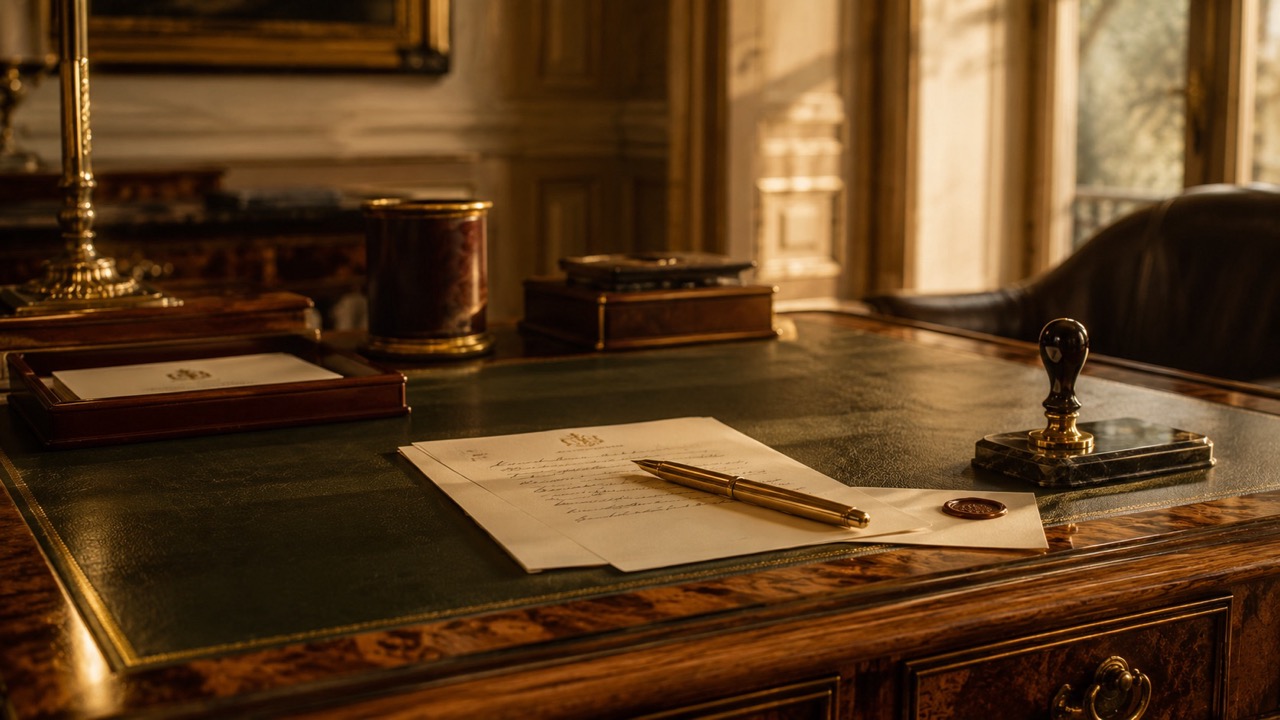
The room in which one thinks is not a neutral container. It is an active participant in every decision made within it, every sentence written, every problem resolved, every idea coaxed from the murky territory between intuition and articulation. The home office has too long been treated as a concession — a space squeezed into a spare bedroom, furnished with whatever survived the move, lit by whatever bulb happened to be in the overhead fixture. For those whose work demands genuine intellectual output, this indifference to environment is nothing short of self-sabotage. The creative study deserves the same considered attention as any other room in the home, and the rewards of that attention are immediate and cumulative.
The Architecture of Thought
Before a single piece of furniture is chosen, the question of spatial arrangement deserves serious consideration. Where does the light fall, and at what hours? Is there a view — a garden, a roofline, a fragment of sky — that refreshes without distracting? How does sound behave in the space, and what can be done to moderate it? These are not merely practical questions but aesthetic ones, because the conditions under which the mind works best are deeply personal and worth understanding precisely.
The desk’s relationship to the window is perhaps the most consequential decision in the room. Side light — a window to the left or right of the working surface rather than directly ahead — reduces screen glare while providing the kind of directional illumination that painters have sought for centuries. A desk positioned to face a wall rather than a view may seem counterintuitive, but it focuses attention inward, which is often exactly what sustained intellectual work requires. The view can be saved for the thinking chair — a separate seat positioned to look outward, reserved for reading and reflection rather than production.
The Desk as Declaration
A desk is a statement of intent. The vast laminate surface of the corporate workstation communicates one set of values; the battered leather top of a Georgian partner’s desk communicates another; the clean expanse of a custom-made solid oak writing table, mortise-and-tenon jointed and finished with linseed oil, communicates something else entirely. What matters is not period or style but the quality of the object’s presence — whether it carries a sense of seriousness, of invitation, of readiness for work that matters.
The working surface should be generous — larger than one imagines needing — because the mind expands to fill space that is offered to it. A cramped desk produces cramped thinking. The surface should be clear of everything that does not serve the current work; storage must therefore be adequate, which means drawers deep enough for files, shelves close enough to reach without rising, and the kind of desktop organisation that reduces the friction between intention and execution to near zero.
Books as Architecture
The shelves of a creative study are not merely storage — they are the room’s intellectual biography, an external memory that the eye consults even when the mind is not consciously seeking a reference. The arrangement of books matters: not alphabetically, which produces the cold logic of a library catalogue, but by association and affinity, which mirrors the way creative minds actually work. Philosophy beside poetry. Travel beside history. The visual arts beside literature. A shelf that surprises its owner when the eye travels along it is a shelf that is doing its work.
Books should be accessible, not decorative. A study that uses books purely as visual backdrop — spines chosen for colour, pages never opened — is performing creativity rather than enabling it. The books that have been read, annotated, dog-eared, returned to repeatedly and marked with slips of paper, are the books that belong on the working shelves. The beautiful and unread can live elsewhere.
Light, Artificial and Natural
The lighting of a creative study requires layering. Overhead ambient light — ideally on a dimmer — establishes the room’s general character. A dedicated task light on the desk, positioned to eliminate shadow on the working surface, handles the practical demands of reading and writing. And then there is the third layer: the atmospheric light that makes a room feel inhabited rather than merely functional — a table lamp in a corner, a picture light above a beloved work, a candle in the late afternoon when the day’s output is being reviewed.
Colour temperature in artificial lighting significantly affects mood and cognitive performance. Warmer tones — in the 2700K to 3000K range — encourage the kind of relaxed, associative thinking from which ideas emerge. Cooler, bluer light (4000K and above) promotes alertness and analytical precision. The ideal study has both available, switchable according to the work at hand.
The Objects That Earn Their Place
A creative study is not a minimalist void but neither is it a cabinet of curiosities. Every object on the desk and shelves should earn its presence through use, beauty, or the particular charge that certain objects carry — a gift from an admired mind, a stone collected from a significant shore, a small sculpture that the hand reaches for without thinking when a problem proves resistant. These objects are not distractions; they are the room’s soul, the evidence of a life being lived with intention alongside the work.
The study one creates for oneself is ultimately an act of self-knowledge — a declaration of what conditions one requires to do one’s best thinking. To take that declaration seriously, to invest in its realisation with the same energy one brings to the work itself, is not indulgence. It is the most practical thing a serious mind can do.