
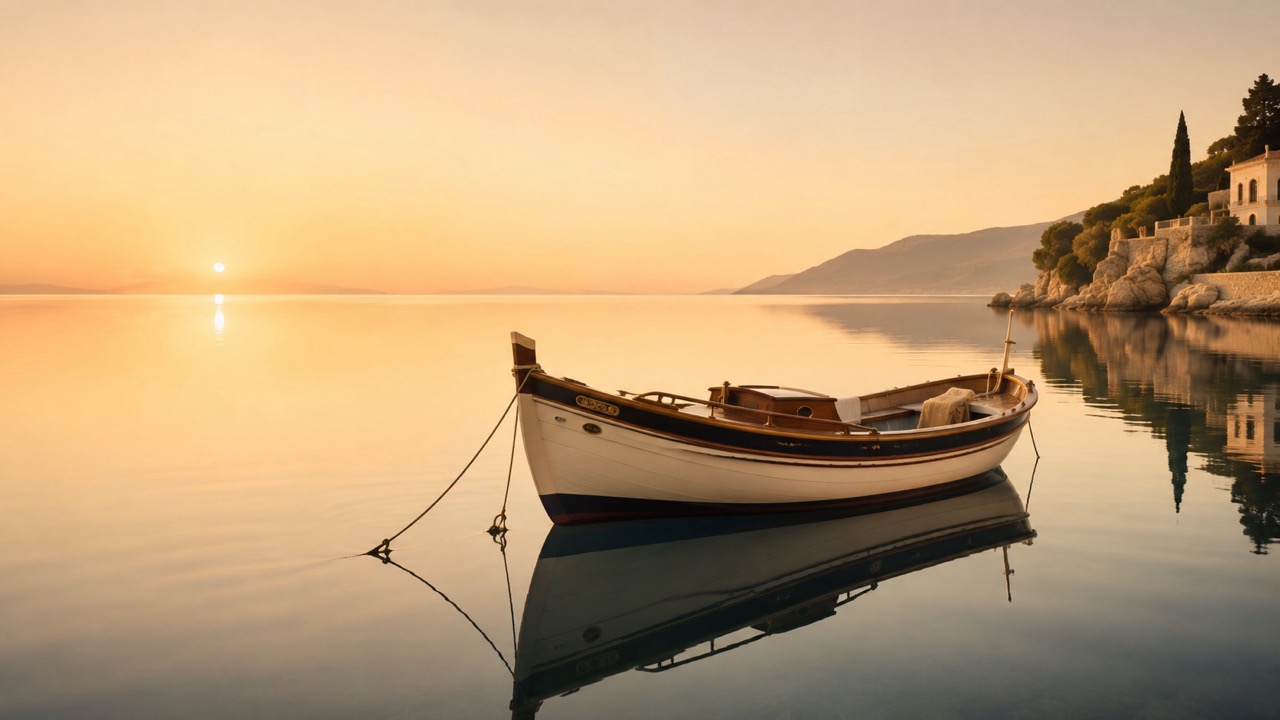
The reputation precedes it like a rumour that has been confirmed so many times it has become legend. Ibiza — white island, island of parties, island of the superclub and the international DJ and the sunset at Café del Mar — is one of the most potent brand names in global travel, a word that conjures a very specific image in the minds of people on every continent. The image is not wrong, exactly. The nightlife is as spectacular and as serious as its reputation suggests, the sunset genuinely is as beautiful as the photographs indicate, and Café del Mar has been fulfilling its particular function — providing a ritualised, collective experience of beauty at the end of the day — with remarkable consistency since 1980. But the image is radically incomplete. Ibiza is a much stranger, richer, more layered place than its celebrity has allowed it to become.
The Old Town and Its Walls
Dalt Vila — the walled upper city of Ibiza Town — is a UNESCO World Heritage Site and one of the best-preserved Renaissance fortification systems in the Mediterranean. The walls, begun in the 16th century under the orders of Philip II of Spain and designed by the Italian military architect Giovanni Battista Calvi, enclose a labyrinth of whitewashed lanes that climb to the cathedral of Santa Maria, whose origins are Gothic and whose views over the harbour and the sea are a reminder that before the clubs there was a city, and before the city there was a fort, and before the fort there was a Phoenician settlement called Ibossim, established around 654 BC. Wandering Dalt Vila in the morning, before the day’s heat arrives, through streets so narrow the houses on either side nearly touch, past the occasional artisan’s studio or gallery that has survived the economics of tourism, is to encounter an Ibiza that the party mythology has almost entirely obscured.
The North: Time Suspended
The north of Ibiza is where the island shows its other face most clearly. The road from Santa Eulalia toward Sant Joan passes through an interior of astonishing agricultural beauty — terraced hillsides of almond and olive, dry-stone walls of the kind that have defined Mediterranean landscapes since antiquity, farmhouses of honey-coloured sandstone whose proportions seem to have been arrived at by instinct rather than design. The village of Sant Joan de Labritja, high in the northern hills, has a weekly hippie market that has been operating since the 1960s, when Ibiza first attracted the countercultural community whose legacy persists in the island’s unusually tolerant and creative character.
The beaches of the north — Cala Xarraca, Cala d’en Serra, Benirràs with its drumming circles at sunset — are dramatically different from the developed, serviced beaches of the south and west. They are reached by roads that narrow to tracks, their facilities are minimal, and their beauty is the kind that rewards the effort of arrival. Benirràs Bay, cradled between pine-covered headlands, has hosted its Sunday drum circle at sunset for decades — a tradition that sits somewhere between music, ritual, and social phenomenon, drawing locals and visitors into a shared experience that has nothing to do with the commercial machinery of Ibiza’s club culture.
Art and Architecture
The creative community that has made Ibiza its home — painters, ceramicists, sculptors, textile artists — has produced a cultural infrastructure that the island wears lightly but carries with genuine depth. The Museu d’Art Contemporani d’Eivissa, housed in a 17th-century arsenal within the walls of Dalt Vila, holds a collection that traces the island’s relationship with the international avant-garde from the early 20th century onward: Erwin Bechtold, who arrived in the 1950s and remained for decades; the German Expressionists who made Ibiza a refuge in the 1930s; the contemporary practitioners who continue to find in the island’s light and landscape an irreplaceable stimulant for their work.
The vernacular architecture of the Ibizan farmhouse — the finca, with its cubic whitewashed volumes added organically over generations, its deep-set windows designed for shade, its pergola of reeds over the south-facing terrace — has been one of the most influential architectural forms of the 20th century, studied by Le Corbusier on his 1933 visit and cited by him as a model of functional beauty. The finest contemporary villas on the island draw on this tradition with considerable intelligence, producing a contemporary Ibizan architecture that is neither imitative nor indifferent to its context.
The Table Beyond the Beach Bar
Ibiza’s culinary identity, beyond the beach bar staples, draws on a Balearic tradition of considerable interest. Bullit de peix — the island’s signature fish stew, made with whatever the boats brought in that morning and served over rice cooked in the saffron-gold broth — is one of the Mediterranean’s great dishes in its simplest form. The olive oil produced from the island’s ancient trees, pressed in mills that have operated for centuries, has a flavour profile of notable distinction. The salt flats of Las Salinas, harvested since Phoenician times, produce a sea salt of exceptional quality.
The Island Beneath the Island
Ibiza’s great gift to the traveller willing to look past its legend is the discovery that beneath the global brand lies a real island — old, layered, complicated, beautiful in ways that have nothing to do with nightlife or celebrity. The pine forests that cover much of the interior are fragrant with a particular Mediterranean resin. The sea at the coves of the north is cold and clear and completely indifferent to the spectacle being staged a few miles to the south. The light at midday, harsh and white and absolute, is the same light that fell on the Phoenician traders who first understood that this island was worth stopping for. Some things do not change.