
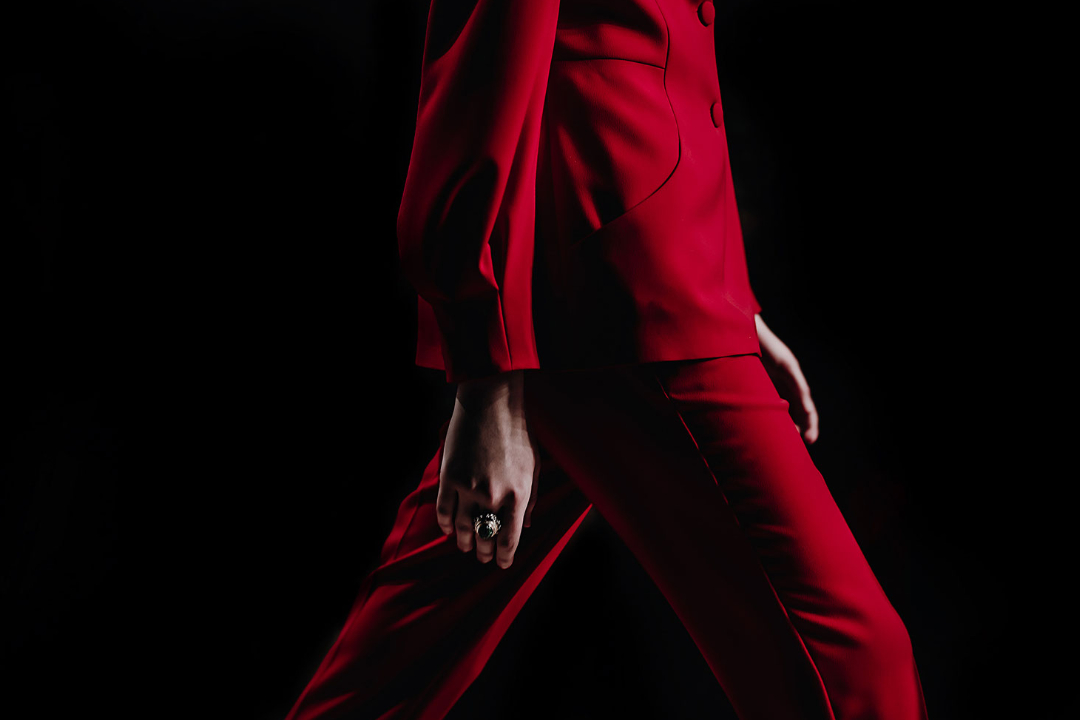
Something shifted, and it did not shift back. When the world retreated indoors for months that stretched into years, the body remembered what fashion had spent decades persuading it to forget: that clothing exists in contact with skin, that movement should be unimpeded, that the sensation of fabric against flesh matters as much as its appearance to others. When we emerged, we emerged changed — unwilling to return to the rigid, the restrictive, the merely decorative. And luxury, always the most sensitive barometer of cultural desire, had already prepared its response.
The Loro Piana Effect
Loro Piana understood before anyone else that the world’s wealthiest people would pay more for comfort than for spectacle — that a cashmere jogger at €2,000 was not a contradiction but a resolution, the point at which ease and excellence ceased to be opposing values. The house’s genius was to recognise that softness is not the absence of luxury but its purest expression: that a fibre so fine it can barely be photographed, worked with such precision that the garment weighs almost nothing while insulating completely, represents a more sophisticated achievement than any structured jacket or evening gown.
Under LVMH’s ownership since 2023, Loro Piana has only deepened this proposition. The baby cashmere, the vicuña, the record-breaking merino — these are not just materials but statements of conviction: that comfort at the highest level requires the rarest resources on earth, and that the simple act of feeling extraordinary against one’s own skin justifies any expenditure.
The Row: Architecture of Quiet
Mary-Kate and Ashley Olsen’s The Row built an entire house on the proposition that the most powerful fashion statement is the refusal to make one. Their garments — cut from fabrics of absurd quality, constructed with couture-level finishing invisible to any observer, priced at levels that reflect their actual production costs — represent luxury as purely private experience. A coat from The Row does not announce itself. It does not photograph particularly well. It simply exists on the body with a rightness that the wearer feels but cannot easily explain to others.
This is fashion as introversion — designed for the sensation of wearing rather than the spectacle of being seen. The seams lie flat. The weight distributes evenly. The movement falls in a way that suggests the fabric has been trained, like a dancer, to behave with grace under any circumstance. The Row’s customer does not dress for others. She dresses for the relationship between her body and the material that covers it, and she considers this relationship worthy of serious investment.
Brunello Cucinelli: The Philosophy Made Corporate
Brunello Cucinelli has constructed not merely a brand but a philosophy — “humanistic enterprise” — in which the dignity of the worker and the comfort of the wearer are treated as inseparable values. His cashmere garments, produced in the medieval Umbrian village of Solomeo (which he has largely restored), carry prices that reflect his commitment to paying artisans significantly above industry standards. The customer pays not only for the cashmere but for the knowledge that its production did not require the exploitation of the hands that made it.
Cucinelli’s personal uniform — soft jacket, open collar, no tie, shoes that could be worn on a country walk — embodies his proposition with an authenticity that fashion’s more theatrical practitioners cannot replicate. He looks comfortable because he is comfortable, and his comfort is not laziness but principle: the conviction that ease of body enables clarity of mind, that restriction serves no purpose that relaxation cannot serve better.
Not Athleisure: The Distinction That Matters
It is essential to distinguish what these houses propose from athleisure — the phenomenon of wearing gym clothing in non-gym contexts that dominated the 2010s. Athleisure borrowed the forms of sportswear and deployed them as casualwear. What Loro Piana, The Row, and Cucinelli propose is something entirely different: the application of luxury’s highest standards of material and construction to garments whose primary design criterion is how they feel to inhabit.
A Loro Piana cashmere tracksuit is not a tracksuit made expensive. It is a garment engineered from first principles for the experience of the body within it — the weight, the drape, the thermal regulation, the way the fabric moves with rather than against the limbs. Its resemblance to sportswear is incidental. Its actual lineage is couture: the same obsessive attention to fit, the same insistence on invisible construction, the same conviction that garments should serve the body rather than constraining it.
The Permanent Shift
Fashion theorists will debate for decades whether the pandemic caused this shift or merely accelerated a transformation already underway. The evidence suggests the latter — Cucinelli’s growth preceded 2020, The Row’s ascent began in the early 2010s, and Loro Piana has traded on softness for decades. What the pandemic provided was permission: a collective experience of bodily comfort so profound that returning to discomfort felt not merely unnecessary but actively absurd.
The men who once wore stiff collars to the office now appear in cashmere crews. The women who once endured heels for dinner now arrive in flat leather shoes so beautifully made they require no elevation to communicate intent. The boardroom has softened. The restaurant has eased. The old signals — stiffness as seriousness, discomfort as effort, restriction as respect — have been replaced by a new semiotics in which ease signals not indifference but supreme confidence. Only those entirely secure in their position can afford to look this comfortable. Comfort has become the ultimate power move, and luxury’s most sophisticated houses understood this before anyone thought to articulate it.