
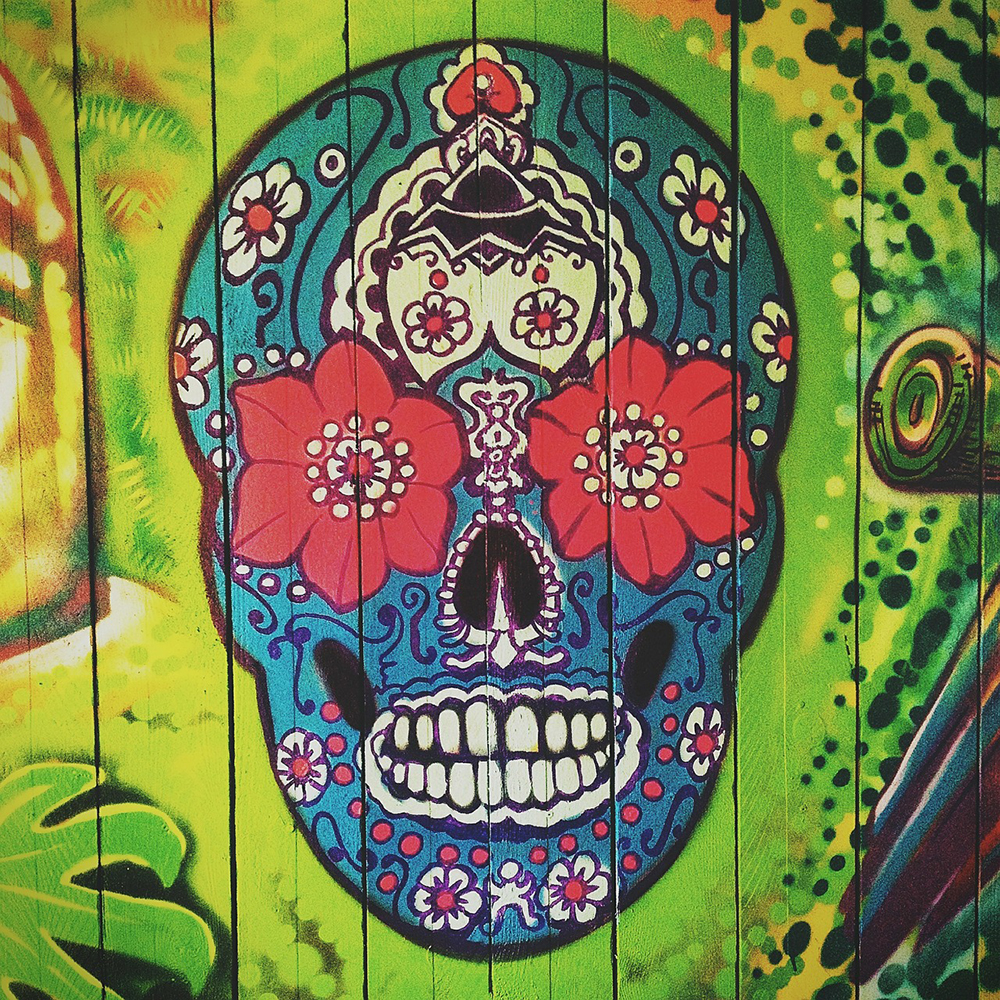
In the early decades of the twentieth century, Diego Rivera — muralist, polemicist, devourer of intellectual positions, and among the most consequential artists Mexico has produced — was also an obsessive collector of Pre-Columbian objects and Mexican folk art. His house in Mexico City, the pyramid-shaped Anahuacalli he designed himself from volcanic tezontle stone to house his collection, tells us something essential about the relationship between the high-art tradition and the popular one in Mexican culture: not the hierarchical separation that European aesthetic traditions insisted upon, but a fluid, mutually sustaining dialogue. Rivera understood, with the instinct of greatness, that the alebrijes of Oaxaca, the lacquerware of Guerrero, the Huichol yarn paintings of Jalisco, and the Talavera ceramics of Puebla were not charming ethnographic curiosities but fully realised works of art, carrying within them a depth of tradition, technical accomplishment, and aesthetic intelligence that demanded serious engagement. The collector of Mexican folk art inherits this understanding — or should.
Oaxacan Alebrijes: The Dreamed Animal
The alebrije — that hallucinatory carved and painted wooden creature, part jaguar, part serpent, part dragonfly, part nothing that has ever existed in nature — was not always Oaxacan. Its acknowledged originator, Pedro Linares of Mexico City, began making papier-mâché fantasy creatures in the 1930s after a fever-dream he described as an experience of a jungle populated by impossible, composite animals that called to him by a name he did not recognise: alebrije. When the Oaxacan craftsmen of the Sierra Juárez — the Zapotec communities of San Martín Tilcajete and Arrazola in particular — adopted the form in copal wood, they transformed it through their own visual traditions into something distinctly regional. The finest contemporary Oaxacan alebrijes, produced by master families such as the Aguilars of Ocotlán and the Jiménez family of Arrazola, achieve a level of carving precision and painted detail — dotwork and geometric patterning applied with brushes of a single hair — that places them unambiguously in the category of fine craft.
For the serious collector, the distinction between artisanal quality and mass production is rarely subtle once the eye is trained. The finest pieces show carving that follows the natural grain and gesture of the copal wood, paint applied in fine, consistent layers that do not obscure the form beneath, and a compositional coherence — the creature as a unified aesthetic idea rather than an assembly of disconnected features — that marks the master’s hand. The village of San Martín Tilcajete, where Manuel Jiménez first brought the form to international attention in the 1980s, remains among the best places to purchase directly from working families, thereby ensuring both authenticity and the equitable distribution of revenue.
Talavera: The Dialogue of Civilisations in Clay
Talavera ceramics represent one of the most fascinating fusions in the history of craft: the encounter between Spanish tin-glazed earthenware traditions, themselves derived from Moorish ceramics introduced to the Iberian Peninsula from North Africa, and the indigenous ceramic traditions of Puebla, where the finest Chinese porcelain was arriving by the Manila Galleon trade. The result, developed in Puebla and the nearby town of Talavera de la Reina in the sixteenth and seventeenth centuries, is a body of work of extraordinary richness — deep cobalt blues, ochres, manganese blacks, turquoise, and the distinctive white ground that distinguishes authentic Talavera from its many imitations.
Genuine Talavera is protected by a Denomination of Origin designation that limits its production to six municipalities in Puebla and Tlaxcala states, specifies the type of local clay that must be used, and prohibits the mechanised production techniques that proliferate in cheaper imitations. Authentic pieces are hand-thrown, hand-painted, and fired twice — a process that takes weeks from clay to finished object. The workshops of the Talavera Poblana tradition — Uriarte, founded in 1824 and the oldest continuous producer, and the more recently established but equally rigorous Talavera de la Luz — represent the tradition at its most intact.
Huichol Bead Art: Sacred Geometry
The Huichol (Wixáritari) people of the Sierra Madre Occidental in Jalisco and Nayarit states have been producing sacred art objects for ritual purposes for centuries; the export of their extraordinary visual tradition into the collecting world is a more recent and ethically complex phenomenon worth engaging with honestly. Traditional Huichol yarn paintings and, more recently, bead art objects — created by pressing glass seed beads into beeswax applied to carved wooden forms — draw their imagery from the nierika, sacred visions induced during peyote ceremonies that form the spiritual centre of Wixáritari religious practice. Deer, corn, eagles, the peyote cactus itself, and the blue-green combinations sacred to the rain deity Tatewari recur throughout the tradition.
The ethical collector approaches this tradition with awareness that the most sacred objects are not produced for external sale, and that purchasing directly from Huichol cooperatives — organisations such as the Huichol Center for Cultural Survival in Tepic — ensures that revenue reaches the producing communities and that the work offered is genuinely representative of the tradition rather than a degraded imitation produced for undiscriminating tourist markets.
Acquiring with Integrity
The Mexican folk art market has been both enriched and complicated by the enthusiasm of international collectors. The finest pieces of the twentieth century — work that Rivera collected, that Patricia Anawalt documented, that Nelson Rockefeller acquired for the Museum of Primitive Art — are now museum property or held in distinguished private collections; the secondary market for them requires specialist knowledge and access. For the contemporary collector building a living collection, the wisest approach combines direct acquisition from producing communities and their cooperatives, engagement with established galleries such as La Mano Mágica in Oaxaca City and Fonart’s network of government-supported artisan outlets, and the development of direct relationships with master craftspeople whose work repays sustained attention over time. Mexican folk art rewards the collector who approaches it as Rivera did: not as decoration or investment, but as a conversation with one of the world’s most vital and continuous traditions of human making.