
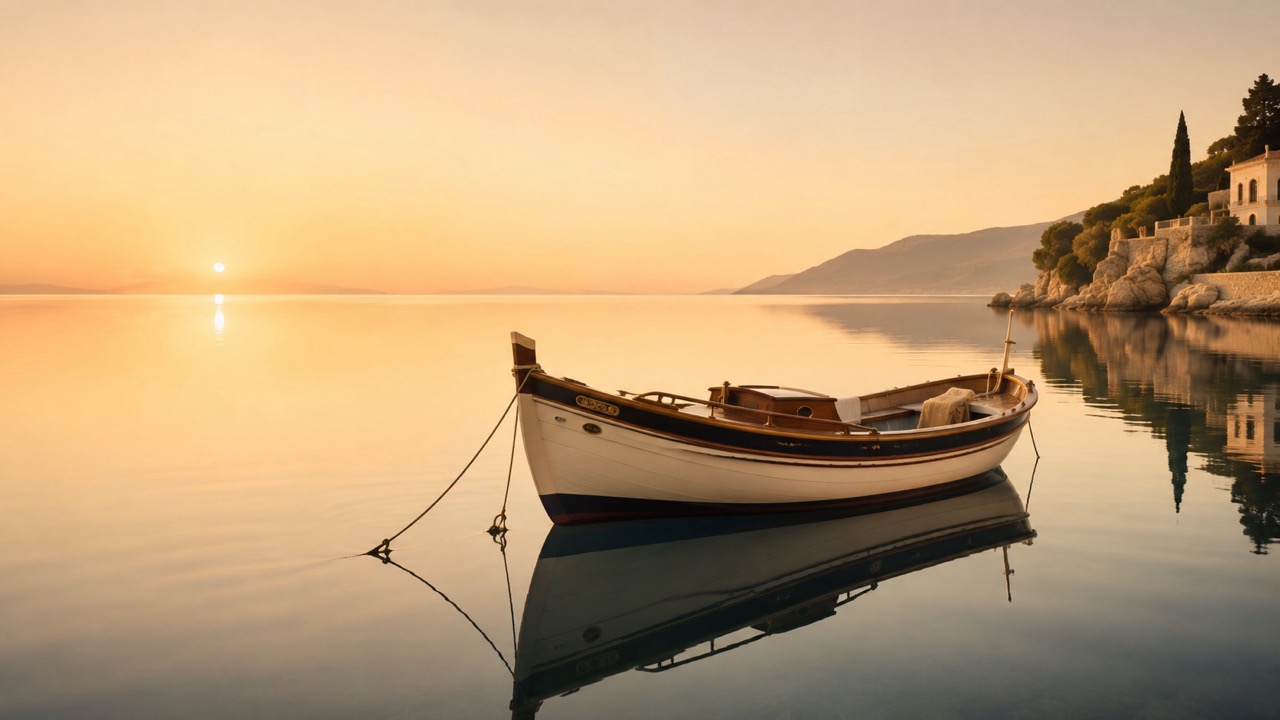
There is a particular alchemy that occurs when two people, still luminous with the decision they have just made, arrive somewhere that seems to have been arranged entirely for them. Light falls differently. Colours hold a deeper saturation. The ordinary act of sitting together over a meal becomes freighted with meaning. The Virgin Islands — that constellation of some 90 islands and cays strung between the Atlantic and the Caribbean Sea — possess an almost unfair talent for producing this effect. They are, by some confluence of geology, light, and culture, among the most naturally romantic places on earth.
St. John: The Unhurried One
Of all the islands in the archipelago, St. John is the one most likely to make a honeymoon couple feel that the world has been specifically arranged for their benefit. Two-thirds of the island is protected as Virgin Islands National Park, which means that the interior remains a canopy of tropical dry forest, the hillsides cascade uninterrupted to the sea, and the beaches — Trunk Bay, Cinnamon Bay, Maho Bay — are clean and relatively uncrowded even in high season. Trunk Bay, with its underwater snorkelling trail marked by signs identifying the coral and fish species, is routinely cited among the most beautiful beaches in the world, and the citation does not seem excessive to anyone who has stood at the water’s edge at the golden hour, watching the light turn the sea from blue to amber.
Caneel Bay, the legendary Rockresort that was rebuilt after Hurricane Irma and has reopened as Caneel Bay Resort, sits on seven beaches within the national park boundaries. Villas here are deliberately elemental — open-air breezeways, natural materials, the deliberate absence of televisions — because the resort’s philosophy has always been that the destination is sufficient entertainment. It is a philosophy that pairs exceptionally well with a honeymoon.
St. Thomas: Refined and Vivid
The contrast between St. John and St. Thomas could not be more deliberate or more appealing. Where St. John is elemental and quiet, St. Thomas is vivid and architectural, its hillsides terraced with sugar-coloured colonial buildings above the deep harbour of Charlotte Amalie, one of the finest natural harbours in the Caribbean. The Ritz-Carlton here occupies a position of regal assurance on the island’s east end, its white facades and terracotta rooflines echoing a Mediterranean aesthetic that suits the clarity of the light. The spa — indulge in the couples’ treatment suites, which look directly out to sea — is among the finest in the Caribbean.
Charlotte Amalie’s duty-free shopping, housed in warehouses that once held Danish colonial merchandise, is a particular pleasure for those who find that luxury goods acquired in beautiful places carry a talismanic quality. The diamonds and coloured stones available from the island’s established jewellers have, for many couples, become part of the honeymoon’s lasting legacy.
The British Virgin Islands: Seclusion at Scale
Across the Sir Francis Drake Channel — named for the privateer who sailed these waters in 1580 with what must have been considerable satisfaction — the British Virgin Islands offer a different register of romance entirely. The BVI is sailing territory, and there is no more intimate way to experience the archipelago than from the deck of a crewed yacht, moving from anchorage to anchorage, swimming off the stern in water so clear the anchor chain is visible in 10 metres of depth, dining on meals prepared by an onboard chef who understands that a honeymoon deserves lobster and champagne as a matter of course.
Necker Island, Richard Branson’s private island retreat available for exclusive hire, represents the apotheosis of this experience — an entire island, with its Balinese-style Great House, its infinity pools and tennis courts and windsurfing fleet, devoted entirely to one party. It is the kind of place that redefines one’s understanding of what a holiday can mean.
Anegada: The Coral Exception
The anomaly of the Virgin Islands is Anegada, the only coral island in an archipelago otherwise defined by volcanic geology. It sits low and flat on the horizon, barely visible until you are almost upon it, rimmed by the longest barrier reef in the Caribbean. The reef has claimed more than 300 ships over the centuries; today it claims only admiration. The beaches here — Loblolly Bay in particular — are among the least developed in the region, the sand almost unnervingly white, the water a sequence of blues that has no precise name in the English language.
The Texture of Time Here
What the Virgin Islands offer a honeymoon couple, beyond their considerable beauty and the luxury of their finest properties, is a particular quality of time. The pace of life in these islands has always resisted acceleration. The light changes slowly. Meals are unhurried. The sea, which is always present, always audible, always a visual presence at the edge of every view, imposes its own rhythm on the days. Couples who arrive with the modern instinct for scheduling and optimising frequently find themselves, within 48 hours, entirely converted to the island’s preferred pace — which is to say, no pace at all.
This, in the end, is the Virgin Islands’ most exquisite honeymoon gift: not the beaches or the hotels or the sunsets, remarkable as all of these are, but the gift of unhurried time together at the beginning of a life that will, inevitably, become much busier than this.