
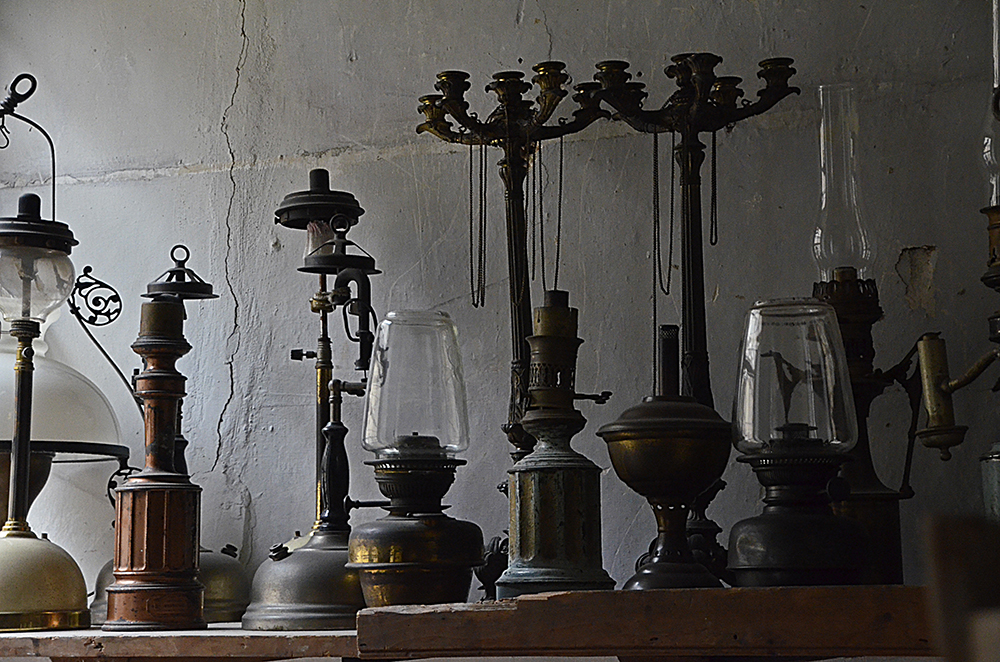
The difference between a good antique and a great one is not, in the end, a matter of age or provenance or rarity, though all three contribute. It is a quality more difficult to define and more immediately apparent when present: the quality of life in the object. A chair that has been sat in for two hundred years has a presence — a patina, a set of wear marks, a slight asymmetry introduced by decades of use — that a reproduction, however skillful, cannot replicate. The great antiquaire understands this distinction not intellectually but viscerally, in the way a musician understands pitch. It is a knowledge acquired through years of handling, comparing, being wrong, and slowly — across hundreds of markets, fairs, and private viewings — building the internal library of reference that separates the dealer from the browser.
The Eye: What It Sees and How It Learns
The antiquaire’s eye is trained on proportion first, surface second, and condition third — an ordering that surprises many collectors accustomed to evaluating antiques as if they were used cars. A piece whose proportions are right — whose dimensions reflect the aesthetic intelligence of the period and the workshop that produced it — will command attention across a crowded saleroom even before its materials and condition are examined. The proportions of a great Louis XV commode, for instance — the subtle swell of the bombé front, the relationship between the height of the marble top and the depth of the bronze mounts, the way the cabriole legs appear to grow from the body rather than support it — are as specific and as non-negotiable as the proportions of a great building. You cannot add an inch without destroying the effect.
Surface is the second examination. The antiquaire’s hand moves across the piece before the eye focuses on detail, because the fingertips detect variations in texture — the smoothness of a much-waxed walnut, the slight roughness where a later hand has introduced a repair, the particular warmth of hand-cut dovetails versus the mechanical precision of machine-cut joints — that the eye alone might miss. Patina, that untranslatable word that describes the accumulated effect of time, air, light, and use upon a surface, is the single most reliable indicator of authenticity: it cannot be faked with conviction, and the experienced hand recognises its absence immediately.
Provenance: The Story Behind the Object
A great antique carries its history with it, but not always visibly. The antiquaire’s responsibility — and one of the primary services for which the collector pays — is the reconstruction of that history from whatever evidence the piece provides: makers’ marks, inventory numbers, stylistic analysis, documentary research in auction records and estate catalogues, and the occasionally decisive evidence of the object’s physical construction. A commode that can be traced to a specific ébéniste’s workshop, documented in a specific inventory, and linked to a specific historical collection is a fundamentally different object — culturally, intellectually, and financially — from an identical commode without that chain of documentation. The provenance does not change what the object is. It completes what the object means.
The Market: Where to Look and What to Know
The hierarchy of the antiques market runs from the auction houses at its summit — Christie’s, Sotheby’s, Drouot, Bonhams — through the established dealers whose galleries in the Faubourg Saint-Honoré, Pimlico Road, or Madison Avenue represent generations of accumulated expertise, to the fairs and markets where the serendipitous discovery remains possible. The Biennale des Antiquaires in Paris (now held at the Grand Palais under the new designation Paris+), the TEFAF in Maastricht, and the Winter Show in New York represent the market at its most vetted and its most expensive. The Puces de Saint-Ouen in Paris, the markets at Arezzo and L’Isle-sur-la-Sorgue in Provence, and the numerous regional fairs that animate the European countryside on weekends throughout the year offer a different proposition: less certainty, lower prices, and the addictive possibility that the next stall will contain the piece that transforms a collection.
The Cardinal Rules
The master antiquaire’s advice, distilled across a lifetime of buying and selling, reduces to principles of deceptive simplicity. Buy what moves you, not what the market recommends; markets shift, but genuine aesthetic response endures. Buy the best example you can afford rather than multiple lesser ones; a single extraordinary piece teaches the eye more than a roomful of adequate ones. Touch everything; the hand knows what the eye suspects. Be patient; the right piece appears when it appears, and the impulse purchase, however exciting, is almost always inferior to the one that rewards a year of looking. And above all, learn from the dealers. The best antiquaires are not salespeople but scholars with inventory, and the education available in their galleries — freely given to the collector who arrives with genuine curiosity rather than a shopping list — is worth more than any book on the subject.