
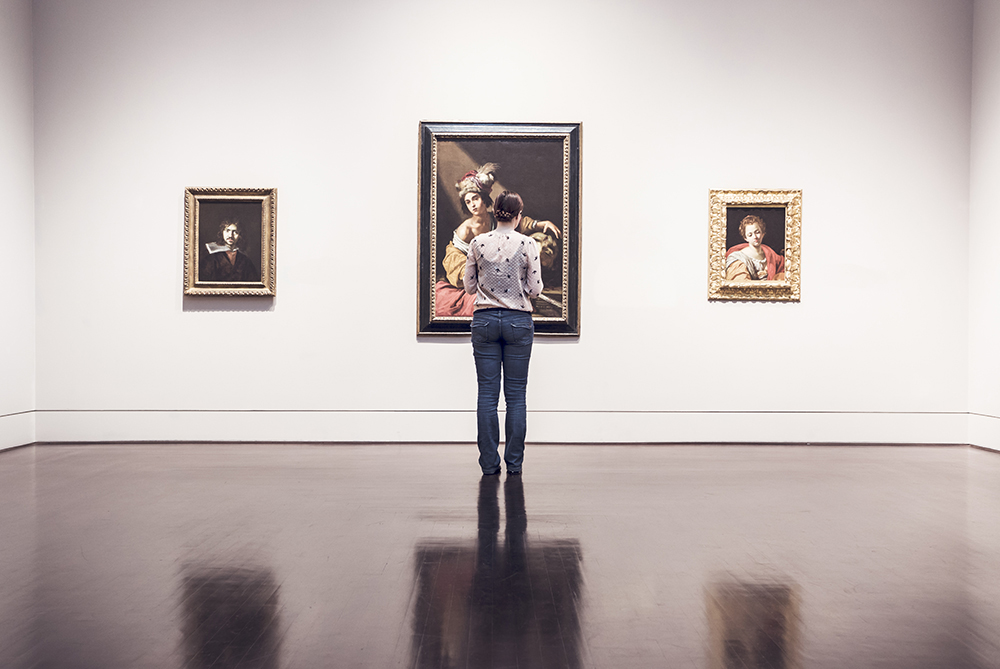
The curator’s power is, by design, invisible. The visitor enters a gallery and encounters what appears to be a conversation between artworks — this painting answering that sculpture, this photograph complicating the certainty of the canvas beside it — and if the curation is successful, the logic of the arrangement feels inevitable, as though the works themselves had chosen their positions. They had not. A human intelligence selected, sequenced, and contextualised every piece, and the decisions that produced the installation — what to include, what to exclude, how to light, how to pace, how to create the rhythm of encounter that transforms a collection of objects into an experience — are among the most consequential aesthetic decisions being made in the cultural world today. Five curators, working across different institutions and traditions, reveal how the art of selection shapes what the world sees.
Hans Ulrich Obrist: The Curator as Conversationalist
Obrist, the artistic director of the Serpentine Galleries in London, has conducted more than three thousand hours of recorded conversations with artists, architects, scientists, and writers — a project he calls the Interview Marathon and others call the most extensive oral history of contemporary culture in existence. His curatorial practice is inseparable from this conversational compulsion: exhibitions emerge from relationships developed over years of studio visits, dialogues, and the accumulation of a knowledge of living artistic practice so comprehensive that it constitutes a kind of collective memory. An Obrist exhibition is never a thesis illustrated by artworks; it is a proposition arising from the art itself, shaped by the curator’s understanding of each artist’s intentions, anxieties, and unfinished thoughts. The model is not the academic essay but the dinner party: curated encounters between works that have not previously met, producing conversations that neither the artists nor the curator could have entirely predicted.
Okwui Enwezor: The Curator Who Remapped the Canon
Enwezor, who died in 2019, transformed the institutional landscape of contemporary art more profoundly than any curator of his generation. His Documenta 11 in Kassel in 2002 — the first edition of the exhibition directed by an African curator — dismantled the assumption that contemporary art’s centre of gravity was European and demonstrated, with intellectual rigour and visual authority, that the most compelling artistic production was emerging from Lagos, São Paulo, Johannesburg, Beirut, and Mumbai as much as from New York and Berlin. His Venice Biennale of 2015, All the World’s Futures, placed Marx’s Das Kapital at the centre of a contemporary art exhibition and made the proposition seem not merely defensible but inevitable. Enwezor understood that the curator’s role was not decorative but political — that the decisions about who is shown, where, and in what context, are acts of cultural power with consequences that extend far beyond the gallery walls.
Cecilia Alemani: Architecture as Curatorial Medium
Alemani’s 2022 Venice Biennale, The Milk of Dreams — titled after Leonora Carrington’s surrealist children’s book — was the most praised edition of the exhibition in recent memory, and its success owed much to her understanding that curation is spatial as much as intellectual. The five “time capsules” she inserted throughout the exhibition — intimate rooms displaying historical works by figures including Hilma af Klint, Remedios Varo, and Claude Cahun alongside contemporary pieces — created pauses in the exhibition’s rhythm that allowed the visitor to absorb, to connect, and to understand the contemporary works in a historical context that enriched rather than encumbered them. Alemani demonstrated that the greatest curatorial skill is not selection alone but pacing — the management of the visitor’s attention over time and through space.
Thelma Golden: The Curator as Community
Golden’s tenure as director and chief curator of The Studio Museum in Harlem — and her leadership of its ongoing expansion into a new building designed by Adjaye Associates — represents a model of curation rooted in community as much as connoisseurship. The Studio Museum’s programme of artist-in-residence exhibitions has introduced artists who subsequently defined their generation — Kehinde Wiley, Mickalene Thomas, Njideka Akunyili Crosby — and Golden’s curatorial vision has consistently insisted that Black artistic production is not a subcategory of contemporary art but a central, defining force within it. Her concept of “post-Black art” — art that is informed by but not limited to questions of racial identity — has become one of the most influential curatorial frameworks of the twenty-first century.
What the Curator Knows
What connects these five practitioners — beyond their intelligence, their commitment, and their influence — is a shared understanding that curation is not a service profession but a creative one. The curator does not merely display art; the curator creates the conditions under which art speaks, the sequence in which it is encountered, the context that determines whether a work whispers or shouts. This is a form of authorship that remains largely invisible to the general public, which is perhaps as it should be: the best curation, like the best editing, effaces itself in the service of the work it presents. But the connoisseur who learns to read the curatorial hand — to recognise the intelligence behind the installation, the argument within the arrangement, the invisible architecture that holds an exhibition together — discovers an additional layer of aesthetic pleasure that transforms every gallery visit into a double encounter: with the art itself, and with the mind that chose to show it this way.