
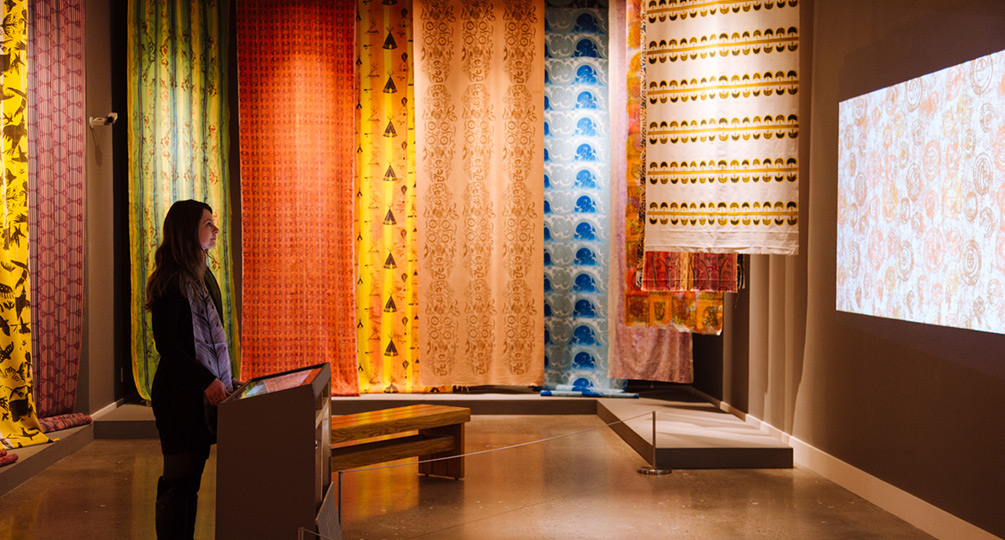
In the winter of 1940, Henri Matisse — bedridden with cancer, his painting hand compromised by surgery — began cutting shapes from sheets of painted paper with a pair of scissors. The resulting works, his celebrated papiers découpés, are among the most joyful things produced by any artist in the twentieth century: forms of pure, singing colour that communicate delight with an immediacy that bypasses analysis entirely. What is remarkable is not only the beauty of the work, but the circumstances of its making. Matisse was dying. He was in pain. And yet the act of making — the scissors moving through paper, the colours aligning, the shapes finding their relation to one another — restored him to something essential. It gave him back, as he said himself, the feeling of flight.
The Ancient Understanding
The idea that art heals is not a modern therapeutic innovation. It is among the oldest understandings in human culture. The cave paintings of Lascaux and Altamira were not merely decorative; anthropologists now believe they served ritual functions associated with healing, with the mediation of fear, with the transformation of experience into something that could be held and contemplated. Ancient Greek hospitals incorporated theatre and music as formal elements of treatment. The medieval Islamic hospitals — the bimaristan — prescribed music, poetry, and visual art alongside herbal medicine. The tradition was never interrupted; it was merely temporarily obscured by the Enlightenment’s preference for the quantifiable.
What the Neuroscience Reveals
Contemporary neuroscience has begun to provide the mechanisms beneath what artists and healers have long known intuitively. Engaging with visual art — whether creating it or contemplating it — activates the brain’s reward circuitry, releasing dopamine and serotonin in patterns that closely resemble those produced by other pleasure-inducing experiences. More remarkably, studies at institutions including University College London and the Max Planck Institute have demonstrated that viewing works of art associated with strong aesthetic response reduces cortisol levels, the primary biochemical marker of stress, within minutes of exposure. The museum, it turns out, is among the most effective pharmacies available without prescription.
The Studio as Sanctuary
For those who make rather than merely observe, the benefits are differently textured but no less profound. The act of making — whether painting, drawing, sculpting, weaving, throwing clay — engages what psychologist Mihaly Csikszentmihalyi identified as flow: a state of deep absorption in which self-consciousness temporarily dissolves, the internal critic falls silent, and the maker exists only in the immediate relationship between hand, material, and emerging form. In clinical settings, this state has been shown to reduce symptoms of anxiety and depression with an effectiveness comparable to pharmaceutical intervention, without the side effects and with the added benefit of producing something that endures beyond the session itself.
The Museum Visit as Contemplative Practice
There is a particular way of visiting a museum — not the exhausted march through the highlights, smartphone raised, every major work documented for an audience that will never quite look at the photograph — but the slow, receptive, almost meditative engagement with a single work or a small group of works that constitutes genuine aesthetic encounter. Spend forty minutes in front of Vermeer’s Woman in Blue Reading a Letter. Let your eye move through the painting’s extraordinary stillness — the light from the window, the map on the wall, the private absorption of the woman’s expression — without any agenda beyond looking. What occurs in that sustained attention is a form of presence that the ordinary texture of contemporary life rarely offers. The painting teaches the looking.
Art and Grief: The Transformative Function
Among art’s most documented therapeutic applications is its role in the processing of grief and loss. The visual arts, unlike verbal language, operate without the mediation of logical structure; they can accommodate emotional states — particularly those associated with loss — that resist articulation in words. Grief art therapy, now practiced in hospitals, hospices, and bereavement counselling settings worldwide, does not require the participant to be skilled or talented. It requires only the willingness to mark — to put something on paper or canvas or clay that externalises an interior experience and makes it, in some measure, visible and therefore manageable. The act of making the feeling material is itself a form of mastery over it.
Colour as Medicine
The therapeutic properties of colour have been investigated since the early twentieth century, when Rudolf Steiner incorporated colour theory into his anthroposophical medicine, and more rigorously since the 1970s, when environmental psychologists began measuring the physiological effects of different colour environments on patients in clinical settings. Blue and blue-green tones lower heart rate and blood pressure. Warm earth tones — the ochres and terracottas that appear throughout the art of every pre-industrial civilisation — promote feelings of safety and groundedness. The particular yellow of Van Gogh’s late sunflowers, that almost vibrating, charged chromatic intensity, has been described by multiple observers as producing a physical sensation of warmth even in the context of a cool gallery. This is not mysticism. It is the body responding, as it always has, to colour as a fundamental environmental stimulus.
The Return of the Atelier
Across Europe and North America, a quiet cultural shift is underway: the return of the atelier, the working studio, as a space of therapeutic as well as aesthetic practice. Wellness resorts now offer drawing and painting classes alongside their yoga programmes and sound baths. Corporate retreats have incorporated life drawing and ceramics into their schedules. Luxury hotels from the Cotswolds to the Maldives now provide dedicated creative studios as part of their guest facilities, in recognition that the appetite for making — for the particular satisfaction of having produced something with one’s hands that did not exist before — is as fundamental to human wellbeing as rest or nourishment.
The Permission to Make
The single greatest obstacle to art’s healing potential is the belief, lodged deep in the psyche of the over-educated adult, that one has no right to make unless one is demonstrably talented. This belief is a modern invention and a damaging one. The children who draw and paint and model with clay without self-consciousness, without reference to outcome or quality, who make because making is intrinsically satisfying — those children are engaged in something that we spend our adult lives struggling to recover. The healing canvas is not the canvas of the masterpiece. It is the canvas of the attempt: imperfect, honest, and entirely sufficient.