
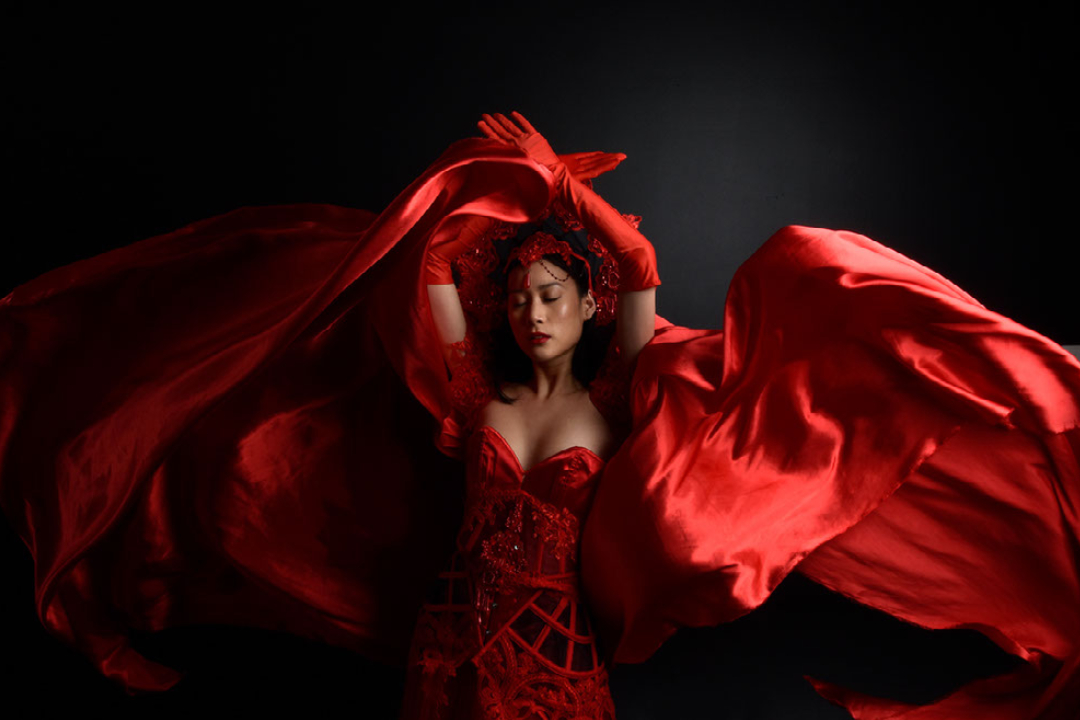
A great photograph stops time — not merely records it. There is a crucial distinction. The record is the function of the camera; the stopping is the art of the photographer. In the hands of a master, the lens does not simply capture what exists before it. It selects, frames, and concentrates reality until something latent within the visible world is made suddenly, irrevocably manifest. This is as true of a fashion editorial shot on an Alexander McQueen rooftop as it is of a travel portrait made in the markets of Marrakech or the corridors of a Kyoto temple at dawn.
The Education of an Eye
Every photographer of genuine distinction will tell you the same thing: technique is learned in months, but seeing takes years. The camera is a transparent instrument — it cannot disguise an untutored eye, and no amount of expensive glass or careful post-processing can substitute for the fundamental capacity to recognise, in the flux of the visible world, the image that is waiting to be made.
Developing this capacity requires a particular kind of study. One must look — look systematically and historically — at the work of those who came before. To understand fashion photography without internalising Helmut Newton’s charged psychological landscapes, Irving Penn’s classical formalism, and Guy Bourdin’s surrealist provocations is to attempt architecture without understanding load-bearing walls. These artists were not merely stylish; they were thinkers who used the visual language of their medium to articulate ideas about desire, power, beauty, and the body that had never been expressed in quite that form before.
Light as the Primary Material
Every photographer’s fundamental material is light, and mastery begins with understanding light in all its varieties: the blue-gold hour light of early morning that arrives soft and forgiving; the theatrical high-contrast drama of midday sun; the particular melancholy of the overcast northern European sky that Richard Avedon exploited so masterfully in his outdoor work; the way artificial light sources — tungsten, strobe, the leaked neon of a Tokyo side street — each carry their own emotional temperature.
In travel and culture photography, light is often the difference between a documentary record and a work of art. The same courtyard in Havana at noon and at seven in the evening is, photographically speaking, two entirely different places. The practised photographer learns to wait — sometimes for hours, sometimes for days — for the quality of light that will transform a scene from interesting to indelible. This patience is not passive; it is an active, meditative state of heightened alertness.
The Ethics of the Gaze
Culture and travel photography raise questions that fashion photography, for the most part, can sidestep: questions of consent, representation, and the power dynamics embedded in the act of photographing another person’s world. The finest practitioners in this space approach these questions not as obstacles but as central to their practice. Sebastião Salgado has spoken at length about the relationship he builds with his subjects before he raises his camera — sometimes spending weeks in a community before making a single exposure. The resulting images carry a quality of dignity and reciprocity that is immediately felt, even before one knows the context.
To photograph in another culture with integrity requires genuine curiosity — not the voyeur’s curiosity, which is essentially extractive, but the traveller’s curiosity, which is open to reciprocal exchange. When a photographer earns the trust of their subject, what appears on the frame is not merely a likeness but a collaboration, however wordless and brief. This collaborative quality is what separates the documentary image from the exploitative one.
Fashion Photography: Where Art Meets Commerce
Fashion photography occupies a uniquely charged space in the broader field — it must simultaneously serve commerce and aspire to art, must be immediately legible and lastingly interesting, must seduce and provoke without alienating the buyer. The photographers who navigate this tension most gracefully tend to be those with the strongest personal vision: Annie Leibovitz brings the psychological intensity of portraiture; Steven Meisel the historian’s eye for style and cultural reference; Nick Knight a technological radicalism that constantly challenges the boundaries of what a fashion image can be.
What these artists share, despite their considerable differences, is a refusal to be merely competent. Competence in photography is abundant. Vision — the settled, idiosyncratic, hard-won capacity to see the world in a way that is recognisably and distinctively one’s own — is vanishingly rare, and it is what the great practitioners spend their careers pursuing.
The Craft in the Digital Age
The democratisation of image-making through digital technology and the smartphone has not, as some feared, devalued photography as an art. It has, rather, created a more demanding environment in which visual noise is ubiquitous and the image that genuinely stops a viewer becomes more precious. The discipline of understanding why a particular composition works, why a specific aperture choice creates the depth of field that serves an emotional rather than merely technical purpose, why waiting for the decisive moment — Cartier-Bresson’s famous formulation — produces something qualitatively different from spraying frames at high speed: these remain the essential lessons, and they have not changed since the first gelatin plate was exposed to available light.
To master them is to join a lineage of artists who understood that a lens, in the right hands, is not a machine for recording the world but an instrument for reimagining it.