
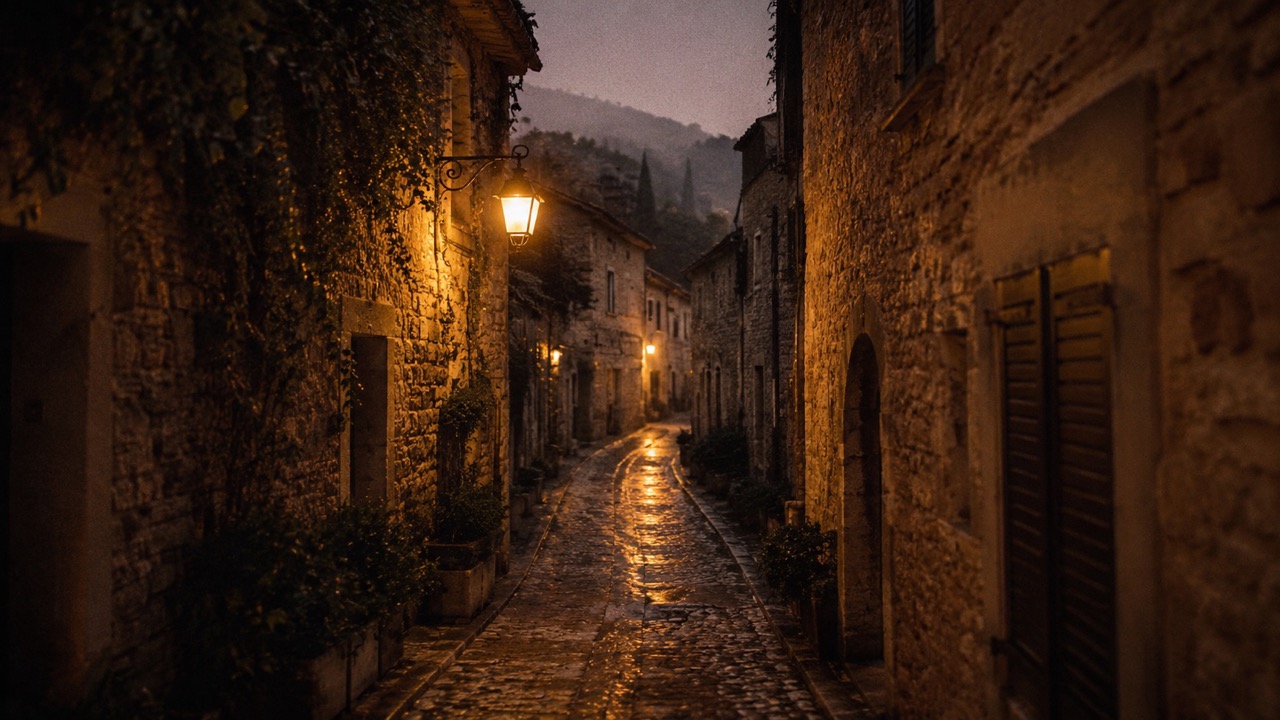
Luxembourg is, by the measures that travellers typically apply, a very small country. It is possible to drive from its northernmost point to its southernmost in under two hours, and the population of its capital city is, by European standards, that of a modest provincial town. These facts have conspired to render Luxembourg, in the imagination of many international travellers, a kind of geographical parenthesis — a nation noted primarily for its banking sector and its position on the map between France, Germany, and Belgium, rather than as a destination worthy of extended consideration in its own right. This impression is, on examination, entirely wrong.
A Capital of Dramatic Architecture
Luxembourg City is built on and around a series of dramatic rock promontories — the Bock, whose natural fortifications drew the Frankish count Sigefroi to build his castle there in 963 CE, and the Rham, whose gorges and medieval towers create a skyline of considerable romantic force. The old town, a UNESCO World Heritage Site since 1994, sits atop these rocky outcrops and looks down into the valleys of the Alzette and Pétrusse rivers with the composed assurance of a settlement that knows its position is literally unassailable.
The Chemin de la Corniche, described by UNESCO as the finest balcony in Europe, runs along the old city walls with views down into the Alzette valley that stop the breath at any season and at any hour. Below, the Grund district — a neighbourhood of converted mills, artisan studios, and intimate restaurants tucked along the river bank — offers a version of European urban life of extraordinary charm. To descend from the upper town to the Grund and spend an afternoon in its café-lined streets before climbing back up through the rock casements as the light turns amber is one of the most pleasurable and least heralded urban walks in all of Europe.
The Moselle Valley: Wine Country of the North
South of the capital, where Luxembourg meets Germany and France along the banks of the Moselle river, lies the country’s wine country — a fact that surprises many visitors who associate Luxembourg with finance rather than viticulture. The Moselle Valley produces wines, primarily from Riesling, Pinot Gris, and Auxerrois grapes, of genuine quality and character. The Crémant de Luxembourg, the country’s sparkling wine produced by the traditional method, has improved dramatically in recent decades and now offers a refined alternative to more famous sparkling wines at a fraction of the price.
The wine estates of the Moselle are strung along the river like beads on a rosary — Remich, Grevenmacher, Wormeldange — and many welcome visitors with tastings and cellar tours conducted with the unhurried graciousness characteristic of the Luxembourg character. The best Moselle Rieslings, with their mineral precision and citrus-driven freshness, are wines of genuine regional distinction that reward the curious traveller who makes the thirty-minute drive from the capital.
The Ardennes: Luxembourg’s Wild North
The northern third of Luxembourg — the Ardennes region, shared with Belgium — is a landscape of a different, wilder character: dense beech and oak forests cut through by river gorges, medieval castles perched on improbable cliff-edges, villages of such antiquity and quiet that time seems to move at a different rate. Vianden, whose magnificent castle dominates the valley of the Our river, is among the most beautiful fortified sites in northern Europe — a complex of feudal towers and Renaissance wings that served as the ancestral seat of the House of Orange-Nassau. Victor Hugo lived there briefly in the 1870s and was, one feels, not displeased with the arrangement.
The Our valley, south of Vianden, offers walking trails of considerable beauty through riverside woodland and dramatic gorge landscapes. In autumn, when the beech forests turn every gradation between butter-yellow and deep burgundy, the Ardennes region achieves a natural spectacle that the country’s most dedicated advocates tend to consider its finest hour.
Cultural Life and the European Experiment
Luxembourg’s cultural life is richer than its size would suggest, sustained by a population that is nearly fifty percent foreign-born and carries the intellectual and cultural traditions of dozens of nations simultaneously. The MUDAM — the Musée d’Art Moderne Grand-Duc Jean, designed by Ieoh Ming Pei in the expansive tradition of his Louvre pyramid — houses a permanent collection of contemporary art of genuine international quality, alongside temporary exhibitions that draw from the best of European and global contemporary practice.
The country is also, uniquely, the home of the European Court of Justice and several major EU institutions — a fact that gives Luxembourg City an unusually cosmopolitan character, with restaurants serving every European cuisine and a public discourse conducted in three official languages: Luxembourgish, French, and German. The national identity, built across centuries of occupation and peaceful coexistence within the great currents of European history, is something quietly distinctive and genuinely admirable.
To visit Luxembourg with proper attention is to discover a country that has been consistently underestimated, and to understand that the most rewarding discoveries in travel are often not the famous or the fashionable but the small, the overlooked, and the quietly extraordinary.