
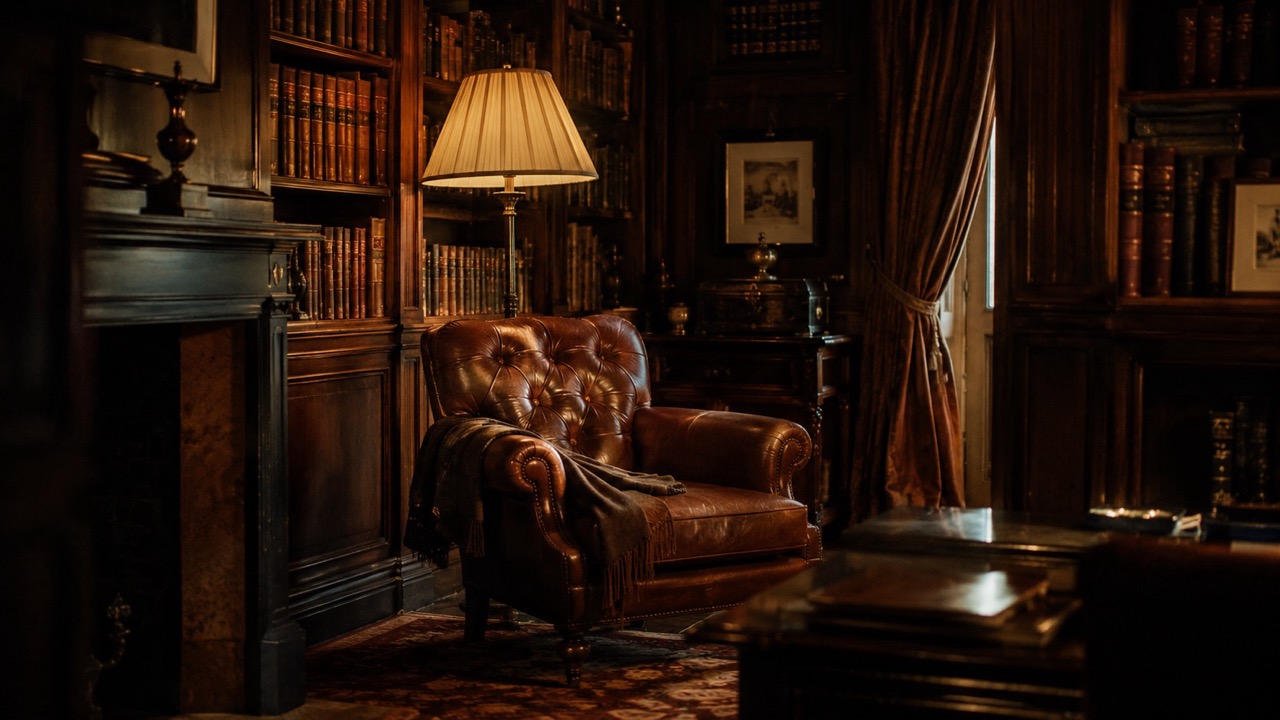
The library hotel is a proposition that sounds decorative and is, in its best expressions, existential. Not a hotel with bookshelves — every boutique hotel in the world has discovered that leather-bound spines photograph well — but a hotel that takes its literary identity seriously: that curates its collection with genuine intelligence, that provides the conditions (silence, light, comfortable seating, uninterrupted time) in which reading actually occurs, and that understands the relationship between a reader and a library as one of the most intimate transactions available to the travelling mind.
The Literary Man, Óbidos
The medieval walled town of Óbidos, an hour north of Lisbon, has been designated a UNESCO Creative City of Literature, and its most remarkable expression of that identity is the Literary Man — a former convent converted into a hotel that houses sixty-five thousand books. The collection is not ornamental. It is browsable, borrowable, and arranged with a bibliophile’s instinct: first editions alongside contemporary fiction, Portuguese poetry beside French philosophy, art monographs stacked on a refectory table that once held the convent’s communal meals. The rooms are named for literary movements and the public spaces encourage the particular form of social solitude that reading in company provides.
Gladstone’s Library, Hawarden
The only residential library in Britain — founded by William Gladstone, who in 1895, at the age of eighty-five, personally wheelbarrowed thirty-two thousand of his own books from his home to the purpose-built library a quarter-mile away — operates as both a research institution and a guest house. The twenty-six bedrooms are modest by hotel standards, which is precisely the point: the luxury here is the collection, the reading rooms, the silence, and the company of other readers. The food room serves meals that are good and unpretentious, and the conversations at dinner — among theologians, historians, novelists, and the occasional tourist who booked by accident and stayed by revelation — are among the best to be had in North Wales or anywhere else.
The Hôtel Littéraire Le Swann, Paris
This small Parisian hotel in the seventeenth arrondissement dedicates itself entirely to Proust — his world, his characters, his obsessions. The rooms are named for figures from À la recherche du temps perdu, the common areas display first editions and manuscript facsimiles, and the library holds a comprehensive collection of Proustian scholarship alongside the works that influenced him. The hotel does not presume that every guest is a Proust scholar; it presumes that every guest is capable of becoming one, given the right environment. The madeleines served at breakfast are, naturally, the real thing — baked to the recipe that Proust described with such precision that it has become the most famous culinary passage in literature.
The Sylvia Beach Hotel, Newport
Named for the American bookseller who founded Shakespeare and Company in Paris, this Oregon Coast hotel dedicates each room to a different author — the Colette room, the Hemingway room, the Emily Dickinson room — furnished and decorated in a style that evokes the writer’s world and stocked with a complete collection of their works. The oceanfront reading room, which prohibits electronic devices and encourages the particular form of sustained attention that the Pacific horizon seems to induce, is the heart of the operation. The hotel hosts regular literary events, author readings, and the kind of conversation about books that is easier to have when everyone present has, quite literally, been sleeping inside their favourite author’s bibliography.
Aman Tokyo: The Minimalist Library
The library at the Aman Tokyo represents the opposite pole of the library hotel concept — not abundance but curation, not thousands of volumes but a carefully selected collection of art books, architectural monographs, and cultural periodicals arranged in a space of such architectural refinement that the act of selecting a book from the shelf becomes a contemplative exercise. The Kerry Hill–designed space uses the materials and the proportions of the traditional Japanese study — washi paper, camphor wood, a quality of light filtered through sliding screens — to create an environment in which reading and looking become aspects of the same activity.
What connects these disparate properties — the converted Portuguese convent, the Victorian library in the Welsh countryside, the Proustian enclave in Paris, the Oregon Coast retreat, the minimalist Tokyo sanctuary — is the understanding that reading is not merely an activity but a condition, and that the spaces in which it occurs are not interchangeable. The library hotel, at its best, provides what the reader most needs and what the modern world most consistently withholds: an environment designed, from its architecture to its silence to the quality of its collection, for the undistracted encounter between a mind and a book.