
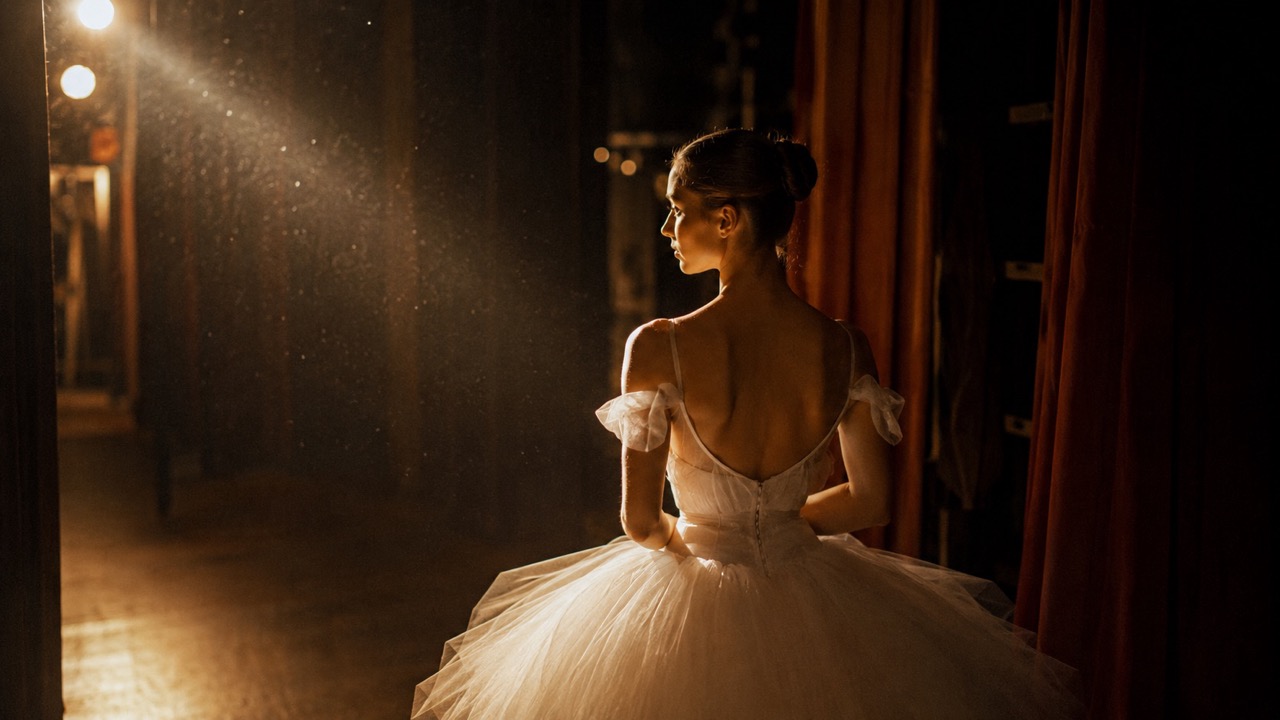
The ballet dancer’s relationship with clothing is, by professional necessity, one of the most intimately considered in any creative field. Eight hours a day, the body is an instrument of extreme precision, subject to physical demands that most athletes would recognise, clothed in garments that must permit total freedom of movement while projecting an aesthetic that the dancer has chosen with the same intentionality they bring to their art. What ballet dancers wear off stage — in the studio, in transit, at the restaurant after a performance — constitutes one of fashion’s most distinctive and least documented style vocabularies: a lexicon of ease, discipline, and quiet sophistication that the fashion industry has admired, borrowed from, and never quite managed to replicate.
The Studio Aesthetic: Where Function Becomes Style
The ballet studio is, in sartorial terms, a laboratory where the relationship between garment and body is tested under the most exacting conditions. The wrap cardigan — tied at the waist, open at the front, its drape following the body’s movement rather than restricting it — migrated from the ballet studio to the fashion mainstream decades ago, but its original purpose remains legible in its design: warmth without bulk, coverage without constraint, a silhouette that flatters a body in motion. The leg warmer, the crossover top, the high-waisted pant that elongates the leg line, the soft-soled flat shoe — each originated as a functional response to the dancer’s needs and acquired, through the particular elegance that function confers upon form, a style authority that transcends its origins.
Contemporary dancers have elevated the studio aesthetic into something more deliberately composed. The younger members of the Paris Opera Ballet, the Royal Ballet, and American Ballet Theatre maintain personal styles that blend technical wear with contemporary fashion — a Loewe knit over rehearsal tights, an Acne Studios coat thrown over a leotard, vintage Chanel ballet flats (the irony fully intentional) worn to and from class. The effect is a kind of effortful effortlessness that the fashion world has spent decades trying to manufacture and that dancers achieve simply by dressing for the life they actually lead.
The Post-Performance Silhouette
After a performance, when the body is simultaneously exhausted and electrically alive, the dancer’s dressing choices reveal priorities that the fashion industry might profitably study. Comfort is non-negotiable — the body has just completed two and a half hours of extraordinary physical output — but the standard of appearance remains high, because the post-performance social life of a ballet company is a significant professional arena. The resulting aesthetic tends toward what might be called elevated ease: beautifully cut trousers with a generous leg, cashmere or merino knits in dark, neutral tones, a well-chosen scarf, flat shoes of quality. Nothing tight. Nothing that restricts circulation to muscles in recovery. Everything chosen with the unconscious precision of someone whose body-awareness operates at a level the rest of us can barely imagine.
The Couture Connection
The relationship between ballet and haute couture is among the oldest and most productive in cultural history. Coco Chanel designed costumes for Diaghilev’s Ballets Russes. Christian Dior dressed the dancers of the Paris Opera. More recently, Valentino’s creative collaboration with the New York City Ballet and Iris van Herpen’s costumes for the Dutch National Ballet have demonstrated that the exchange between couture and choreography continues to produce work of genuine creative significance. The dancer’s body — trained to inhabit fabric with an awareness of line, movement, and visual impact that no model can match — remains the ultimate vehicle for a couturier’s vision, and the couturier’s fabrics — engineered for beauty, cut for the body’s architecture — provide the dancer with materials that elevate even the simplest gesture into spectacle.
The Influence, Uncredited
The ballet world’s influence on contemporary fashion operates largely without attribution. The wrap dress, the ballet flat, the bodysuit, the practice of wearing athletic knits as outerwear, the preference for a high waist and a long leg line, the confidence to wear black in daylight without apology — each of these mainstream fashion staples originated in or was popularised through the ballet world’s particular relationship with the dressed body. To observe professional dancers in their daily lives — at the stage door after a performance, crossing the plaza outside Lincoln Center, gathering at the cafés near the Palais Garnier — is to see a style tribe whose influence is everywhere and whose credit is almost nowhere. This article, in its small way, corrects the record.