
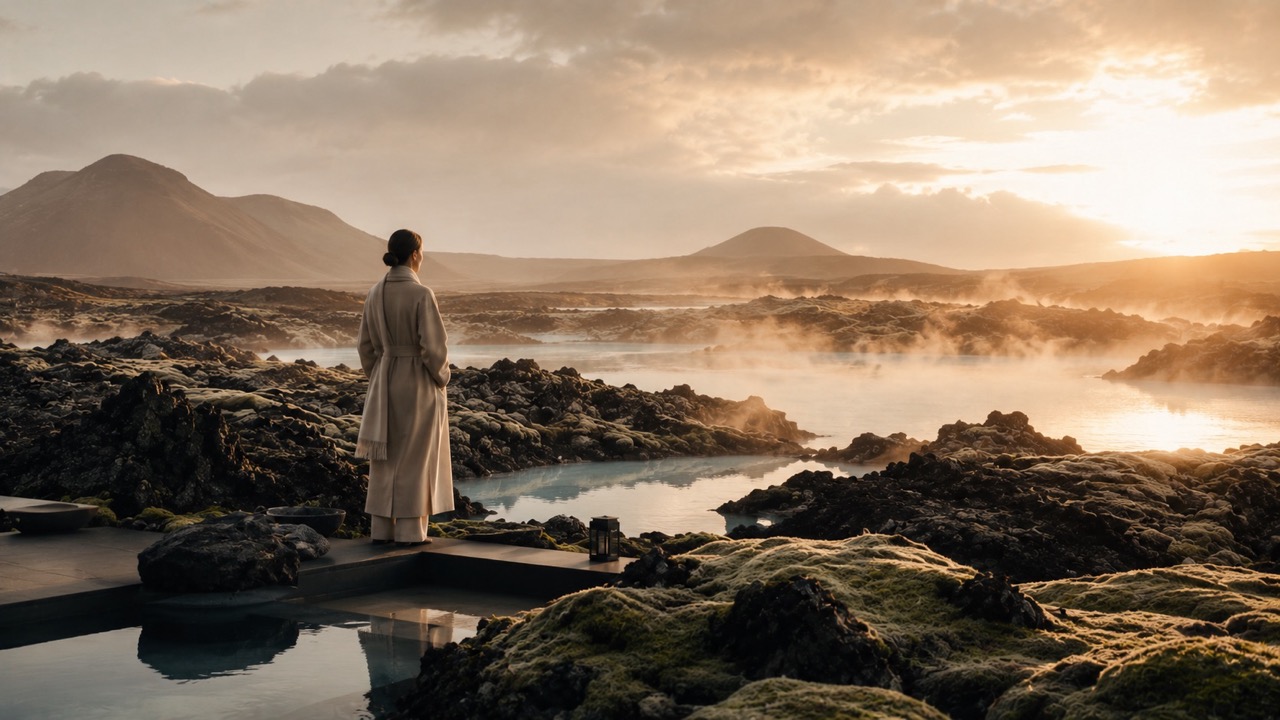
There is a particular quality of silence in the Scottish Highlands that resists description — not the absence of sound, but a fullness of quiet, a landscape so vast and so ancient that it absorbs noise the way peat absorbs rain. To travel here for whisky alone is to miss the point, though the whisky is reason enough. The single-malt trail that threads through Speyside and across to Islay is less a route than a meditation, each distillery a chapel of patient transformation, each dram a liquid memoir of the ground beneath your feet.
The Speyside Contemplation
Speyside in autumn is the colour of its own whisky — amber, copper, deep honeyed gold. The River Spey moves through the valley with the unhurried confidence of something that has been doing its work for millennia, and the distilleries that cluster along its banks share that same quality of quiet persistence. At Macallan’s Easter Elchies estate, the sherry-seasoned casks breathe in warehouses where time moves differently. At Glenfiddich, the Robbie Dhu springs still feed the same stills that William Grant fired in 1887. These are not factories. They are monasteries of flavour, tended by people whose knowledge is inherited rather than taught.
The landscape between distilleries matters as much as the drams themselves. The Cairngorms rise to the south, their granite plateaux holding snow well into May. Red deer move across the hillsides in groups of deliberate grace. The air carries peat smoke and heather and the mineral coldness of mountain streams. To drive — or better, to walk — between tastings is to understand why these whiskies taste the way they do. Terroir is not merely a viticultural conceit; it is written into every glass poured in these glens.
Islay’s Peat-Smoke Altar
The crossing to Islay is itself an act of commitment. The ferry from Kennacraig takes two hours across water that rarely flatters, depositing you on an island where the wind carries salt, iodine, and the unmistakable phenolic smoke of peat-fired kilns. Laphroaig, Lagavulin, Ardbeg — the southern trinity sits within walking distance of one another along a coast that feels like the edge of the known world. Here, whisky is not refined; it is elemental. The malting floors at Laphroaig still turn by hand. The peat is cut from bogs that have been forming since the last ice age retreated. Each bottle contains ten thousand years of botanical decay, transformed by fire and patience into something transcendent.
To taste Islay whisky on Islay is an experience that cannot be replicated in a London bar. The context is everything — the crash of Atlantic waves against black rock, the cry of oystercatchers, the particular grey-blue light that makes the island feel suspended between sea and sky. The dram in your hand is not merely a drink; it is a concentrated expression of this specific place, this weather, this ancient chemistry of water and grain and smoke.
Noble Solitude: The Highland Lodge
The Highlands have always understood that true luxury is not gilded excess but earned remoteness. The Torridon, set against the Wester Ross mountains with Loch Torridon silvering its doorstep, offers the kind of seclusion that money alone cannot buy — you must want to be unreachable. Kinloch Lodge on Skye, where Lady Claire Macdonald once presided over a kitchen that married French technique with Highland larder, remains a place where dinner is an event and the surrounding silence is absolute. These are not hotels in the conventional sense. They are refuges, places where the absence of connection — mobile signal, Wi-Fi, the perpetual digital hum — becomes the primary amenity.
The activities on offer — stalking, fishing, hill-walking — are presented as sport but experienced as something closer to philosophy. To follow a ghillie across a peat moor in pursuit of salmon is to enter a state of attention so focused it borders on meditation. The fish matters less than the watching. The stag matters less than the stillness required to approach it. The Highlands teach a lesson that the modern world has largely forgotten: that boredom is not a failing but a doorway, and that solitude, properly embraced, is the most generous form of self-knowledge.
The Dram at Day’s End
Evening in the Highlands arrives slowly, the light lingering at the horizon as though reluctant to leave. In a lodge drawing room, with a peat fire muttering in the grate and a glass of something old and sherried catching the last amber glow, you understand the Highland compact. This is luxury stripped to its essence — warmth after cold, flavour after effort, company after solitude. The whisky in your glass has waited twelve, eighteen, twenty-five years for this moment. The least you can do is meet it with equal patience.
Scotland’s Highlands do not seduce; they select. They reward those willing to travel slowly, to be cold and wet and lost before finding warmth, to understand that the finest things — a perfect dram, a perfect silence, a perfect view — cannot be rushed or bought, only earned through the ancient currencies of time, attention, and the willingness to be genuinely, nobly alone.