
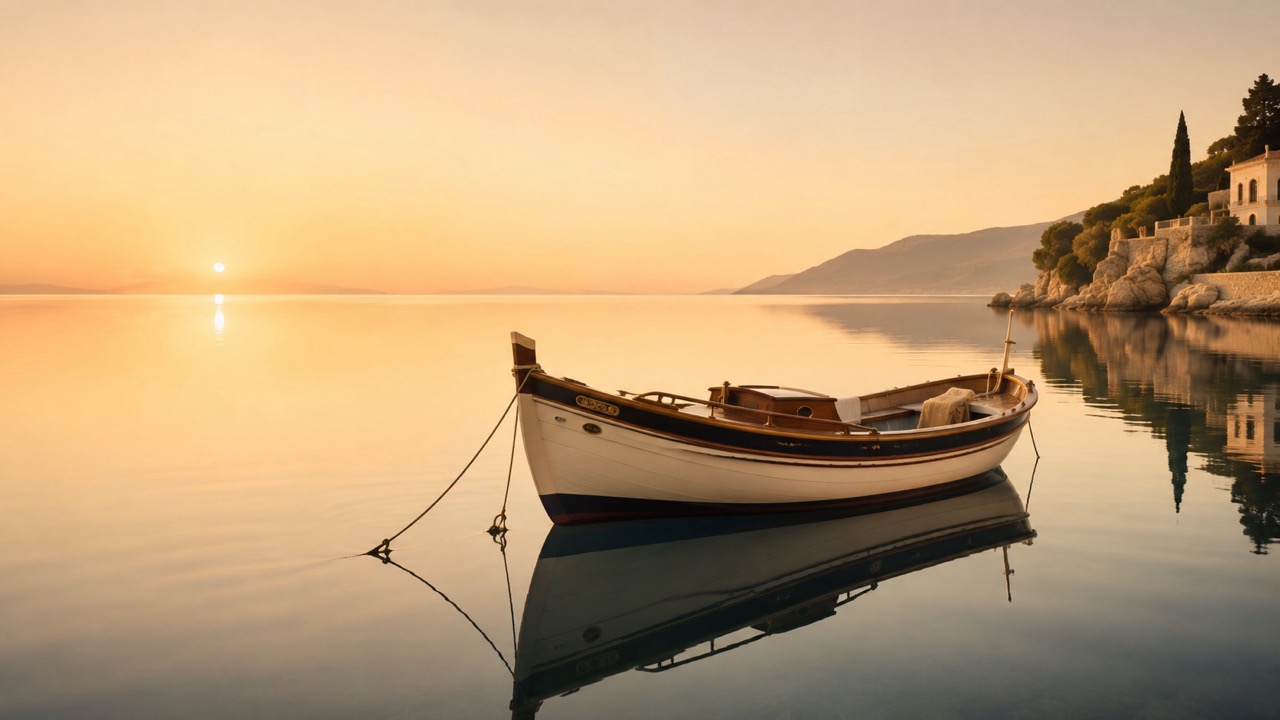
The private island exists in the popular imagination as the ultimate expression of wealth — Onassis on Skorpios, Branson on Necker, Marlon Brando on Tetiaroa. But the reality of island exclusivity has diversified considerably beyond billionaire ownership. Across the Caribbean, the Mediterranean, and the Indian Ocean, a network of properties offers exclusive-use rental at price points ranging from the accessible to the extraordinary — and the experience of an island entirely to yourself, however briefly, remains one of travel’s most potent luxuries.
The Caribbean: Established Exclusivity
Mustique — that volcanic speck in the Grenadines where Colin Tennant invited Princess Margaret in 1960 and thereby created the template for private-island society — offers villa rentals through the Mustique Company that range from ten thousand to over a hundred thousand dollars per week. The island itself is a shared community of approximately a hundred properties, not an exclusive-use rental. But the effect, given its geographical isolation and the absence of any hotel infrastructure, approximates privacy at a level impossible on larger islands. For genuine exclusive-use, Calivigny Island off Grenada offers the entire property — two beaches, five villas, a fleet of boats, a staff of fifty — for a weekly rate that, split among a group of ten or twelve, approaches attainability for the seriously affluent rather than the genuinely billionaire. Petit St. Vincent — a thirty-acre resort island where communication with staff happens by raising a flag on your terrace — offers the psychology of a private island within a resort structure.
The Greek Islands: Hidden Inventory
Greece contains over six thousand islands, of which fewer than three hundred are inhabited. Among the uninhabited, a small but significant number are available for exclusive rental through specialist agents — firms like Vladi Private Islands or Greek Luxury Villas that maintain relationships with the families who own these specks of Aegean rock. A typical offering: a ten-acre island with a restored stone farmhouse, a private beach, a generator, a water cistern, and a caretaker who arrives daily by boat with provisions. Prices — from five thousand euros per week for basic properties to fifty thousand for those with swimming pools and guest cottages — reflect the radical simplicity of the accommodation. What you purchase is not comfort but isolation: the experience of swimming from a beach that no other person will visit that day, that week, perhaps that month.
Croatia: The Adriatic Alternative
Croatia’s coastline contains over a thousand islands, and a handful of properties have developed the island-hotel model to a point approaching private-island experience. Isola di San Clemente — now a JW Marriott property in the Venetian lagoon — offers an entire island experience within sight of St Mark’s. More compelling for the exclusivity-minded: the Croatian island of Brijuni, once Tito’s private retreat, now a national park with a single restored villa available for rental. Obonjan, near Šibenik — a sixteen-acre wooded island with glamping-style accommodation — can be booked exclusively for groups. These properties trade on the Adriatic’s particular appeal: the clarity of the water, the density of the pine forests, the proximity to historic mainland towns that prevents the isolation from becoming oppressive.
The Indian Ocean: Remote Perfection
The Maldivian model — one island, one resort — has always approximated private-island experience, but recent years have seen genuinely exclusive-use properties emerge. Voavah by Four Seasons offers a five-bedroom private island within the Baa Atoll UNESCO Biosphere Reserve — bookable only as a whole, complete with marine biologist, dive team, and private yacht. In the Seychelles, North Island — rehabilitated from a coconut plantation to a wildlife sanctuary — offers eleven villas on a property of over five hundred acres, bookable in its entirety for groups of sufficient size. Frégate Island Private accommodates a maximum of forty guests on its seven-hundred-acre nature reserve — not exclusive-use in the strict sense, but with such a density of land to guest that encounters with others are genuinely optional.
The Practical Architecture of Island Privacy
The logistics of private-island experience are more complex than booking a hotel suite. Provisioning, staffing, weather contingency, medical access, and power generation all require advance planning. The specialist agencies that facilitate these rentals — Vladi, Luxury Retreats (now part of Airbnb Luxe), Private Islands Inc. — function as producers as much as agents: assembling the chef, the boat captain, the housekeeper, and the supplies into a functioning household on a piece of land that may lack mains electricity and fresh water. The premium one pays above the rental itself — typically thirty to fifty per cent — covers this production. The result, when well executed, is something no hotel can replicate: the absolute certainty that every horizon, every beach, every square metre of the landscape exists, for this moment, entirely for you.
The private island is not, ultimately, about luxury in any material sense — the accommodation is often simpler than a good hotel, the food limited by what a boat can deliver. It is about the luxury of absence: no other guests, no schedule imposed by others, no social performance required. In a world of relentless connectivity and perpetual observation, this particular form of solitude — bounded by water, staffed by discretion, temporary but absolute — may be the scarcest commodity of all.