
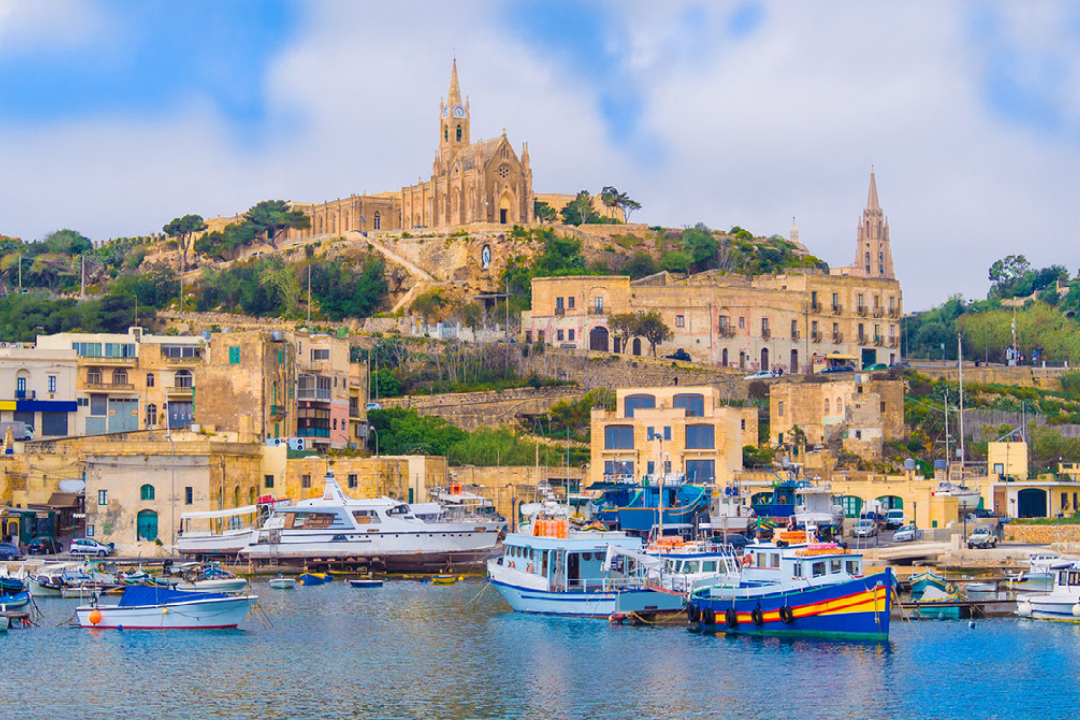
There is a moment, arriving in Malta for the first time, when the eye simply does not know where to rest. The limestone — honey-coloured, warm even in winter light, the same stone from which temples, fortifications, churches, and farmhouses have been quarried for seven thousand years — seems to absorb and return the Mediterranean sun with an intimacy that feels almost personal. Valletta, the capital, rises from its peninsula with the assurance of a city that has always known its own importance. And yet the island, barely twenty-seven kilometres in length, carries its history so lightly, so habitually, that locals will pause their morning coffee beside a Baroque church façade without appearing to notice that they are sitting in one of the world’s most concentrated repositories of human civilisation.
Valletta: A Capital Built for Ceremony
Valletta was purpose-built by the Knights of St John following the Great Siege of 1565, conceived from the outset as a statement of European resolve and architectural ambition. Its grid of streets — unusual in the sixteenth century — descends in regular steps from the spine of the peninsula to the twin harbours on either side, affording views of extraordinary drama at almost every cross-street. The Co-Cathedral of St John, its exterior deliberately restrained in accordance with the Knights’ military order, opens its interior into one of the most astonishing Baroque spaces in Christendom: every inch of wall and ceiling worked with gilded relief, the floor a mosaic of memorial tombstones in coloured marble, Caravaggio’s monumental canvas of the beheading of John the Baptist presiding over the Oratory with sombre authority.
The city was named a UNESCO World Heritage Site in 1980 and became European Capital of Culture in 2018, investments that have accelerated an already impressive transformation. The Renzo Piano-designed City Gate and Parliament building, opened in 2015, achieves the rare distinction of adding to rather than compromising a historic urban fabric — its warm limestone and considered geometry in genuine conversation with the seventeenth-century bastions that flank it. The boutique hotels that have opened in restored palazzi across the city offer accommodation of remarkable intimacy: rooms with two-metre ceilings, private terraces overlooking the Grand Harbour, breakfast taken on stone balustrades where the Knights once kept watch.
The Three Cities: Living History
Across the Grand Harbour from Valletta — reached by a traditional dghajsa water-taxi, a journey of twelve minutes that crosses five centuries — lie the Three Cities of Vittoriosa, Senglea, and Cospicua. These are among the oldest inhabited parts of the island, their narrow lanes predating the Knights’ arrival, their waterfront fortifications built in layers over the Ottoman siege and beyond. Vittoriosa in particular rewards long, unhurried walking: past the Inquisitor’s Palace (the only complete example of an Inquisitor’s residence in the world), through the bieb — the narrow gate openings characteristic of the old streets — to the waterfront where superyachts now moor against the same quayside that received the galleys of the Order.
Mdina and the Island’s Interior
At the island’s centre stands Mdina, the Silent City, its medieval walls rising from a plateau with views extending to the sea on three sides. Entry through the main gate shifts the acoustic world entirely — the silence inside the walls is genuine, almost architectural, reinforced by a rule permitting only residents’ vehicles. The cathedral, damaged by earthquake in 1693 and rebuilt in Baroque splendour by Lorenzo Gafà, anchors a tight cluster of aristocratic palazzi and intimate lanes. Visiting at dawn, before the day-trippers arrive, is an experience of rare purity — the golden stone catching the first light, the bells of the cathedral marking the hour, the island spread below in its entirety.
Table and Tradition
Maltese cuisine occupies a Mediterranean crossroads that its geography demands: Arab influences in the aromatic spicing, Sicilian echoes in the pasta shapes, British remnants in the surprising fondness for rabbit pies. Fenkata — rabbit braised with garlic, wine, and bay — is the island’s unofficial national dish, typically consumed in prodigious quantities at Sunday family lunches that extend well into the afternoon. The ftira, a sourdough ring bread stuffed with tuna, capers, and sun-dried tomato, is the perfect lunch for exploring on foot. At Rubino in Valletta, a restaurant that has occupied the same premises since 1958, traditional recipes are executed with disciplined clarity: the bragjoli, thin-sliced beef rolled around a stuffing of breadcrumbs, herbs, and hard-boiled egg, is exactly as it should be.
The Sea, Always the Sea
No account of Malta is complete without the water. The island’s coastline, much of it accessible only by boat, offers bays and coves of improbable clarity — the Blue Lagoon of Comino, the sea caves of Gozo’s Dwejra, the sheltered creeks of the south where fishing boats in the traditional luzzu style, painted with the Eye of Osiris, bob in water the colour of tourmaline. Gozo itself, Malta’s smaller sister island a twenty-minute ferry crossing away, offers a rural pace and a gentler landscape — terraced fields, a citadel town, the extraordinary Ggantija temples, older than the Pyramids — that feels like a different chapter of the same extraordinary story.
Malta rewards the visitor who arrives with patience and curiosity rather than a schedule. Its greatest pleasures are not attractions to be ticked but textures to be absorbed: the weight of centuries in the stone, the warmth of a people accustomed to welcoming strangers, the peculiar grace of a small island that has somehow always mattered enormously to the world.