
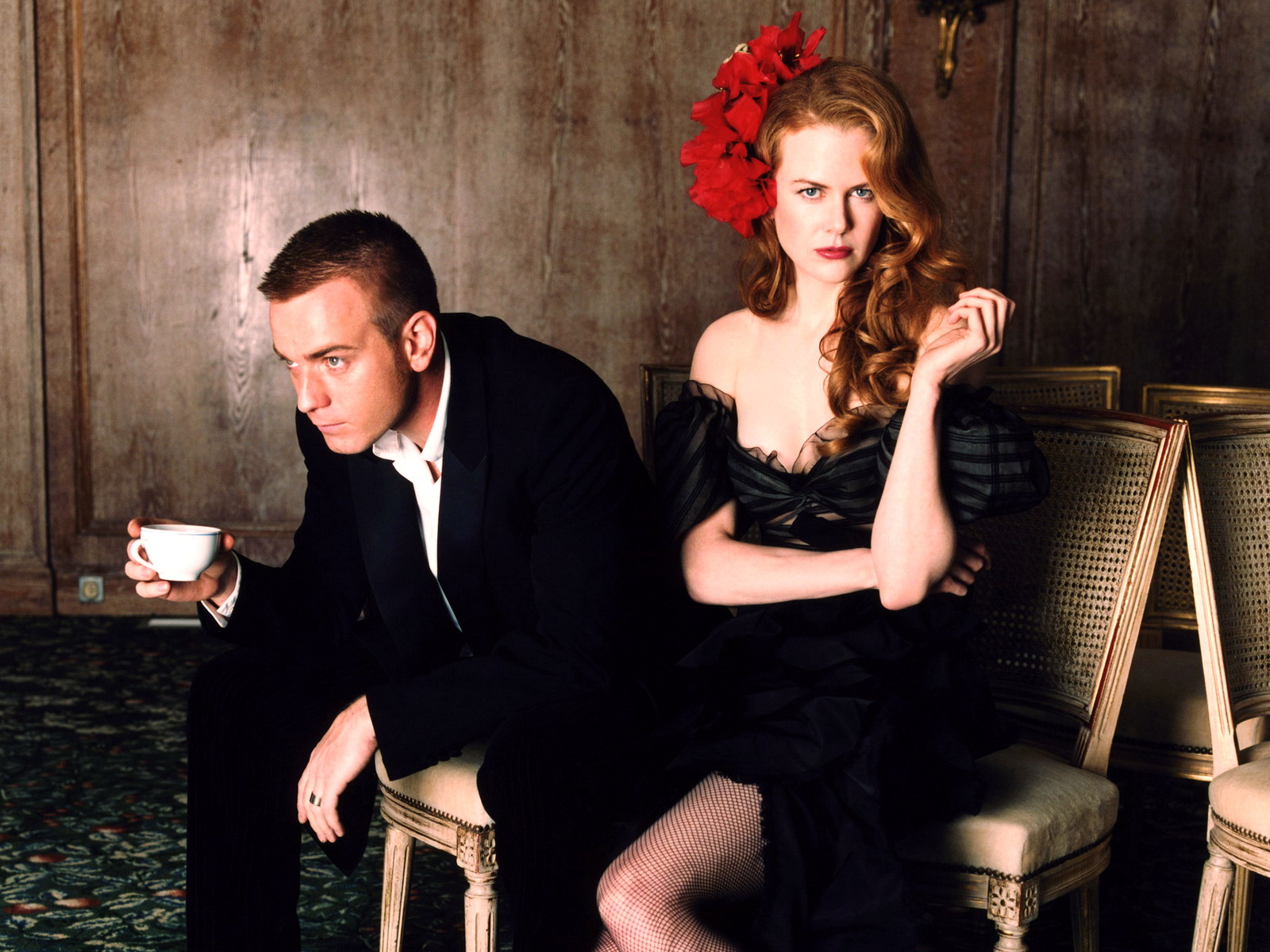
Cinema has always been fashion’s most powerful mirror — and fashion, in return, has given cinema some of its most enduring iconography. The relationship between the two arts is not one of mere illustration or commercial alliance but of genuine creative symbiosis: the costumes that have defined the great screen performances are inseparable from those performances, encoding character, desire, and cultural moment in cloth and cut with a precision that dialogue alone could never achieve. To revisit the films is to revisit the clothes; to understand the clothes is to understand the films more completely.
Audrey Hepburn and the Architecture of Simplicity
No single collaboration in cinema history has shaped fashion’s visual language more profoundly than that between Audrey Hepburn and Hubert de Givenchy, which began with Sabrina in 1954 and extended across seven films and a decades-long friendship. Givenchy’s clothes for Hepburn worked on a principle of radical simplification: the elimination of everything extraneous, leaving only the essential line and the relationship between garment and the particular quality of Hepburn’s presence. The black Givenchy dress worn in the opening sequence of Breakfast at Tiffany’s — the long pearl necklace, the oversized sunglasses, the coffee cup held with that distinctive elongated wrist — is not merely a costume. It is a thesis about elegance: that the most powerful style is that which conceals effort entirely and presents itself as inevitability.
The influence of this image on subsequent fashion is impossible to overstate. The little black dress had existed before 1961, but Breakfast at Tiffany’s fixed it in cultural consciousness as the garment of a certain kind of sophisticated urban femininity — self-possessed, slightly melancholy, entirely assured — that Givenchy’s cut and Hepburn’s inhabitation made permanent.
Grace Kelly: Hitchcock’s Blonde as Fashion Argument
Alfred Hitchcock’s collaboration with costume designer Edith Head, and his particular obsession with dressing Grace Kelly across three films — Dial M for Murder, Rear Window, and To Catch a Thief — produced a vision of femininity that was simultaneously controlled and charged with erotic current. Hitchcock understood that clothing was character in the most literal sense: Kelly’s costumes in Rear Window, moving from a casual sundress through increasingly formal and elaborate evening wear, trace the arc of Lisa Fremont’s campaign to make herself indispensable to a man determined not to need her. The gold and white gown she wears to Jefferies’s apartment for their dinner — structured, luminous, impossible to ignore — is not decoration but argument.
Head won eight Academy Awards for costume design over her career, a record that has never been equalled, and her work with Kelly represents the apex of a particular Hollywood ideal: clothing that tells the story without announcing that it is doing so, beauty deployed with intelligence rather than simply displayed.
Faye Dunaway and the Bonnie Parker Silhouette
Theadora Van Runkle’s costumes for Bonnie and Clyde in 1967 arrived at a precise cultural moment when fashion was fracturing between the last gasps of mid-century formalism and the new freedoms of the counterculture, and landed with the force of a manifesto. Dunaway’s Bonnie Parker — beret tilted at exactly the right angle, midi skirts in Depression-era fabrics worn with a gangster’s swagger, the knit pull-over that somehow reads simultaneously as period costume and 1967 modernity — created a silhouette that influenced every major designer of the following decade.
Yves Saint Laurent was among the first to acknowledge the debt, his 1971 “Libération” collection drawing directly on Van Runkle’s Depression-era research. The beret, the midi, the layered knit: these became the vocabulary of a sophisticated bohemianism that persisted in fashion through the 1970s and continues to resurface in various forms whenever designers seek an image of romantic, slightly dangerous femininity.
Diana Ross in Mahogany: Couture as Aspiration
Diana Ross’s costumes in Mahogany (1975) — many of which she designed herself, in the film’s conceit as in the production reality — represent one of cinema’s most extravagant explorations of fashion as the language of ambition. The film is imperfect by almost any critical measure, but its visual vocabulary is extraordinary: a succession of increasingly elaborate looks that trace the trajectory of a Black woman from Chicago’s South Side to the international fashion world, clothing deployed as the measure of distance travelled and the cost of that travel.
The cultural significance of this vision — a Black woman as high-fashion designer and model, at the centre of a major studio production’s aesthetic imagination — was considerable in 1975 and has been insufficiently acknowledged since.
The Enduring Lesson
What the great cinematic looks share, across their differences of era and sensibility, is the quality of absolute rightness — the sense that no other choice would have served as well, that character and costume have achieved a total integration in which it becomes impossible to imagine one without the other. This is the lesson that the finest costume designers have always understood and that fashion itself, at its most ambitious, aspires to: that clothes do not merely cover or decorate but articulate, express, and in the most powerful instances define.
The silver screen gave fashion its most public laboratory and its most enduring archive. Every great cinematic look is a document of its moment — of what a culture believed about beauty, power, and the possibilities available to the person who knew how to dress with intelligence and intention. To watch these films with attention to their clothes is to read fashion history at its most vivid and its most human.