
The spirits renaissance of the past two decades has produced a generation of distillers who approach their craft with the seriousness, the intellectual curiosity, and the reverence for raw materials that were once the exclusive domain of the great wine estates. These are not hobbyists bottling flavoured vodka in converted garages. They are artisans — many of them trained in chemistry, agriculture, or the culinary arts — who have chosen to work at a scale that permits obsessive attention to every variable: the provenance of the grain, the character of the water, the species of yeast, the geometry of the still, and the selection and treatment of the cask. The result is a new landscape of spirits that rewards the connoisseur’s attention as richly as any wine region on earth.
The Grain-to-Glass Movement
The most significant philosophical shift in contemporary distilling is the insistence on controlling every stage of production, from the field to the bottle. Where the great majority of spirits producers — including many whose marketing invokes the language of craft — purchase their base spirit as a commodity and redistil or flavour it, the grain-to-glass distillers grow or source their grain with the same specificity that a vignerons sources grapes. Waterford Distillery in Ireland, founded by Mark Reynier (previously of Bruichladdich), has taken this principle to its logical extreme, producing single-malt whiskies from barley grown on individually identified farms, each bottled separately to demonstrate the effect of terroir on the spirit. The results are compelling: side-by-side tastings of Waterford’s farm-origin bottlings reveal differences in flavour as distinct and as terroir-driven as those between neighbouring Burgundian vineyards.
The Botanical Distillers: Gin’s Golden Age
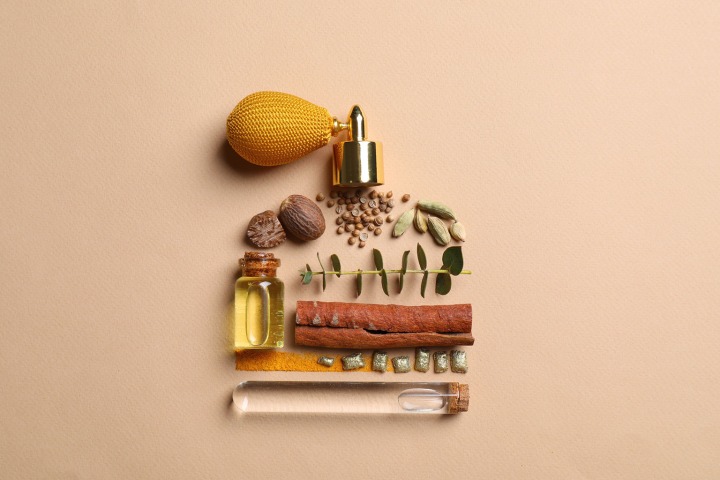
The gin renaissance that began in London in the early 2000s and has since spread to every continent has produced a category of spirits of unprecedented diversity and quality. The best contemporary gins — Monkey 47 from the Black Forest, with its forty-seven botanicals foraged from the surrounding woodland; Ki No Bi from Kyoto, whose botanicals include gyokuro tea, hinoki cypress, and bamboo leaves, distilled in a rice spirit base; Hernö from northern Sweden, where the juniper is hand-picked from trees growing at the sixty-third parallel — demonstrate that gin is less a fixed category than a framework for expressing place through the medium of distilled botanicals.
The common thread among these producers is a refusal to treat the botanical bill as a secret formula to be protected and an insistence on treating it as a transparent expression of aesthetic choice. The distiller’s decisions — which botanicals, in what proportions, macerated or vapour-infused, distilled together or separately — are the creative acts that define the spirit, and the best contemporary gin producers discuss their process with the candour and the precision of chefs discussing a signature dish.
Agave Beyond Tequila
The global discovery of mezcal — and, beyond mezcal, the wider family of agave spirits produced across Mexico from dozens of distinct agave species — has introduced the spirits world to a craft tradition of remarkable depth and diversity. The finest mezcals are produced by maestros mezcaleros whose families have distilled agave for generations, using methods that predate European contact: earthen pit roasting, stone-mill crushing, open-air fermentation with wild yeasts, and distillation in clay or copper stills whose designs have remained essentially unchanged for centuries. The resulting spirits — Tobalá, Madrecuixe, Tepeztate, each named for the agave species from which it is distilled, each with a flavour profile as distinct as a grape variety — are among the most complex and terroir-expressive spirits produced anywhere on earth.
The New Whisky Geographies
Scotland and Kentucky remain the centres of the whisky world, but the most interesting developments are occurring at the periphery. Amrut in Bangalore, whose single malts mature at a rate accelerated by the Indian climate and have won blind tastings against Scotch whiskies of considerably greater age and reputation. Kavalan in Taiwan, whose distillery in Yilan County produces whiskies of such tropical richness that they have redefined expectations of what climate can do to spirit and wood. Starward in Melbourne, whose use of Australian red-wine barrels produces a whisky that tastes unmistakably of its place — fruit-forward, warm, generous — rather than of the Scottish or American traditions it might have been expected to imitate. These distillers have demonstrated that whisky is not a British invention that other countries may borrow but a global form that every culture can make its own.
The Collector’s Shelf
The cultivated spirits collection, like the cultivated wine cellar, is built not by accumulation but by curation — by the willingness to seek out the distilleries whose work is most distinctive, to acquire bottles that represent a particular moment in a particular maker’s development, and to share them with the seriousness and the generosity that great spirits deserve. A bottle of Waterford’s farm-origin barley whisky beside a Hernö Old Tom gin, a Real Minero Arroqueño mezcal alongside a Poli Sarpa di Amarone grappa: this is not a collection of drinks but a library of craft, geography, and human devotion, and it rewards the connoisseur’s attention as richly as any bookshelf or art collection in the home.