
Luncheon has always occupied a curious position in the hierarchy of meals — neither the considered ceremony of dinner nor the improvised warmth of breakfast, but something in between: a midday gathering that, at its finest, carries its own particular elegance. The great luncheon tables of history — the long afternoon meals of Edwardian country houses, the white-clothed terraces of the French Riviera, the private dining rooms of London’s oldest clubs — understood that midday eating is not merely refuelling but a civilised pause in the day’s momentum, deserving of its own aesthetic and its own culinary ambition. It is time to reclaim that understanding.
The Architecture of the Midday Table
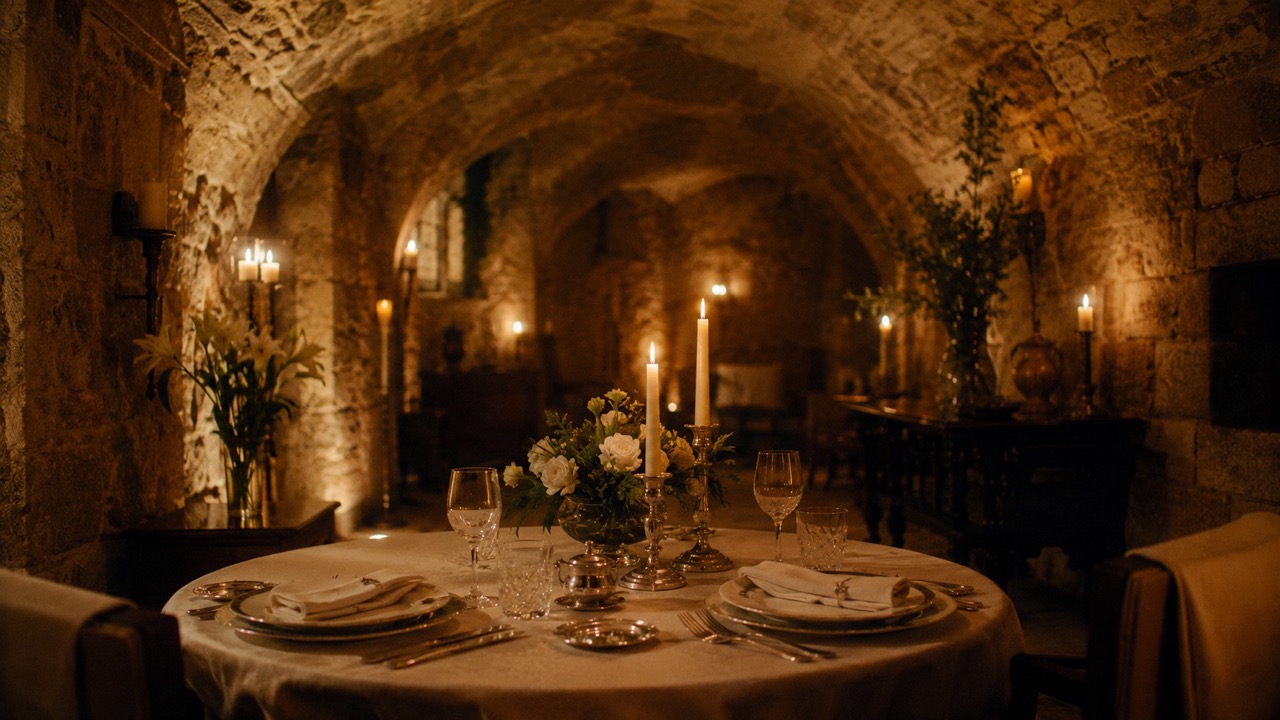
The luncheon table differs from its evening counterpart in one essential quality: light. Natural daylight — whether streaming through tall restaurant windows or falling across a garden table — demands a different visual register than candlelight. The table settings should be crisp, the linens white or the palest natural linen, the glassware clear and simple rather than ornate. Flowers, when present, should be low enough to permit conversation and fresh enough to suggest they were cut this morning. The midday table is a table of clarity — intellectually and aesthetically — and its decoration should honour that quality.
The composition of the meal itself should follow the same principle. Luncheon favours the precise and the bright over the rich and the prolonged. A lunch that attempts the full architectural gravity of a grande dîner loses the particular grace of midday eating without gaining anything in return. Three courses, well chosen, are more distinguished than five that exhaust the appetite before the afternoon’s obligations resume.
The First Course: Composed and Confident
The great luncheon starters share a family resemblance: they are prepared dishes that require genuine skill but carry their accomplishment lightly. A perfectly composed salad of shaved fennel, blood orange, and Sicilian green olives, dressed with a vinaigrette that has been built rather than whisked, speaks of kitchen confidence without demanding theatrical preparation. A pressed terrine of heritage vegetables, bound with aspic and served with a sharp, herb-flecked cream, brings the craft of the charcutier to the vegetable world with unexpected elegance.
Egg dishes, often overlooked in the repertoire of the ambitious cook, are among the most refined first courses available to the luncheon table. A perfectly coddled egg with crème fraîche and smoked salmon roe, served in its shell in a silver cup, requires a technique that cannot be rushed and produces something that cannot be improved. The oeufs en gelée of the classic French kitchen — a soft-poached egg suspended in clear tarragon-scented jelly — is not a period piece but a masterwork of precision and flavour that rewards rediscovery.
The Principal Dish: Seasonal and Unhurried
The luncheon main course has historically drawn from a particular repertoire: dishes that benefit from slow preparation but are served without excessive ceremony, that are generous without being exhausting, and that honour the season without being slavishly governed by it. A whole roasted sea bass with a salsa verde of capers, anchovy, and fresh herbs; a fricassée of spring chicken with morels and a cream sauce built from the cooking juices; a crab tart in a butter pastry case so thin it shatters at the touch of a fork — these are dishes of genuine accomplishment that sit correctly at the midday table.
The carbohydrate question at luncheon deserves particular attention. Bread — genuine bread, from a proper baker, with character in both crust and crumb — belongs on the luncheon table as a presence rather than an afterthought. Potatoes, when they appear, should be worth their place: a gratin dauphinois that has spent two hours in a slow oven, a pomme purée of the Robuchon school, or the simplest possible new potatoes boiled in salted water and finished with butter and chives, which at the height of their season need nothing else whatsoever.
Cheese Before or Instead of Pudding
The luncheon cheese course is a more austere affair than its dinner equivalent — typically two or three pieces rather than a full board, chosen with the wines in mind and served at the correct temperature, which almost always means removed from the refrigerator at least an hour before the meal. A single exceptional cheese, served with bread and perhaps a spoonful of quince paste, can close a luncheon with more satisfaction than a composed dessert, and leaves the afternoon considerably lighter.
When pudding is served, restraint remains the governing principle. A lemon posset in a small chilled glass; a financier warm from the oven with a scoop of crème fraîche; seasonal fruit of impeccable quality served simply, without embellishment — these are the puddings that belong to luncheon, that honour the meal without prolonging it beyond its proper duration.
The Wine List at Noon
Luncheon wines tend toward the precise and the aromatic rather than the weighty and tannic. White Burgundy of a village appellation or above brings both authority and finesse to fish and vegetable courses. A good Beaujolais — a Moulin-à-Vent or Fleurie of some age — handles the transition to the main course with the ease of a practiced conversationalist moving between subjects. Champagne, served throughout the meal rather than merely as an aperitif, is the most elegant luncheon choice of all: light enough to last the distance, complex enough to accompany dishes of genuine ambition.
The civilised luncheon, recovered from its long midcentury exile into the sandwich and the solitary screen, offers something that no other meal format provides: the luxury of an unhurried pause in the middle of a busy life, shared with people whose company improves the food and whose conversation improves the day. It deserves its restoration to the calendar of the seriously living.